It's Not Flat!
⬅ previous ⬆intro next ➡Day 4 ~ 9 September ~ Biogradska Gora National Park to Poscenje
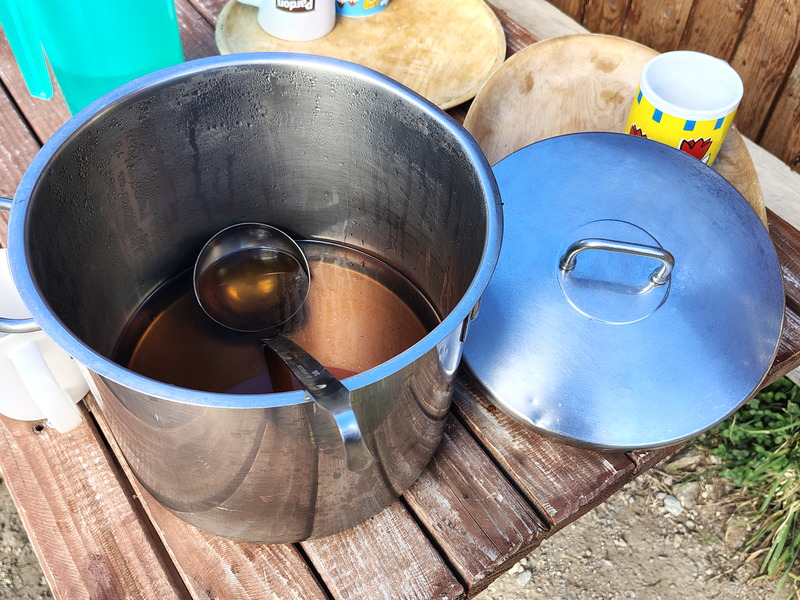
Good morning!
It's been a chilly night, so some nice hot herb tea is what's needed.
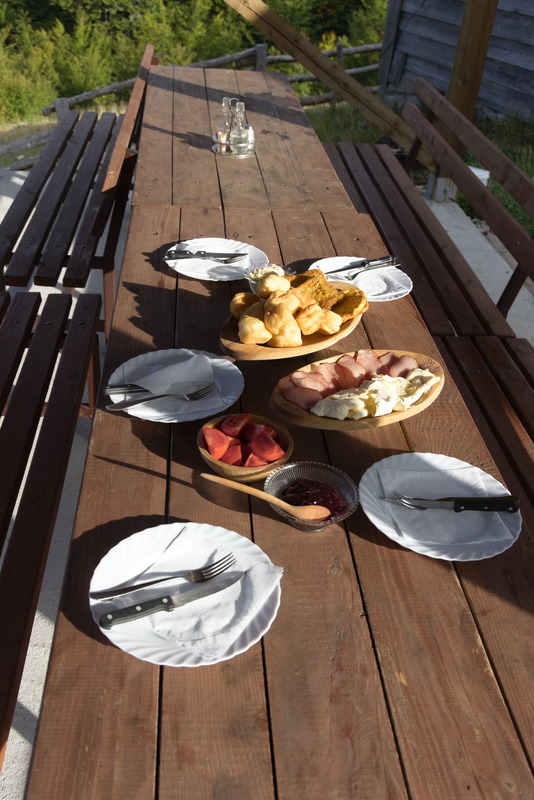
Breakfast with Sir Cheese! Also, ham, tomatoes, fried bread and 'priganice' -- deep fried dough balls. These are very simple: literally nothing more than the description implies. They are believed to have originated from times of hardship and relative food scarcity, but have become something of a national institution today.
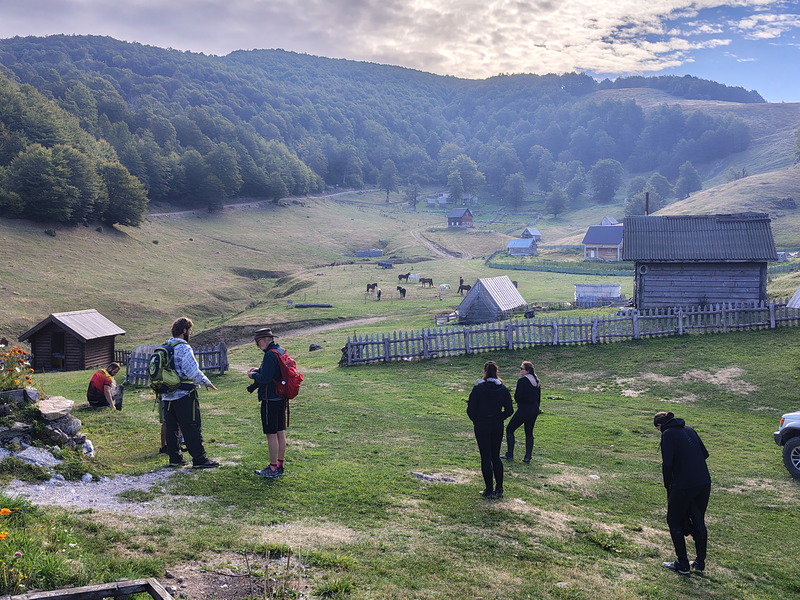
Getting ready to move out. To the right of the picture are three of a group of women on a horse riding trip who also stayed at the lodge last night. Those are their horses further down the field.
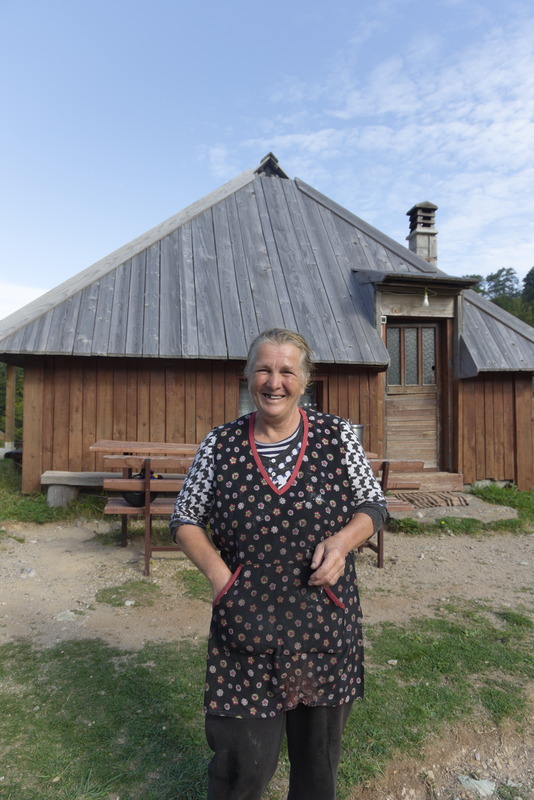
Our hostess doesn't speak a word of English, but she's been lovely.
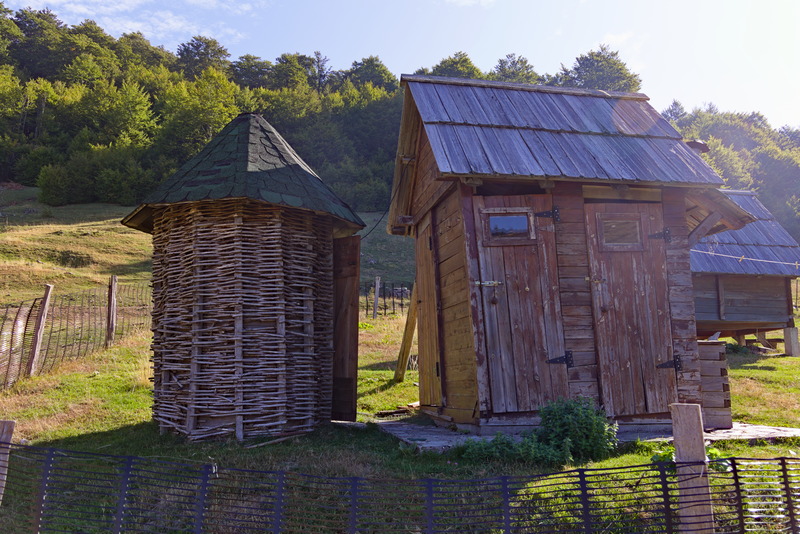
On our way out, we pass the shower block, or round wicker hut as it might more accurately be called!
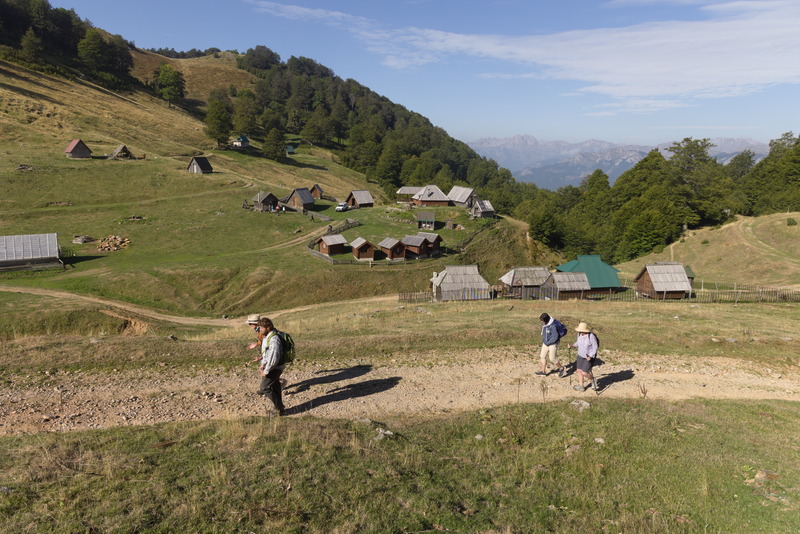
It's an easy walk to start, but the itinerary says we have a steep 600m descent ahead.
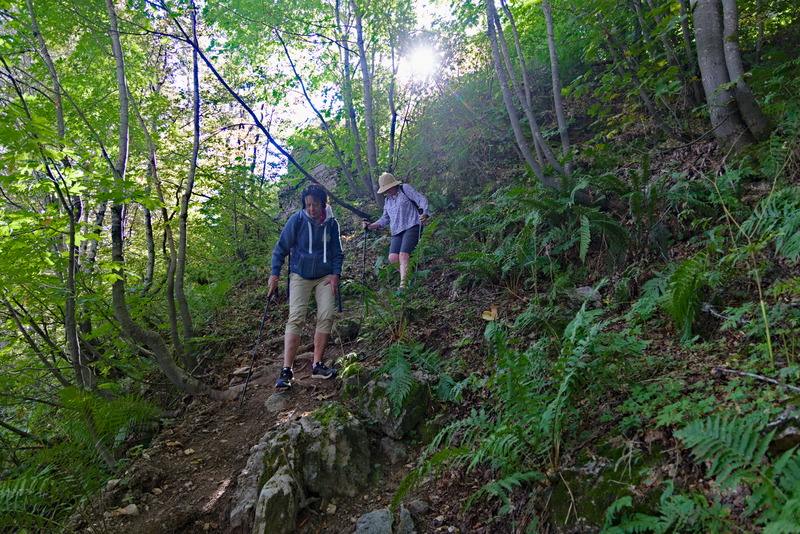
It wasn't lying!
Amanda and Thérèse, especially the latter, are both finding it a bit hard on their knees and taking it slowly and carefully.
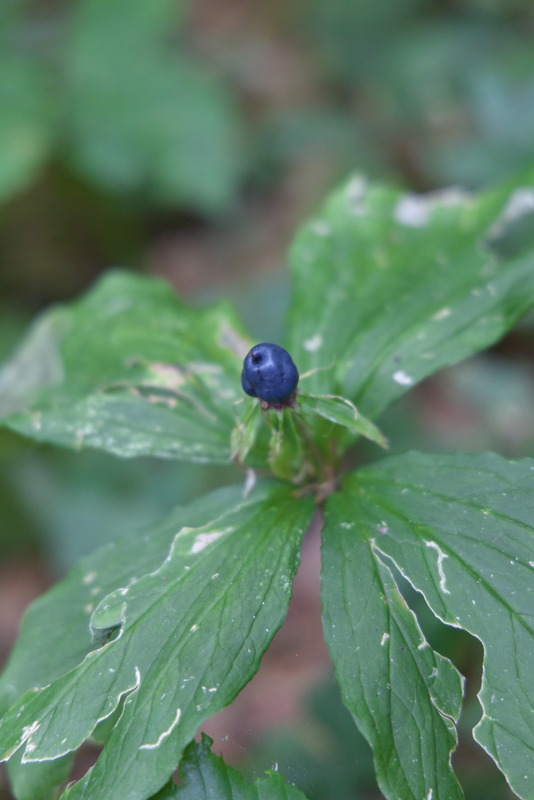
Rather than rush on ahead, I'll take pictures of interesting flora. The forest doesn't seem to have much in the way of visible wildlife; there are allegedly 150 species of birds and 10 of mammals, but I suspect that they may largely consist of LBJs and small rodents.
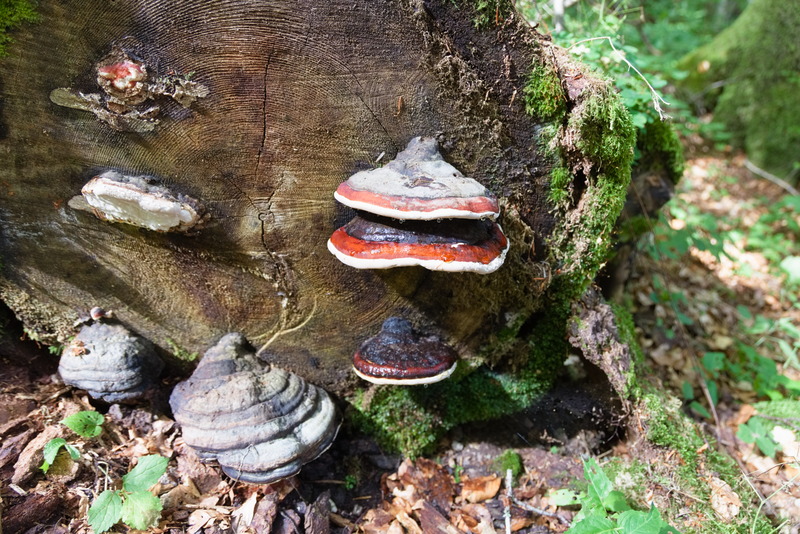
Plenty of fungus, though.
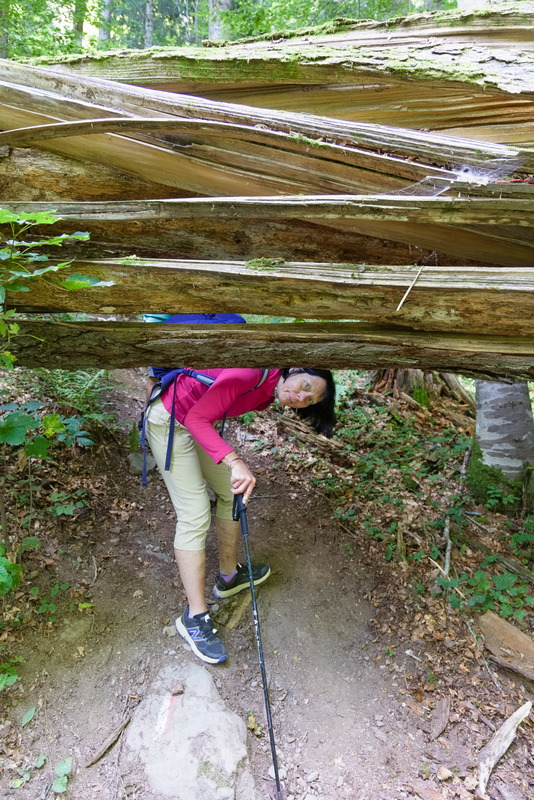
"Are we nearly there yet?"
Actually yes, not much further now.
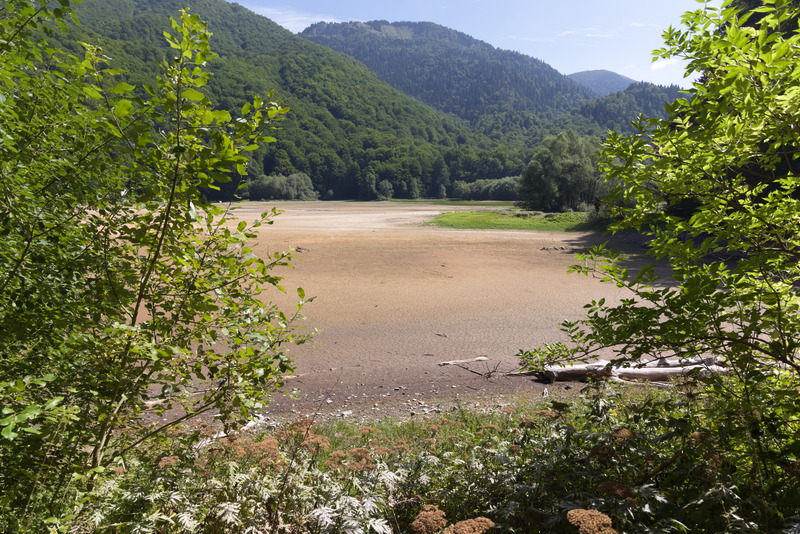
Hmm... Lake Biograd is not looking very lakelike! It's been a very hot dry summer here. It'll fill again with meltwater in the spring.
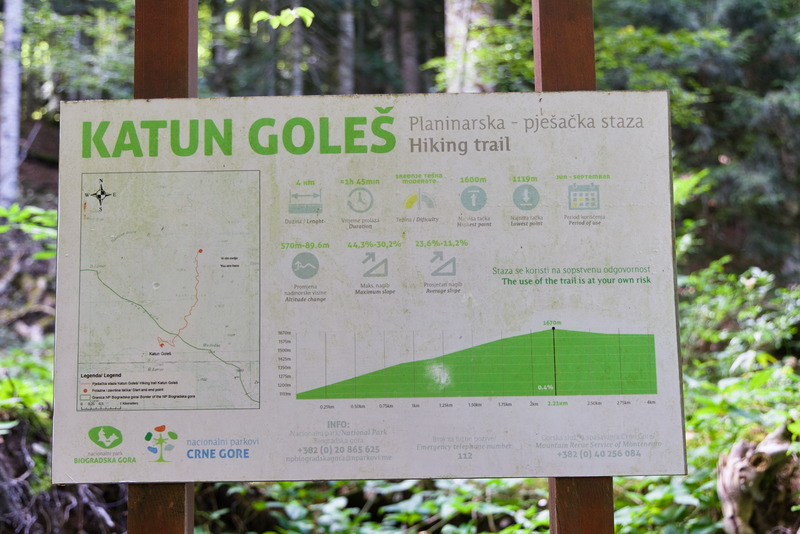
Since there's a car park and other facilities here at the lake, most people start here and walk up where we've been walking down, and this sign tells them what to expect. Not that anyone has been doing this: we've been completely alone until now, but suddenly we are among families and tour groups taking the rather less strenuous lakeside path.
We go for a coffee at the lake café, but it's utterly undrinkable!
Back in the bus, then, to our next lodge where we have two nights.
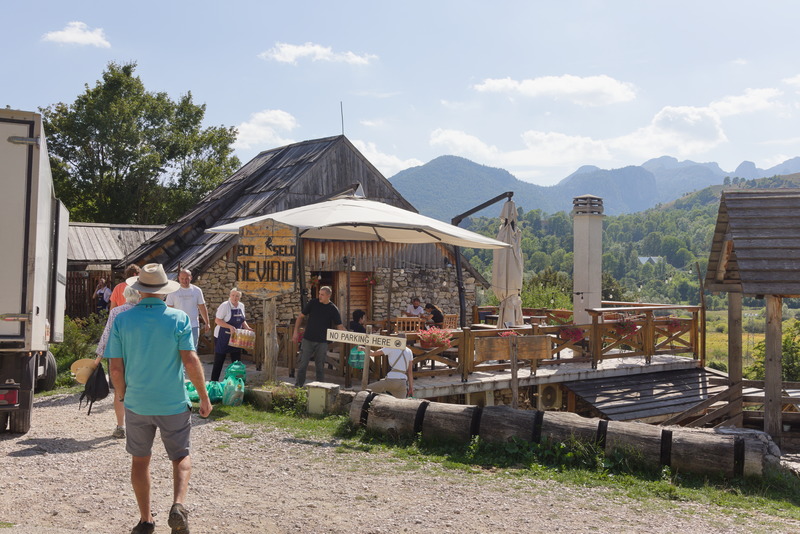
Eco Selo Nevidio, or "Nevidio eco village".
Now it's not easy to see in this picture, but on the sign board, just above and to the left of the 'S' in 'SELO', is a little figure of a man climbing on a rope. There's a reason for that and I'll tell you more later, but I don't notice it myself as we arrive.
We've taken the scenic route, so it's been an hour and a half, twice the time it would be on the main road, which means we're getting very late for lunch when we arrive, a bit after 14:30. So late that the kitchen has closed, and it'll be at least three before we can get any food. If we'd known we could have eaten in Kolasin at one.
At least lunch is good when we finally get it.
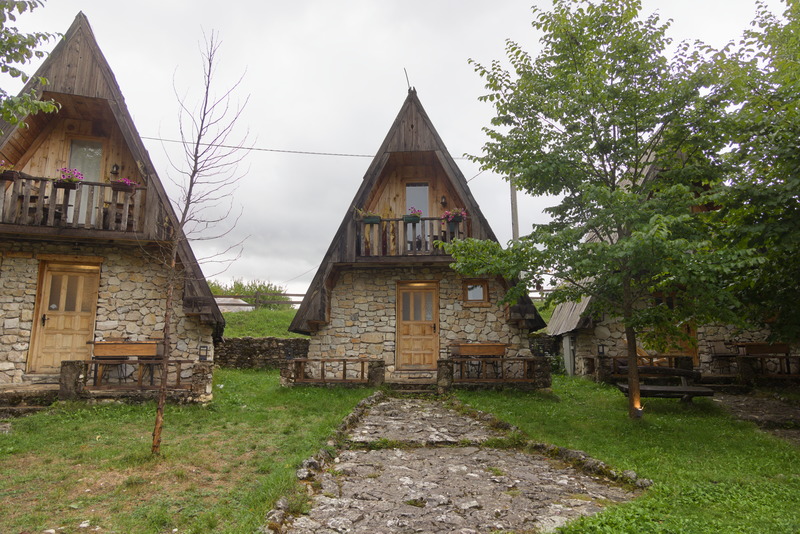
We are staying in these attractive stone and wood cablns.
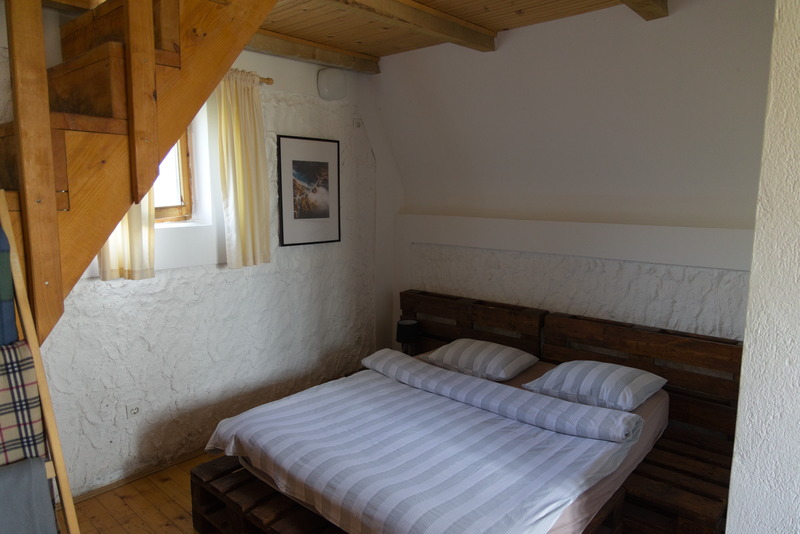
Still not quite five-star luxury inside, but definitely a bit more substantial than last night.
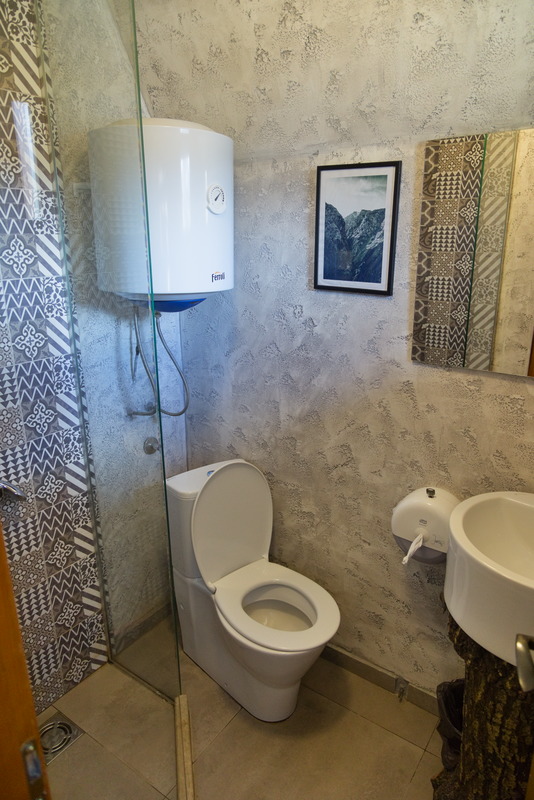
And an en-suite too; what more do we need?
But we are far from finished for the day, we still have more to see.
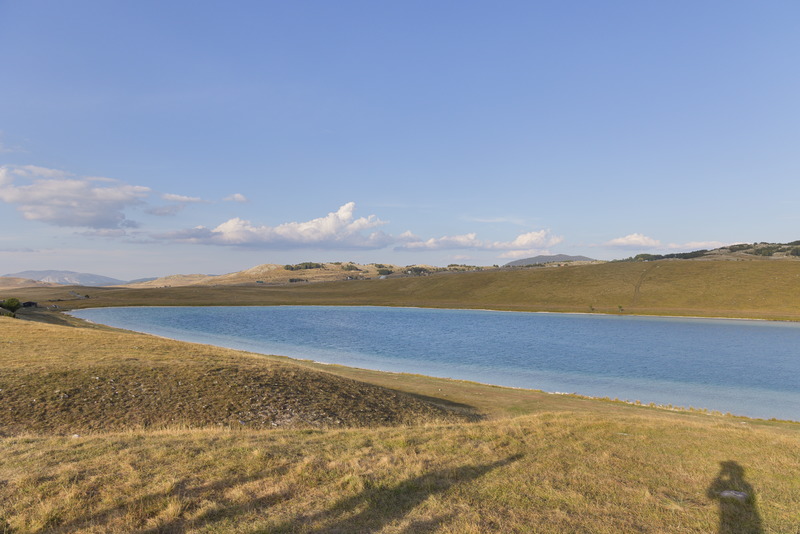
Another short drive takes us to Riblje Lake, which doesn't have a visitor centre but does have water, so that boosts it over Biograd in our opinion.
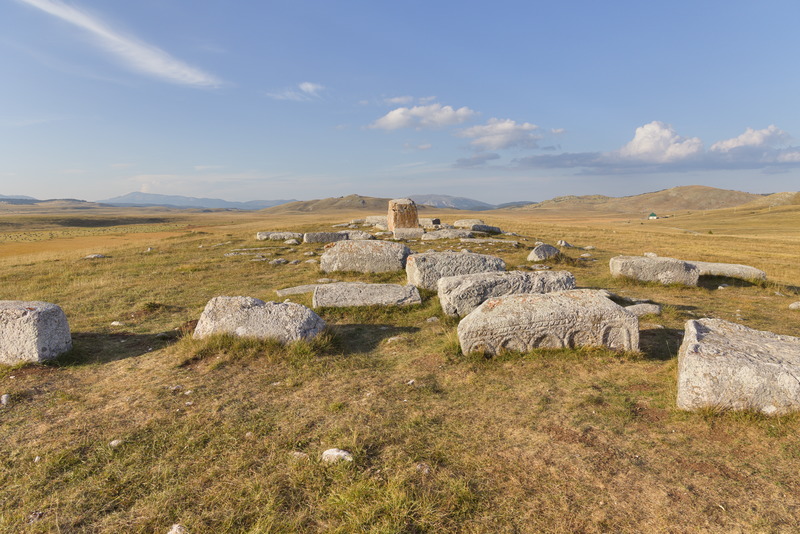
Then on the other side of the road is a mediaeval cemetery. The stones are called 'stećci' (singular, 'stećak') and some are carved in a distinctly Balkan style.
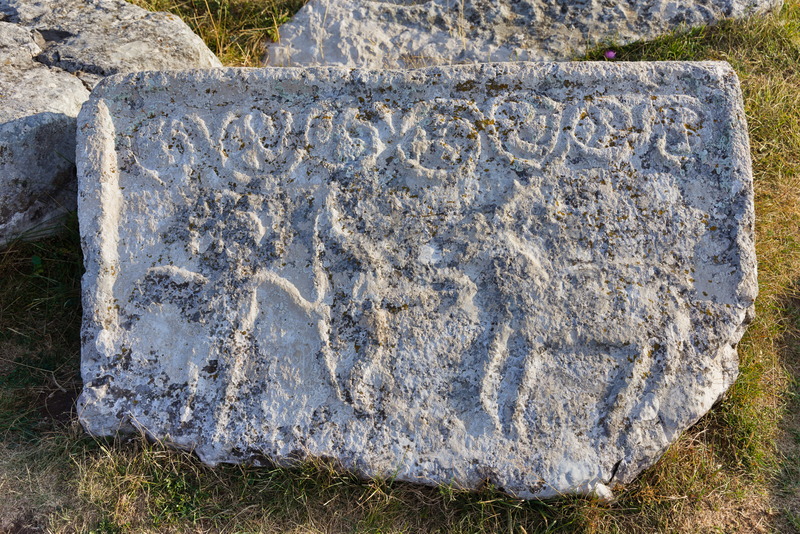
They are all quite badly weathered and it can be difficult to tell what the carvings are: I think this is a hunter shooting a deer with a bow and arrow, but I won't swear to it. It's a common decorative figure on this type of stone, though.
There's a suprisingly long article about stećci at Wikipedia. Many of the sites are UNESCO World Heritage listed, although not this one I believe.
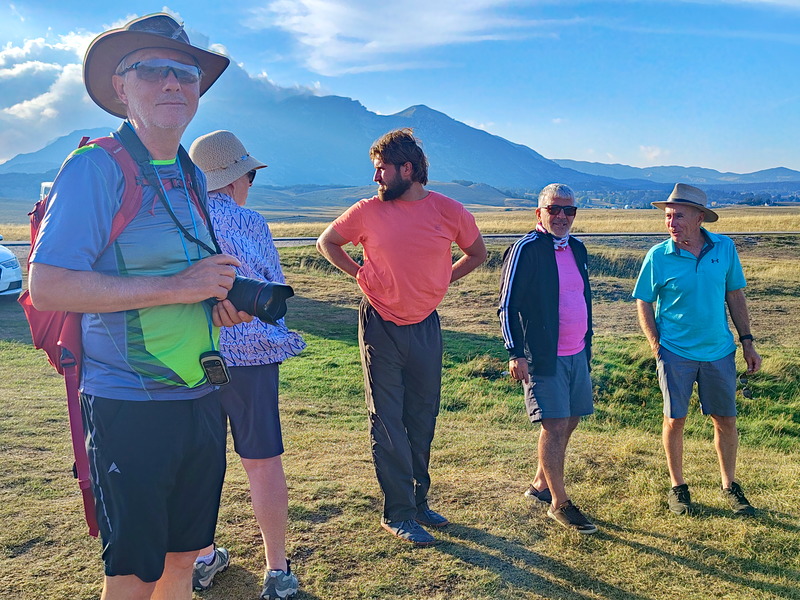
Ah, and this appears to be the first picture to include Dasha, our driver, second from right.
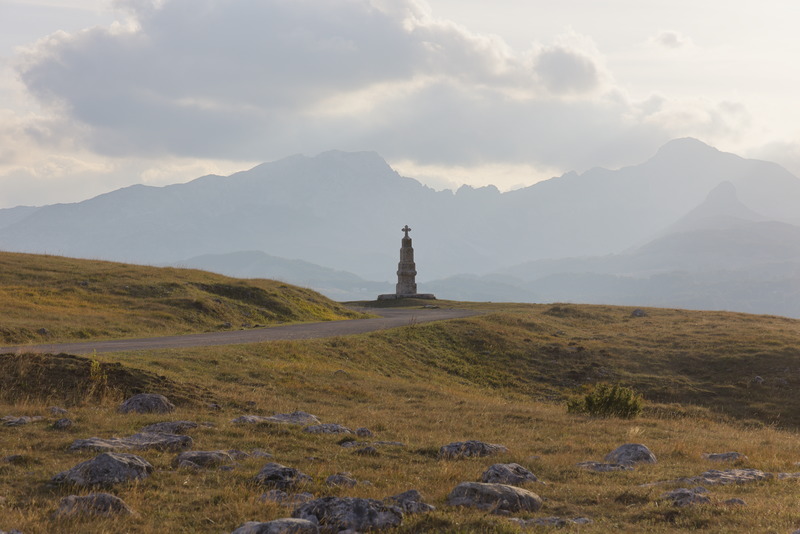
And from another field of stones a little further along, we can see this monument. It's something to do with the conflict in the Balkans before World War 1, but it's hard to find much info about it. On Google Maps, it's clearly labelled "Spomenik Žugića 1909", but searching for that provides little apart from stock photos of it. Can AI help? No. Google's AI Overview just says,
Historical Context While specific historical details about the 1909 event are limited in the search results, the monument is identified in stock photo descriptions as a "Monument Balkan War of 1909". This places it in the context of the conflicts in the Balkans leading up to World War I.Strictly speaking, the 'Balkan Wars' proper took place in 1912 and 1913, but it seems like some of preceding sabre-rattling could well have spilled over into a little local sabre-stabbing on occasion.
So, onwards now to the Tara River Canyon, the deepest in Europe.
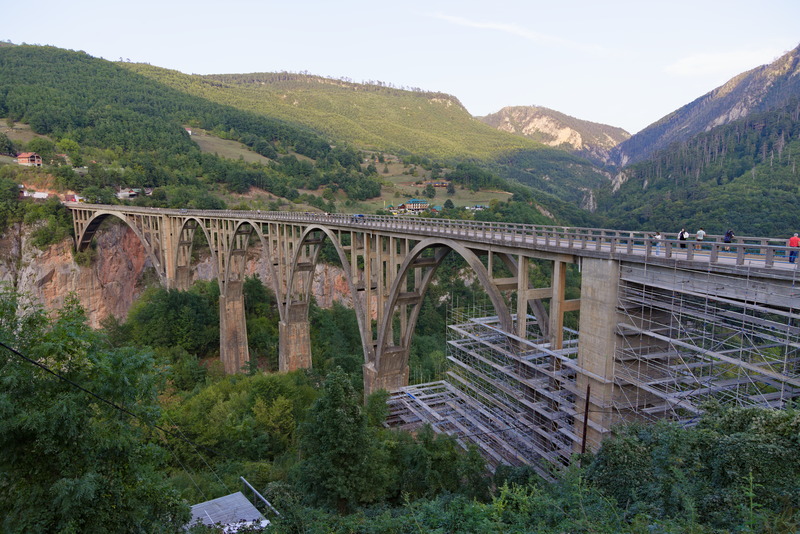
We won't descend into it, though, we'll stop at the “Đurđevića Tara” bridge. This concrete arch bridge was built between 1937 and 1940 and at the time was the largest of its kind in Europe. During WWII, Yugoslavs blew up the southermost arch with the help of one of the original engineers, removing the only crossing route for the oncoming Italian army.
The Italians rather took exception to this, and shot the engineer on the bridge after capturing him.
It was rebuilt in 1946, and as you might deduce from the scaffolding, it may be in need of a bit of rebuilding now too.
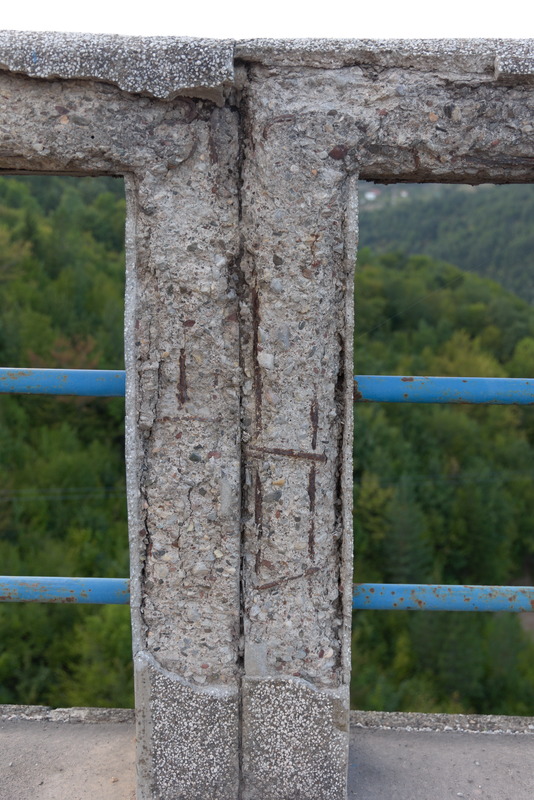
I'm sure it's still perfectly safe.
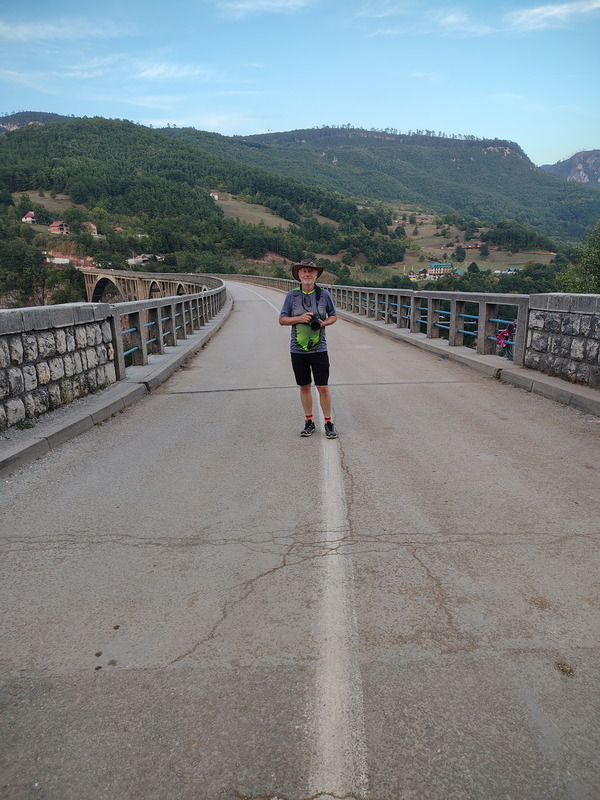
Look, I'll stand in the middle to show how confident I am!
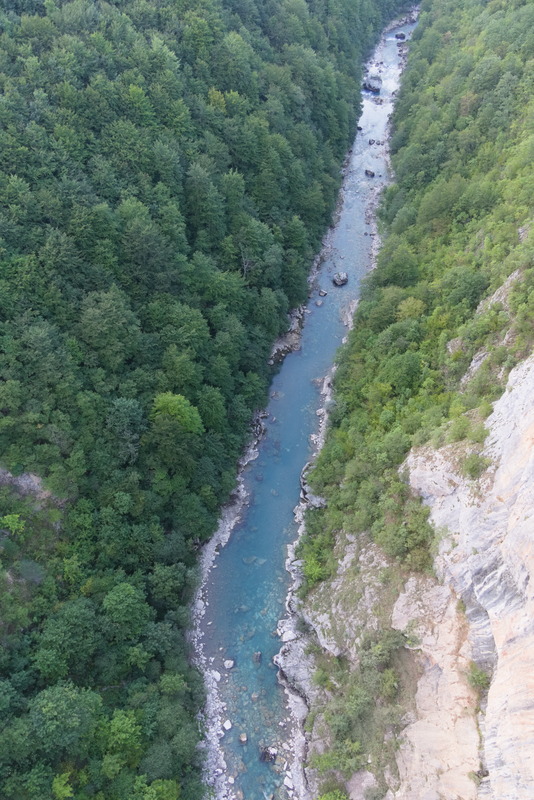
But there's no denying it's a long way down.
According to the itinerary there's an opportunity to ride one of Europe's longest zip wires here, but nothing seems to be operating. We have seen a few signs, but either they've closed for the season or maybe just closed entirely. If the state of the bridge is a guide, this may not be a bad thing.
Back for dinner now.
Some local lads are in, shall we say, high spirits, and keep turning the music up and slnging along, while we want to chat and keep asking the staff to turn it down again. Seems one of the lads is the proprietor's son, or his friend or something, so they get more of a vote than us tourists. It's not too cold an evening, though, so we adjourn outdoors for pud.
Time for bed: it's been a long day and tomorrow will be our longest walk.
⬅ previous ⬆intro next ➡