It's Not Flat!
⬅ previous ⬆intro next ➡Day 6 ~ 11 September ~ Poscenje to Cetinje to Kotor
The weather got worse last night: thunderstorms and heavy rain. We may need to adapt our plans a bit, but we shall see.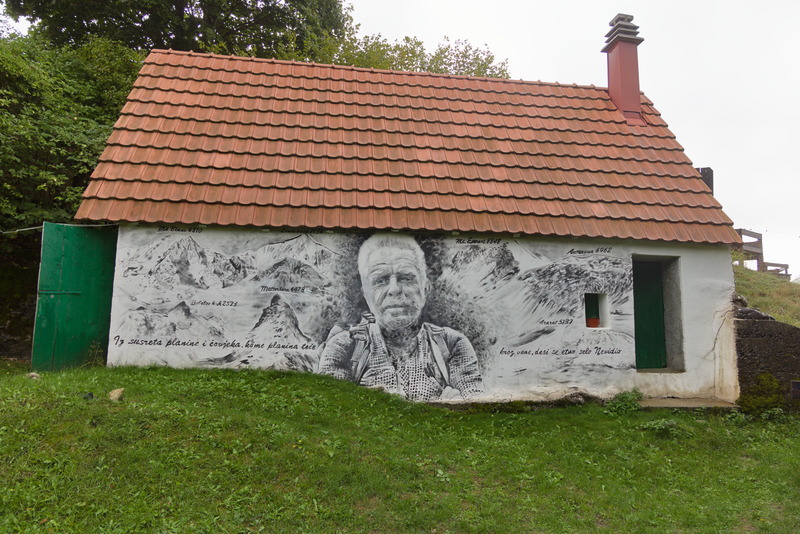
Before we leave, we'll just have a quick look around the lodge, which we've not really had any time to see. This wall is painted with a portrait of Lalović and some of the famous mountains he climbed.
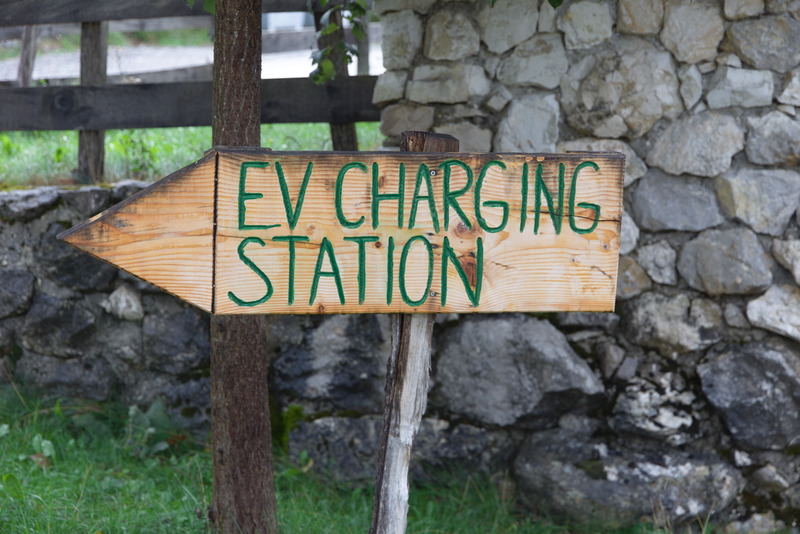
Eco credentials to the fore!
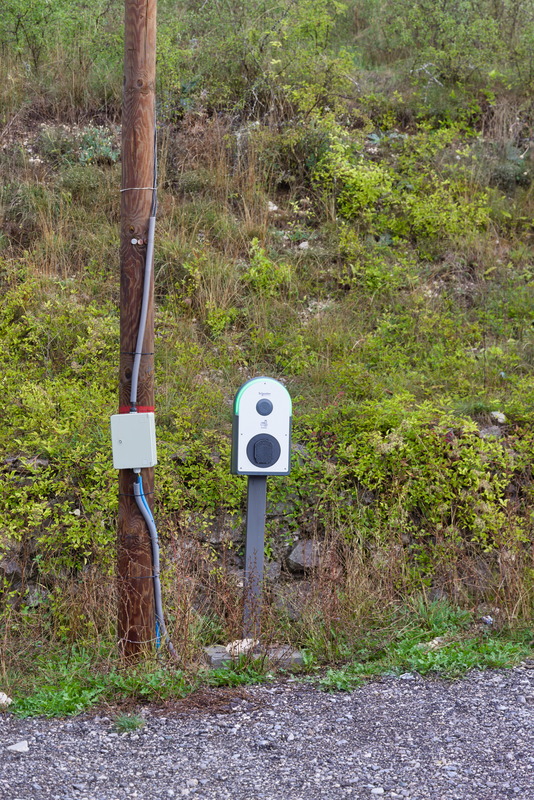
Although you could be forgiven for expecting something a bit more substantial.
It's not being used, and I've not noticed any EVs at all, though I haven't particularly been looking. A little research shows that the country has been slow to adopt them generally and charging infrastructure is weak outside cities.
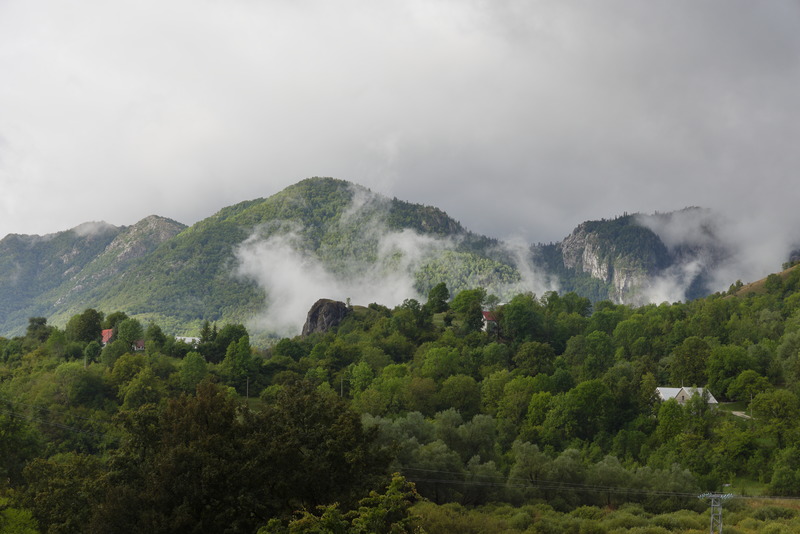
The weather is looking a bit mean and moody, although it's not raining now.
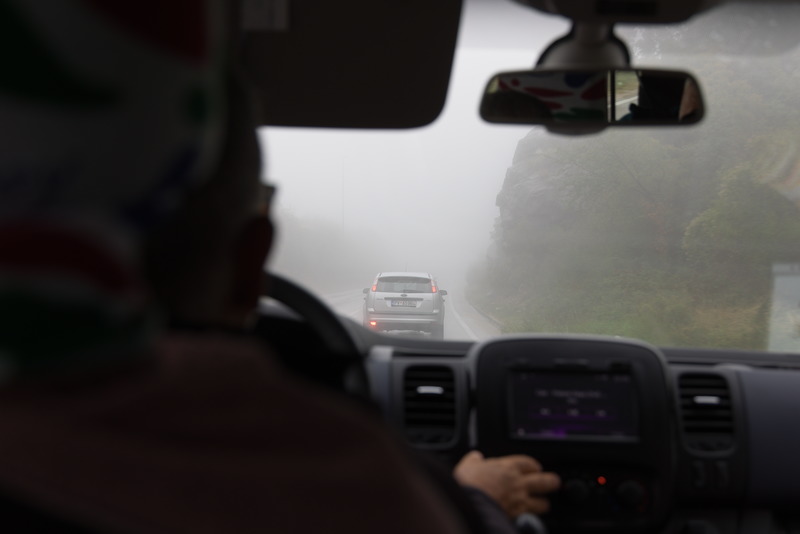
And now we're in the clouds.
It's about two and a half hours on the road to Cetinje, and we are in and out of clouds and rain most of the way.
Marko plays "Future Days".
Well that's a hit! He and Dasha are both blown away and can't believe that something so modern sounding is more than fifty years old! It's another contribution to my thesis that it's not just special pleading and nostalgia for the 70s, it really was a unique time for music. Can were never as widely known as their contemporaries Kraftwerk, and to some degree Tangerine Dream, but they were one of a number of German bands inventing their own take on rock'n'roll that had very different roots to Anglo-American pop/rock.
And speaking of Kraftwerk, Wir not quite fahr'n, fahr'n, fahr'n auf der Autobahn, but trundling along well enough.
The rain has stopped by the time we arrive, though the streets are all still wet. First stop is a coffee shop and then we have a short city tour with a local guide. She tells us to call her "Milly" as her full name is a bit of a mouthful. She's a language teacher in her day job, and tells us the unsurprising news that children learn Russian and English here, but the rather more surprising fact that they also take Latin.
Now I have a Latin O-Level, but even in the 70s, that was pretty esoteric and few non-public schools offered it. At one time it was a part of the entry requirements for Oxford and Cambridge Universities, but even they had moved a bit more into the 20th century by then.
[For non-English readers, a "public school" in Britain is what the rest of the world would call a private school, and for those and also younger readers,"O levels" were a class of school exams taken at about age 15-16, but phased out in the 1980s]
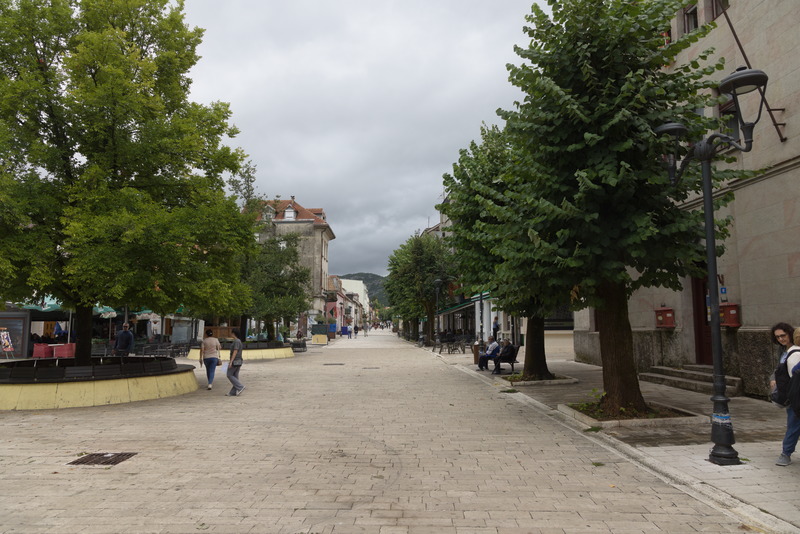
The town centre is mainly pedestrianised.
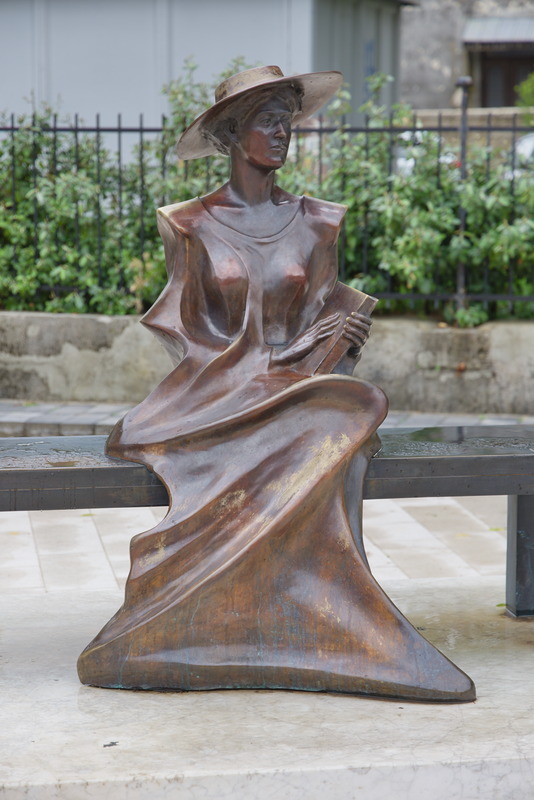
This is not Milly, this is Princess Xenia, who was born in the city in 1881 when it was the royal capital. Much of her early life was spent as the subject of public speculation about her potential suitors and rumours of marriage, but she remained single all her life, an intellectual and artist rather than the traditional unit of currency in international alliances.
And she was the first woman to drive a car in the Balkans according to the US Embassy website!
If searching for more information online, do be sure to distinguish Princess Xenia Petrović-Njegoš of Montenegro from Princess Xenia Georgievna of Russia, and especially Xena: Warrior Princess.
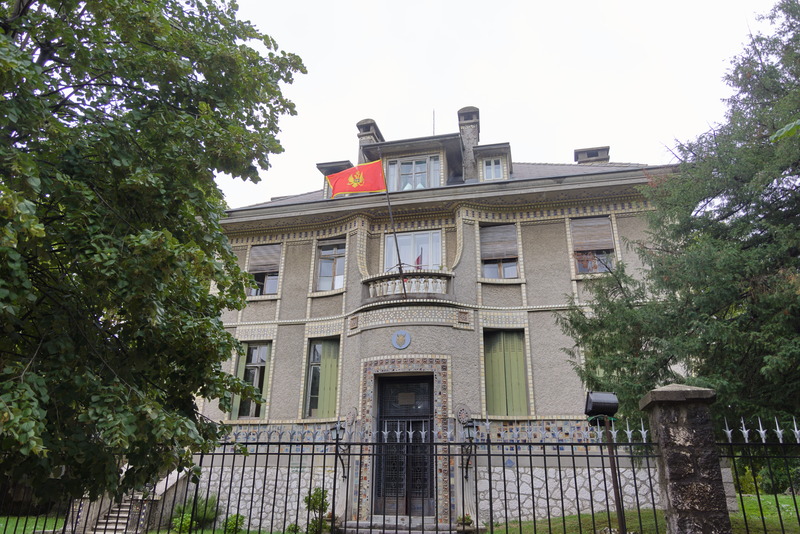
As the former capital, the city has a lot of fine architecture. This, for example, was the French Embassy, now used by the National Library.
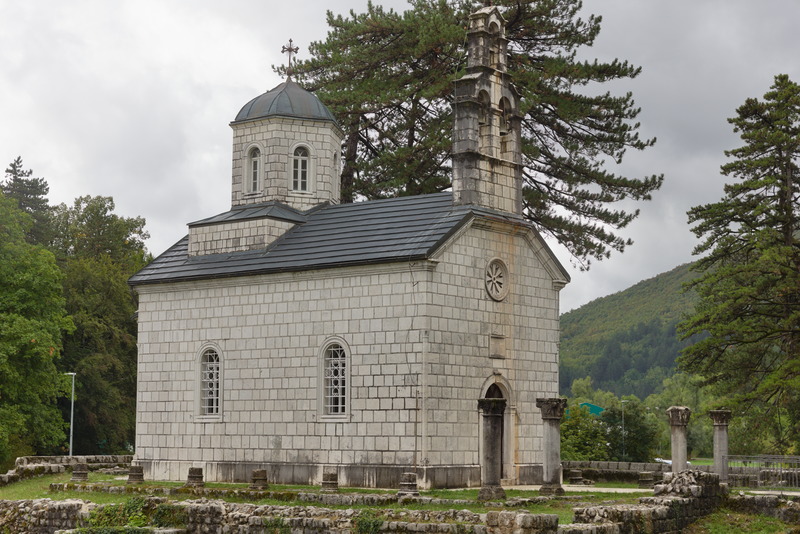
This is the "Court Church", the Serbian Orthodox church where Princess Xenia is buried, built on the site of a former monastery. Curiously, there's another nearby church which looks absolutely identical bar the hexagonal tower, the Vlach Church. Nothing I can find on the web even mentions this similarity, let alone explains it. The latter church originally dates back to the 15th century but was rebuilt in its present form in 1864, while the former is from 1890, so maybe a deliberate copy.
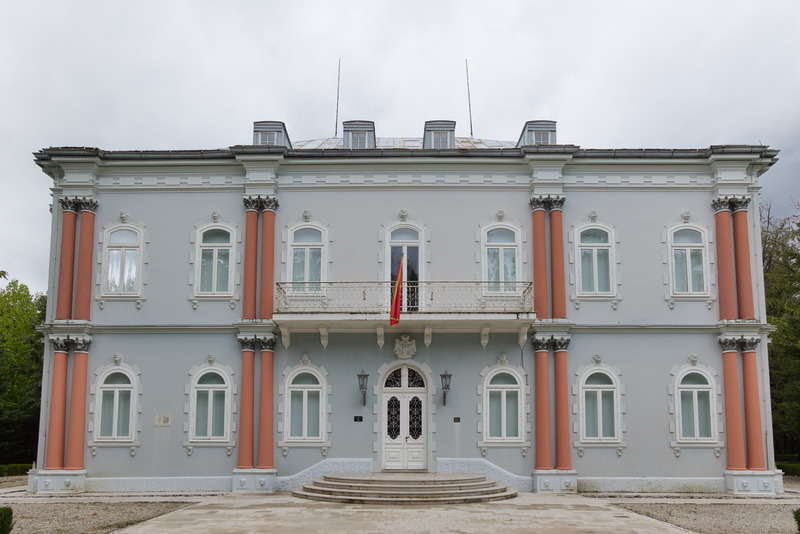
This is the "Blue Palace", and I agree you could be forgiven for thinking it's not very blue. It looks a good bit bluer in a photo on Google Maps, but that was taken in 2019, so the paint could well have faded a bit though it was still pale even then. It's the official residence of the President of Montenegro, but I don't think he's at home today. The sentry boxes outside are both empty, and everything looks a bit shut up and lifeless.
Slightly surprisingly, I don't have a picture of Milly. She's been an excellent guide and given us lots of information about the locality and the people in a short time. Mind, she herself admits to being one of the top local gossips who knows everything about everyone's business!
Back in the bus, on to Lovcen National Park where the itinerary said we'd be walking an old military road into Kotor but it seems we're doing something a bit different, hiking up to a mausoleum at the top of a hill with interesting history and amazing views.
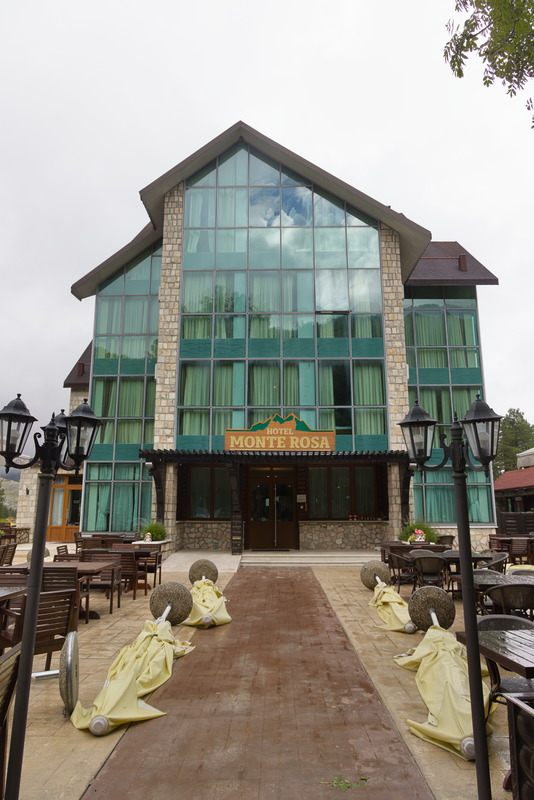
We'll start walking just across from here, but first we'll have lunch. The original plan called for packed lunch but it's been changed to the restaurant here, and sadly it's not a change for the better. Dry overcooked trout is not a good thing.
It starts raining quite heavily, and we're not sure whether we'll be walking or not, but by the time we've had coffee it seems to have stopped so we'll take our chances.
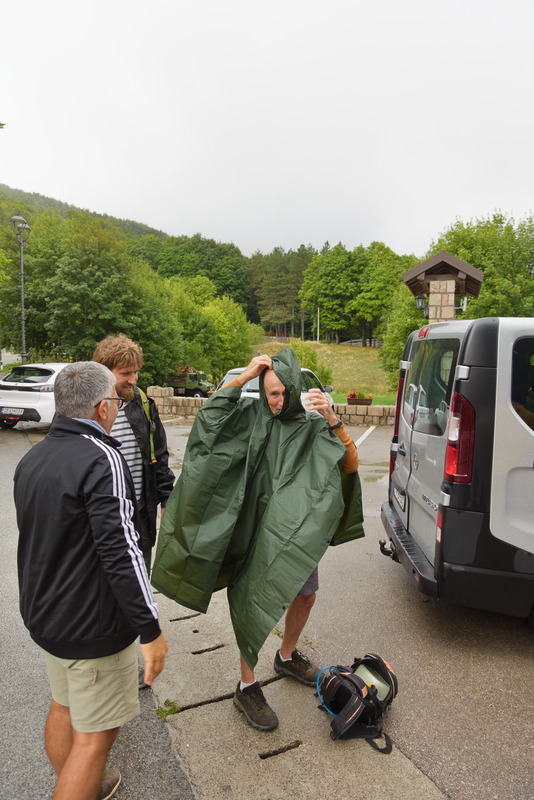
Not too many chances, though. In the car park we all put our waterproofs on before setting out.
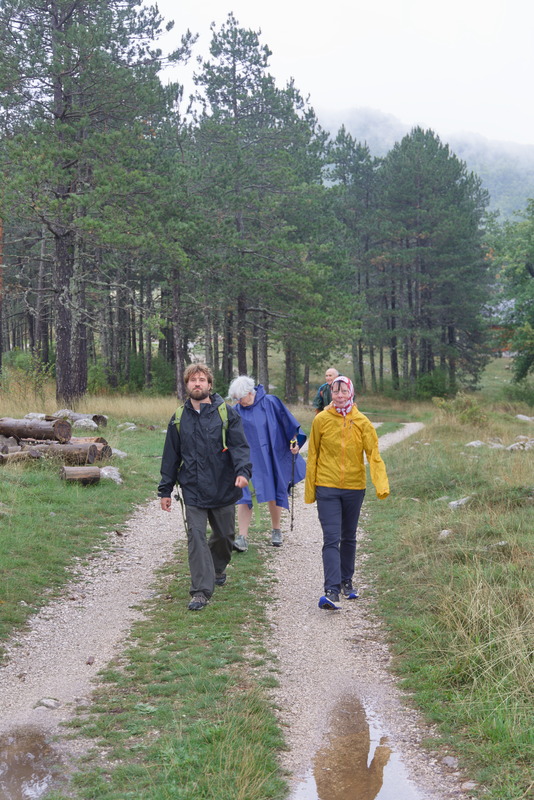
It's still not raining, though damp, and the walk starts off pretty flat.
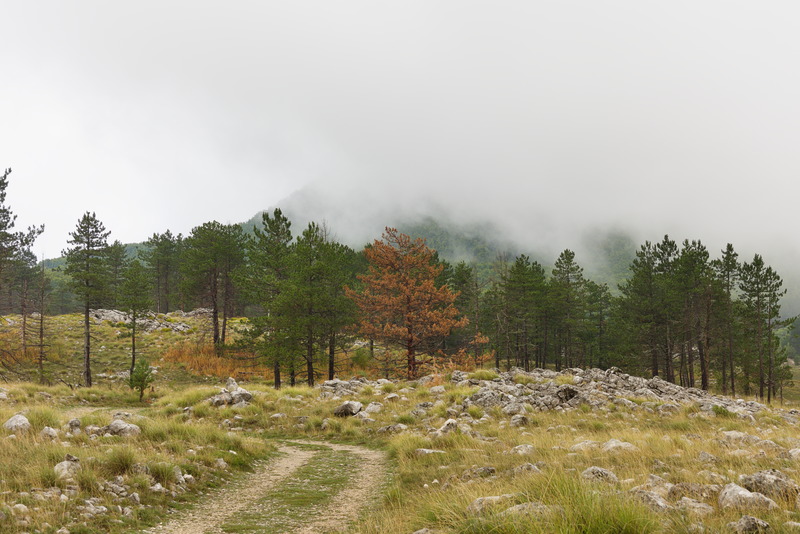
But we're headed towards that hill you can't see because of the clouds. It's not going to stay flat, that's for sure.
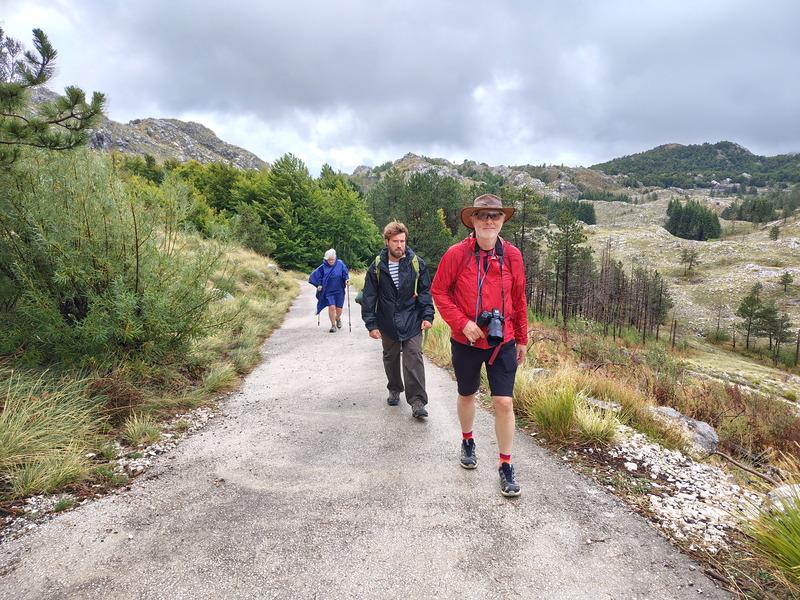
Strangely enough, as we start to climb the road goes from gravel to tarmac for a bit.
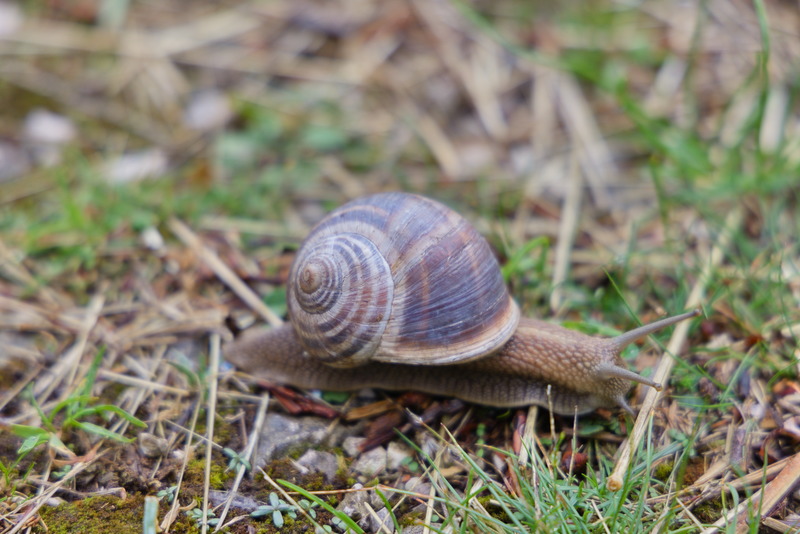
We start seeing loads of large snails with colourful shells. Marko loves them, and so do I, so we both take many pictures of them. I have a suspicion that Peter and Thérèse probably think us odd.
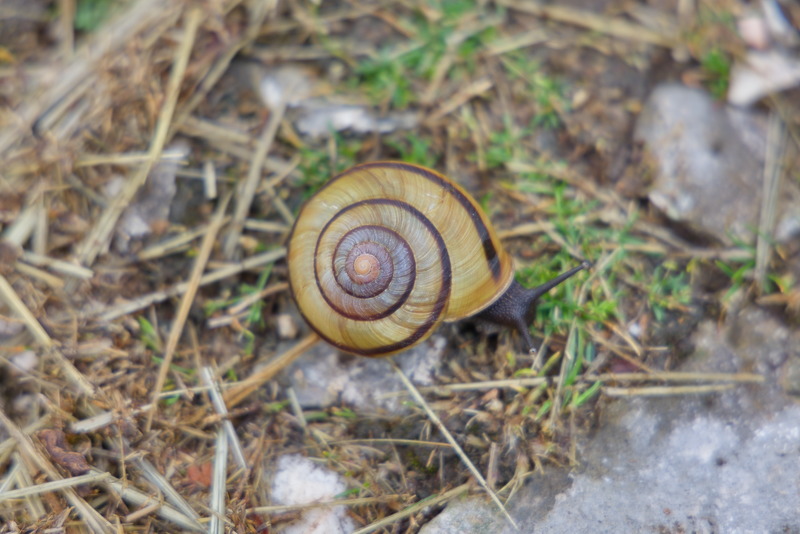
They get better.
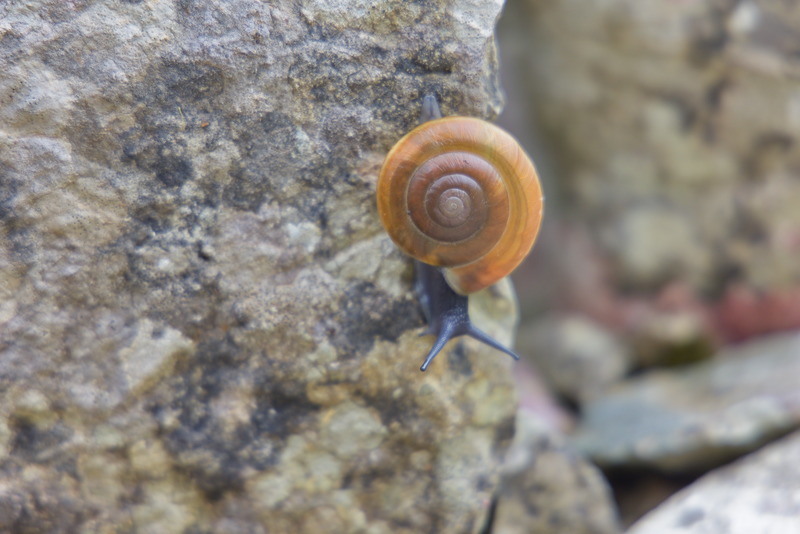
Ok, maybe we are a bit odd. But come on, they are brilliant snails, aren't they!
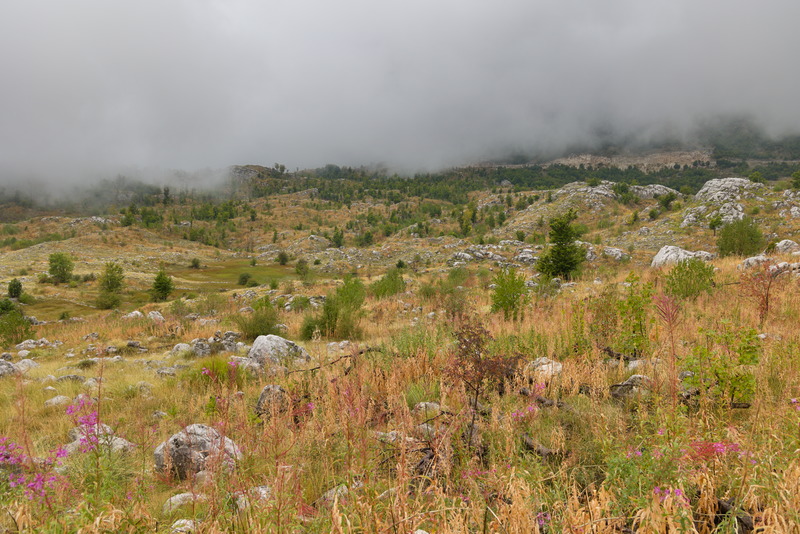
Nearly in the clouds now.
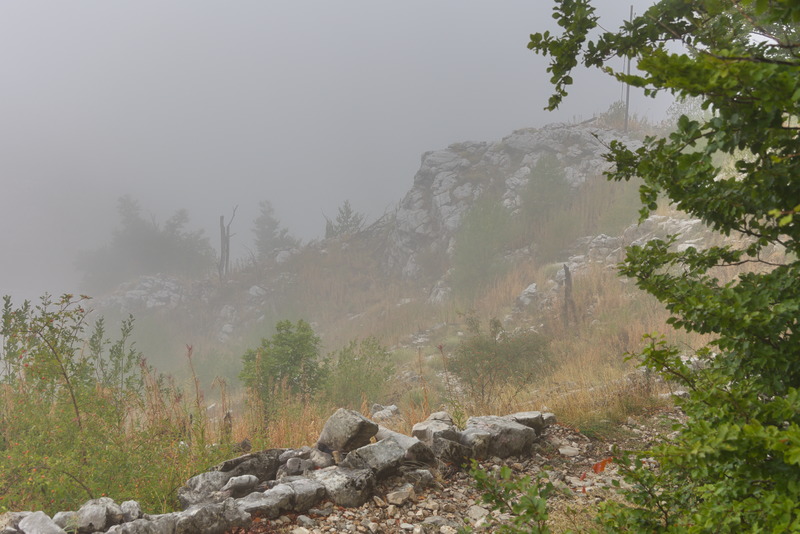
Definitely in them now. After this it gets a bit murky to be worth taking any more pictures for a while.
Not far from here, we reach a road where Dasha is waiting. Thérèse gets on board for the last part, but we cross the road and continue upwards on foot. Our destination isn't that far now. We meet again at the mausoleum car park.
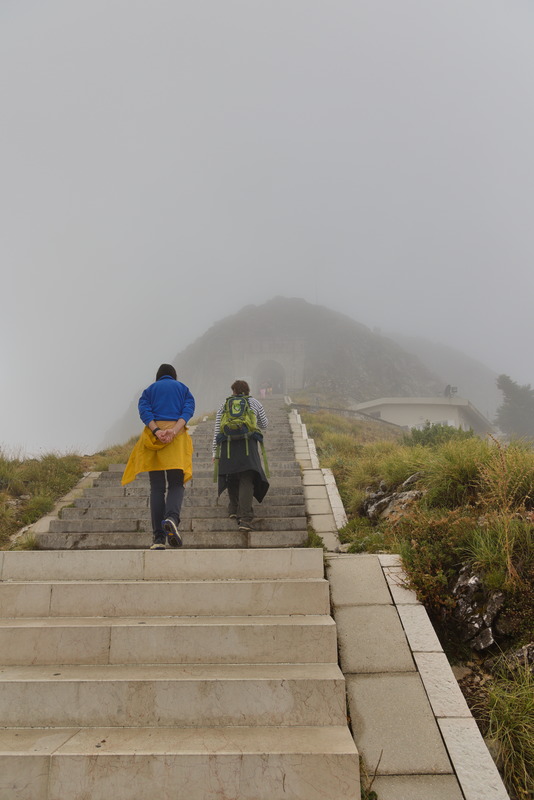
For the Led Zeppelin fans: a mashup of "Stairway to Heaven" and "Misty Mountain Hop"!
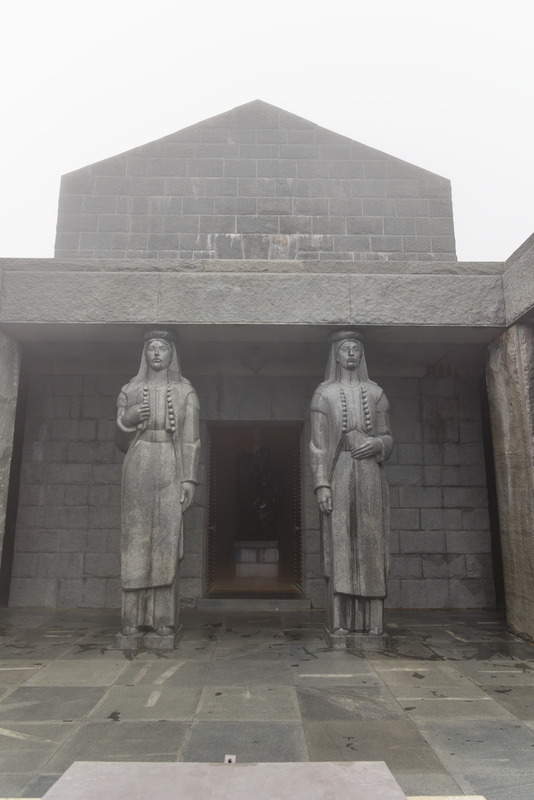
Reminds me a bit of Egypt. I don't know whether it's meant to be a deliberate reference or not.
Wikipedia says:
Petar II Petrović-Njegoš, commonly referred to simply as Njegoš, was a Prince-Bishop of Montenegro, poet and philosopher whose works are widely considered some of the most important in Montenegrin and Serbian literature.
And the official museum website says,
On the occasion of the centenary of Njegoš's death, in 1951, the Government of the People's Republic of Montenegro made a decision to erect a mausoleum in Lovćen, in honor of Petar II Petrović, instead of the previous chapel. This monumental building was built in 1974 according to the design of the great Yugoslav architect and sculptor Ivan Meštrović.
Mind, I'm not too sure how trustworth this website is: consider the following screen capture from the "Conditions" section on that page.

No, I haven't the foggiest notion what happened there! The same text appears for the other subsections entitled "wireless coverage" and "conditions for people with disabilities".
I am open to suggestions.
And yes, as the attentive will have noticed, his surname is the same as Princess Xenia's: the House of Petrović-Njegoš was Montenegro's ruling dynasty from 1697 to 1918, and they still have semi-official status today.
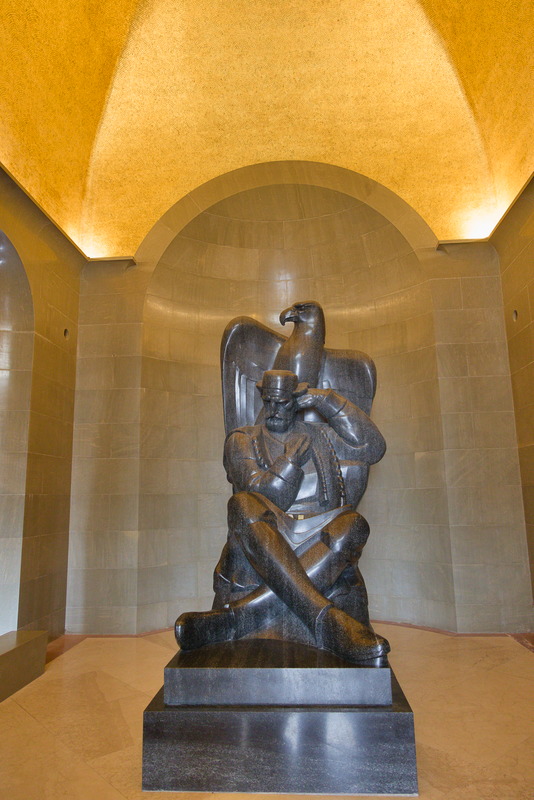
This is what is through the door. The gold ceiling is made up of tiny mosaic tiles.
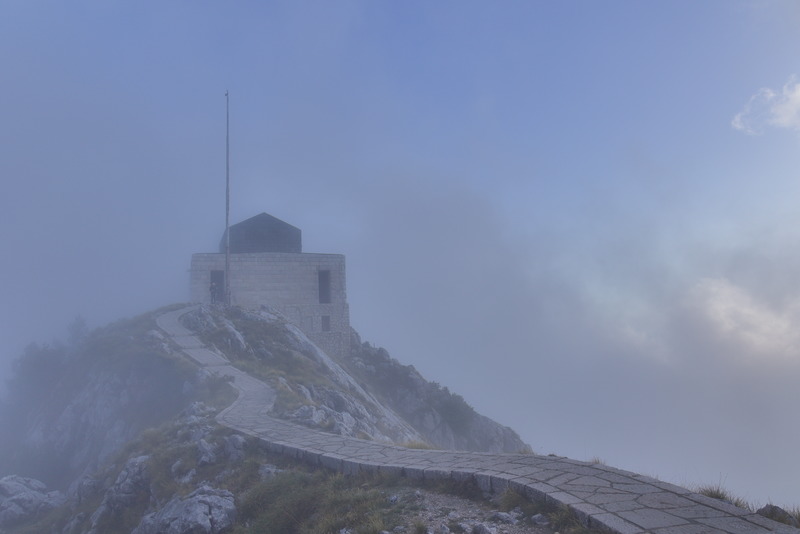
Continuing past the mausoleum the path leads you to a viewpoint, although the view is a bit obscure right now.
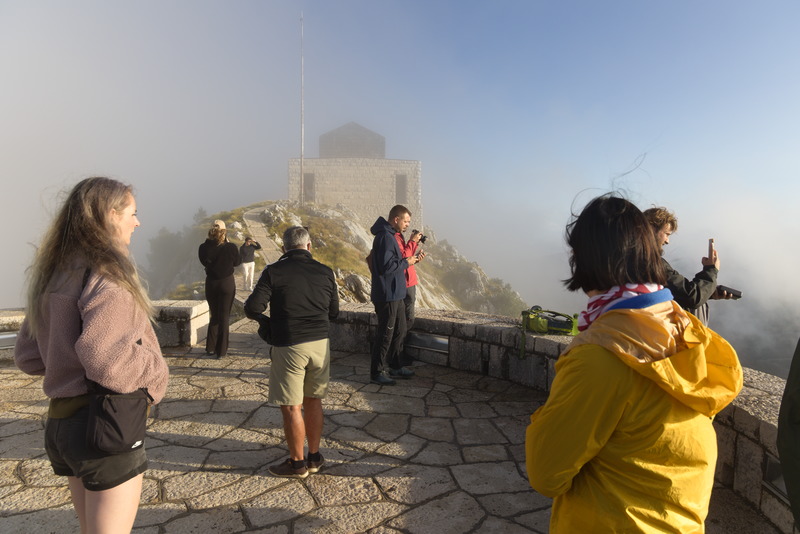
It's quite windy, though, so the clouds swirl around and come and go.

And when they come and go in just the right way, you see this! It's called a Brocken spectre, and it's basically your own shadow with the sun behind you and water droplets in the cloud creating a rainbow. It's not all that rare in mountainous regions, but it's not something we've ever seen before. As always, Wikipedia will tell all.
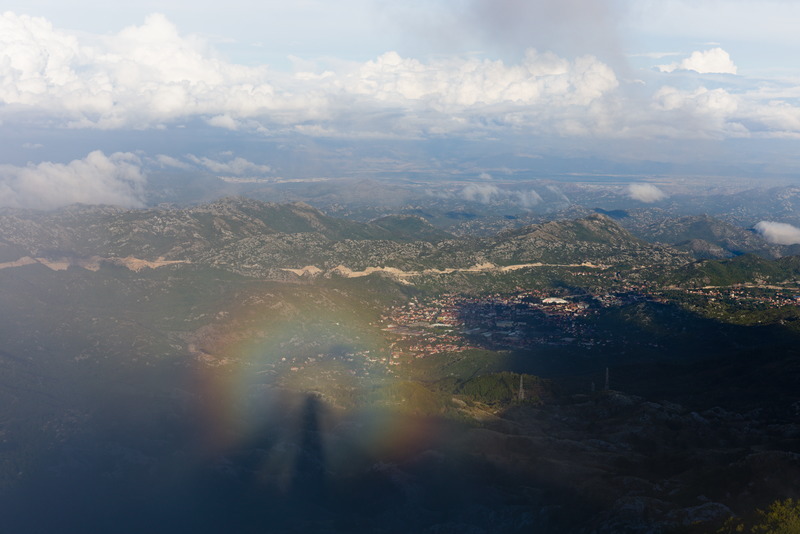
Here it is a few minutes later when we can now see Kotor down below.
Now we walk back down to the bus and drive the rest of the way to our hotel. The so-called Serpentine road has 35 hairpin bends and is very narrow in places.
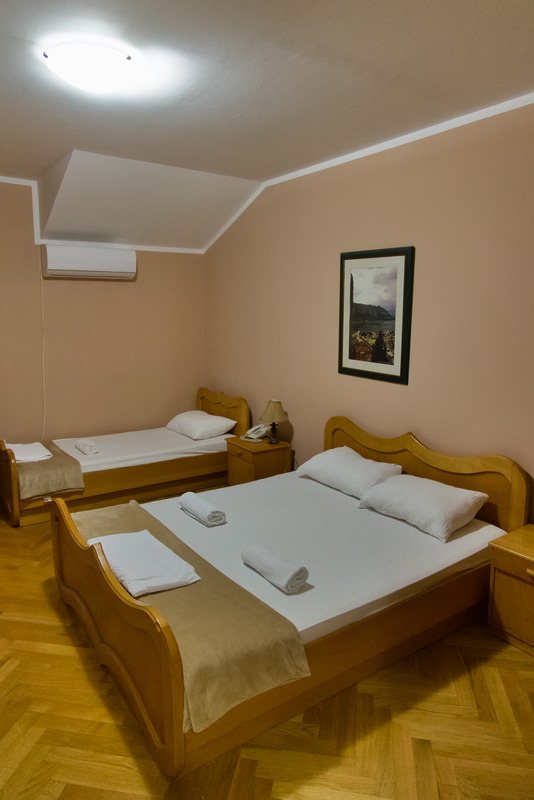
The room is a bit utilitarian, but it's fine. We're staying a little out of town, as the hotels in and closest to the old city are quite noisy and cramped, with tourists revelling into the night. We're going to eat in the old town tonight, so it's a short drive to get there.
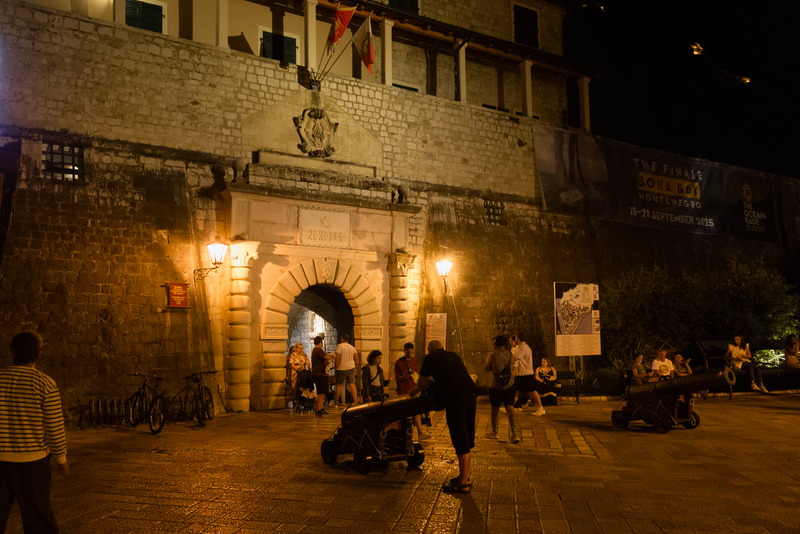
We walk into the walled city.
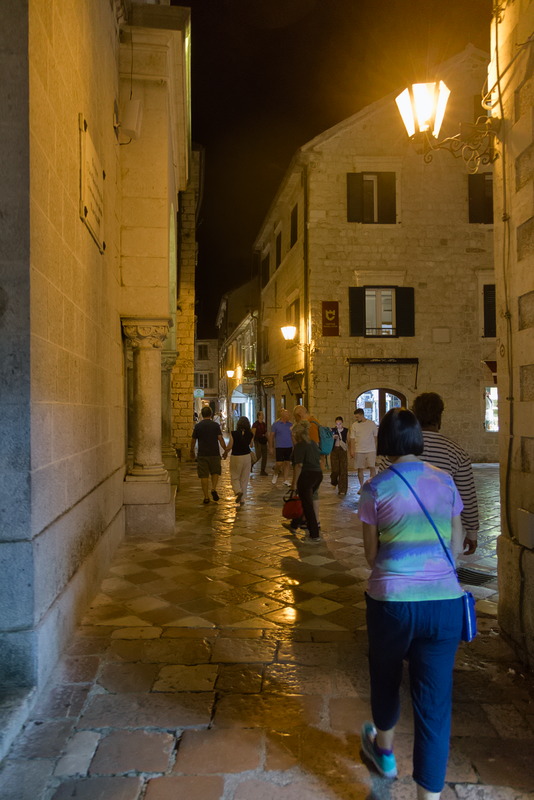
Very much the classic mediaeval warren of narrow streets. In hindsight it's interesting that not only are there no cars, there's very little in the way of street furniture and signage to detract from the appearance.
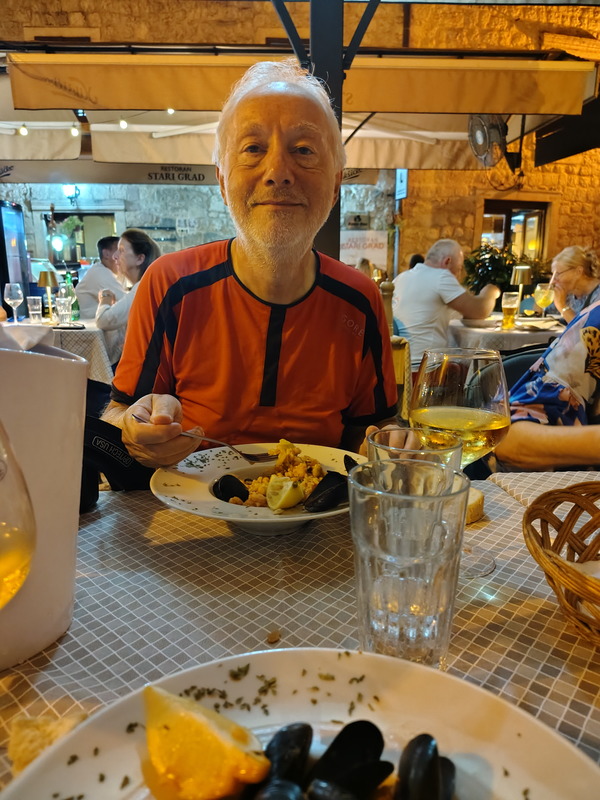
Dinner is a fine seafood risotto -- the Italian influence is strong here -- with a very decent bottle of Malvasia to drink. And at €25 for the bottle in a tourist trap like this, we certainly can't complain about the cost!
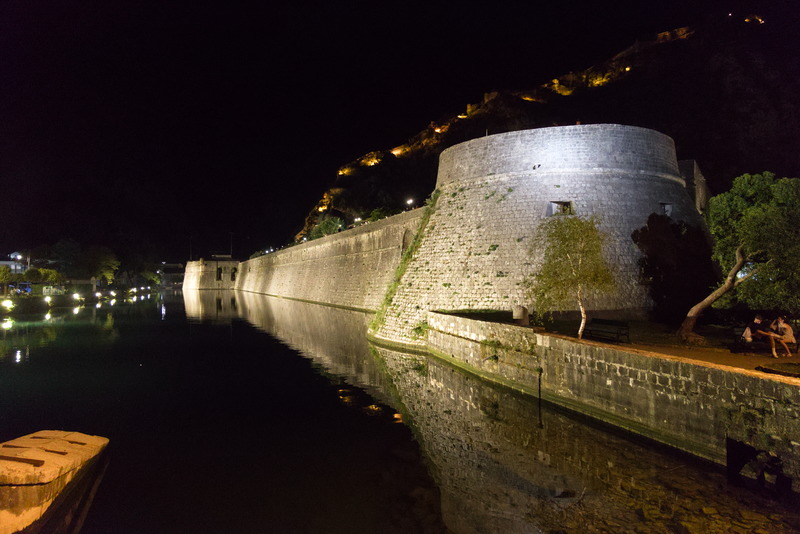
Rather than get the minibus back, we walk along the waterfront. After some rather mixed weather earlier, it's a fine and still evening, just perfect for a gentle stroll.
⬅ previous ⬆intro next ➡