That Wasn't There Last Time We Looked!
⬅ previous ⬆intro next ➡Day 6 ~ 20 May ~ Alqueva Lake
Today just an hour or two's sailing to Monsaraz, another mediaeval walled town that is a local must-see.We leave the empty pontoon and head off into the empty lake.
Not another boat to be seen? Well there's one in the distance, and it seems to be coming our way... It seems to be coming straight towards us... It is coming straight towards us: it's a small fast RIB and it's got “Police” written on it! They (politely) ask us to stop, and they come aboard. We show them our paperwork and they seem happy enough. They ask us in a pleasant conversational way if we're planning on doing any fishing, and it's only much later that we think maybe they are fishing for us to admit we will be doing so without a licence.
After a few minutes, they wish us a pleasant holiday and we go our separate ways. Perhaps with the lake being so empty, they just got bored and wanted to chat.
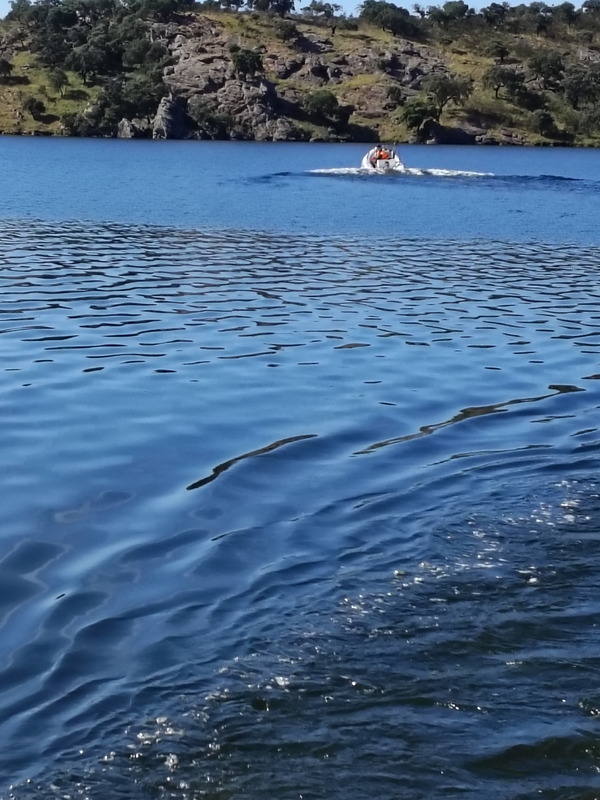
Amanda grabs a rather blurry digitally-zoomed picture of them when they are at a safe distance. It probably wouldn't have been very tactful to go snapping away at them when they were beside us.
But now I realise we've not had any pictures from inside the boat.
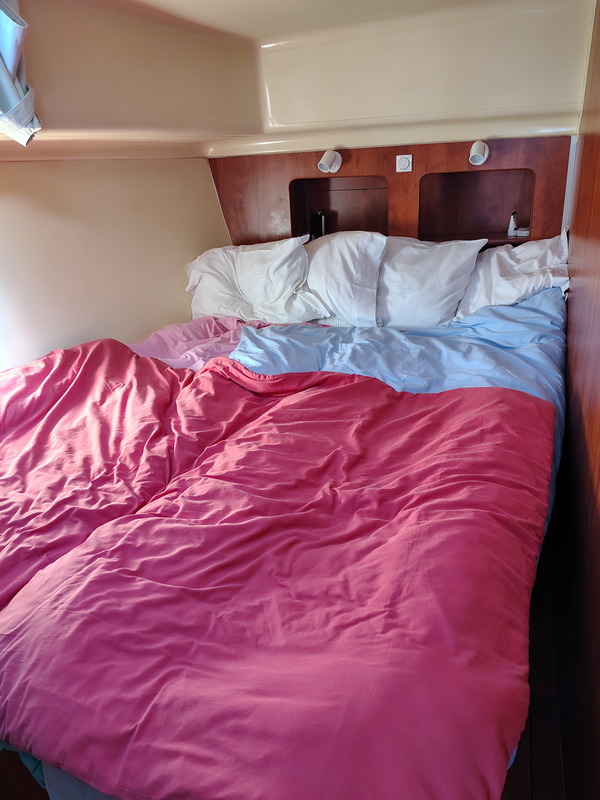
There are two cabins at the front, one either side. This, on the left (sorry, port!) side is where we sleep.
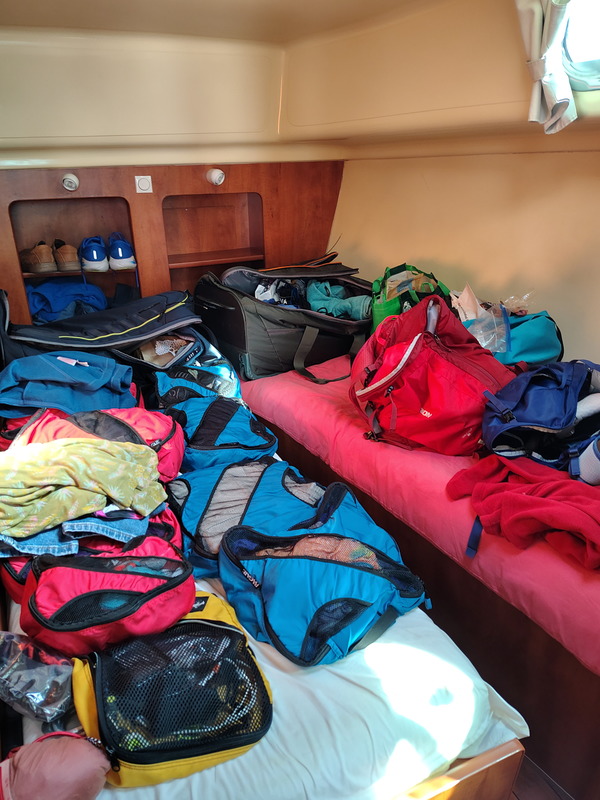
And here in the starboard cabin is our wardrobe.
There's ‘proper’ storage space of course, but it's always pretty cramped on a boat, just like in a caravan, so we always go for 4-6 berths to let us spread out a bit. The smaller boats can also be a bit lacking in other facilities too.
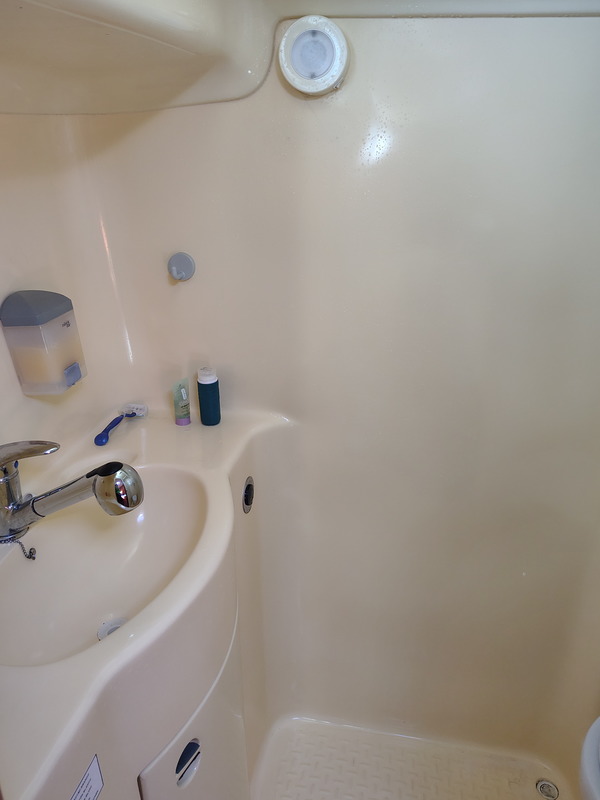
The tap heads extend on flexible tubing for showering, and the whole bathroom/toilet cubicle is essentially a tiny wet room. Having one per cabin, we can dedicate them to different purposes so you don't have to sit on a wet seat when you need to go!
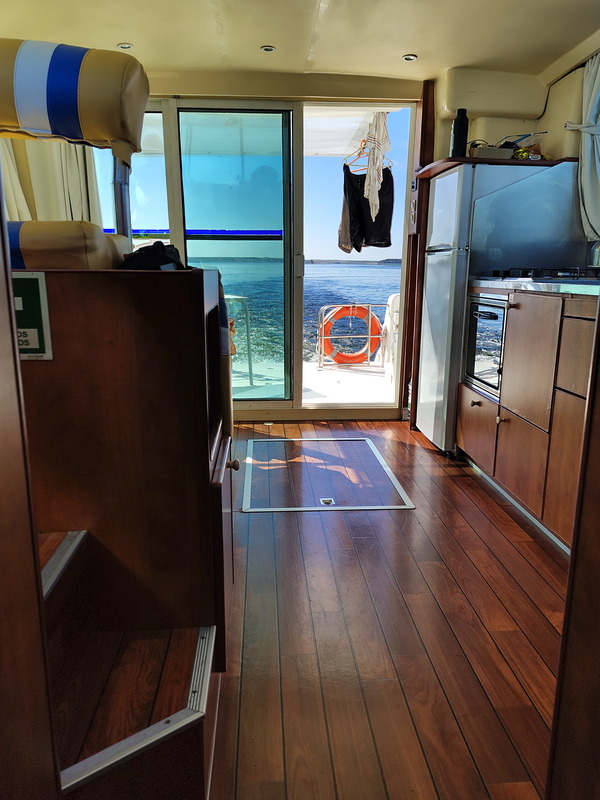
Looking back from the cabin area into the living space. As well as the full-size fridge-freezer, we have an oven and a four-ring gas hob: that's better than we had in the apartment when we stayed in Hobart!
Then again, it looks like the cooking facilities here are maybe a bit more necessary than in Hobart. As I mentioned, the villages we've seen so far have been pretty empty and we get the impression that there aren't too many restaurant options. Our info pack from the boat company mentions a few possibilities, but recommends phoning to check first, and we suspect it's now too late in the season for most of them.
What we also haven't seen, which is a bit more of a surprise, is local village markets where we can buy local produce. Our reference points for this type of holiday have been exclusively French to date, and cooking what we've bought from the market that day has always been something we've enjoyed. Monsaraz seems to be a bit more of a place, though, so we shall see what we can find there.
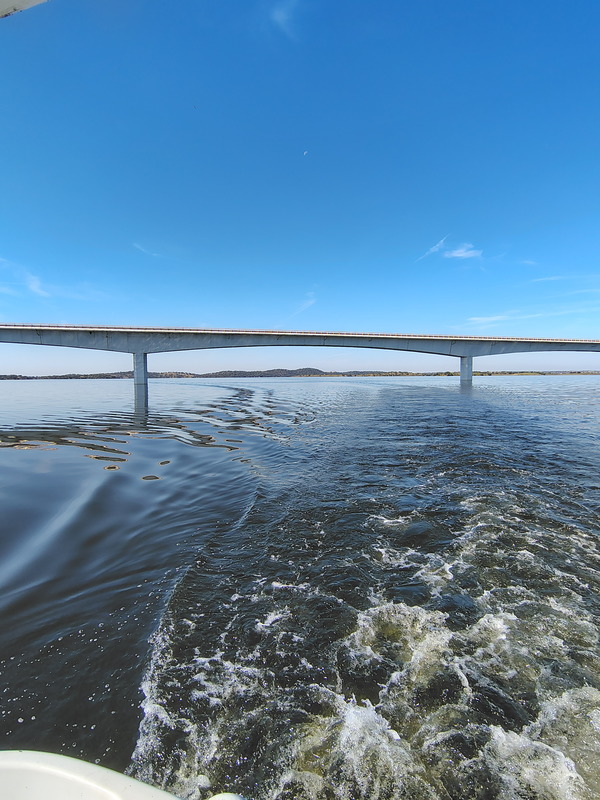
Bright blue skies and utterly still water; we are alone again and our boat's wake is the most disruptive thing for miles.
We've just passed under the bridge that carries the only road linking the two sides of the lake. The map shows minor roads ending at the lake shore which would once have continued into the river valley, and then maybe to some smaller bridges, but no more. Further up, the lake and the river form the border between Portugal and Spain, so there would probably never have been many crossings anyway.
On the subject of Spanish waters, we have been told we can cross the demarcation line with no problem, but shouldn't spend a night on the Spanish side.
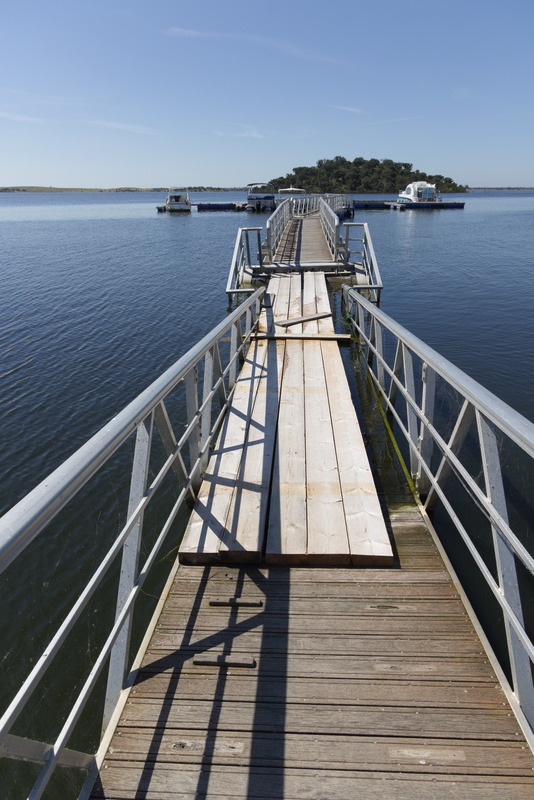
Gosh! Look back at the pontoon, count the boats!
While this is by far the most we've seen since leaving the dam, it seems pretty clear that the other three are locals, not tourists like us. Two of them look semi-permanently parked, covered against the elements.
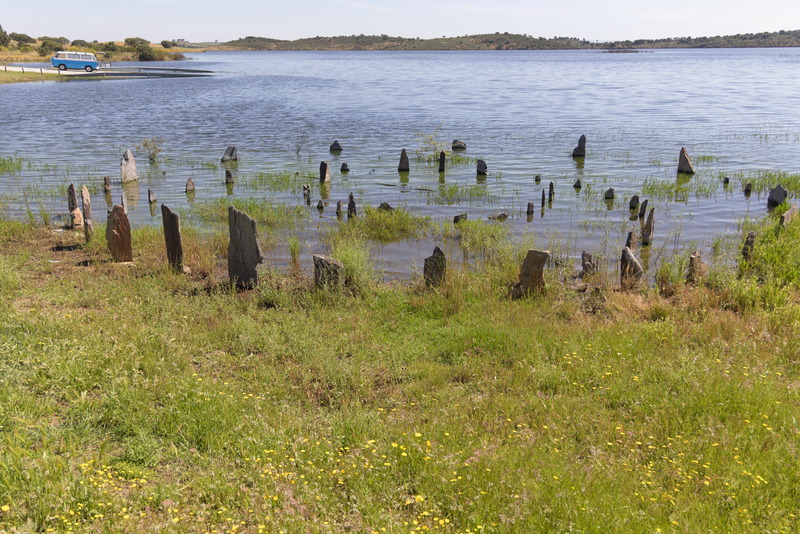
You could be forgiven for not realising that this is an artwork. It's echoing the neolithic stone circles which are to be found in the region.
(Oh, and note the VW campervan in the backround: we are clearly no longer in post-apocalypse world.)
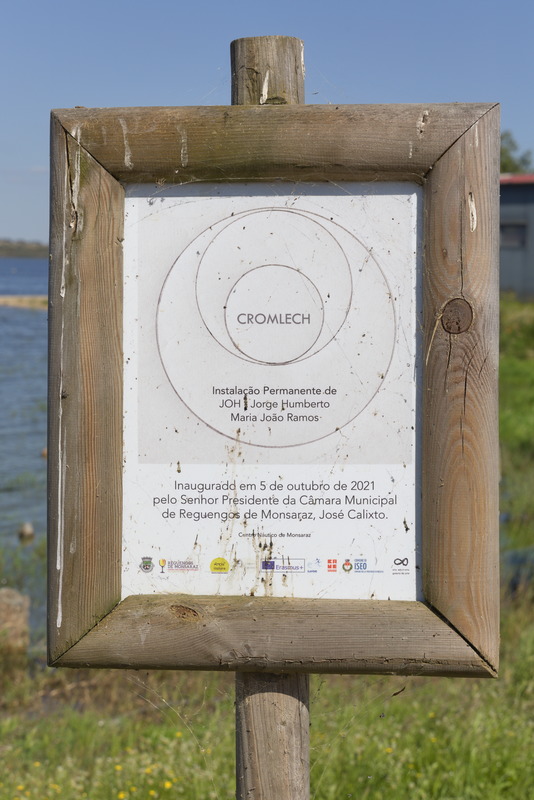
To be fair, we might not have realised it was an artwork ourselves without this subtle clue.
“Cromlech” is a curious word: originally from Welsh crom (“bowed, arched”, feminine of crwm) + llech (“flat stone”) and used to mean a dolmen or megalithic stone tomb, it's become extended to include stone circles in English, and thence adopted into other languages with only the latter meaning. The Portuguese word is actually cromeleque, and there's an important local one which was moved from its now-flooded original location and reconstructed. Possibly wrongly reconstructed according to Wikipedia! See the Xerez Cromlech [Cromeleque do Xerez] page. We'll visit it later.
There's a castle here too, but it's all a bit of a way, so it's time to break out our bicycles! They are not, shall we say, the most exotic specimens ever seen, but hopefully will do the job.
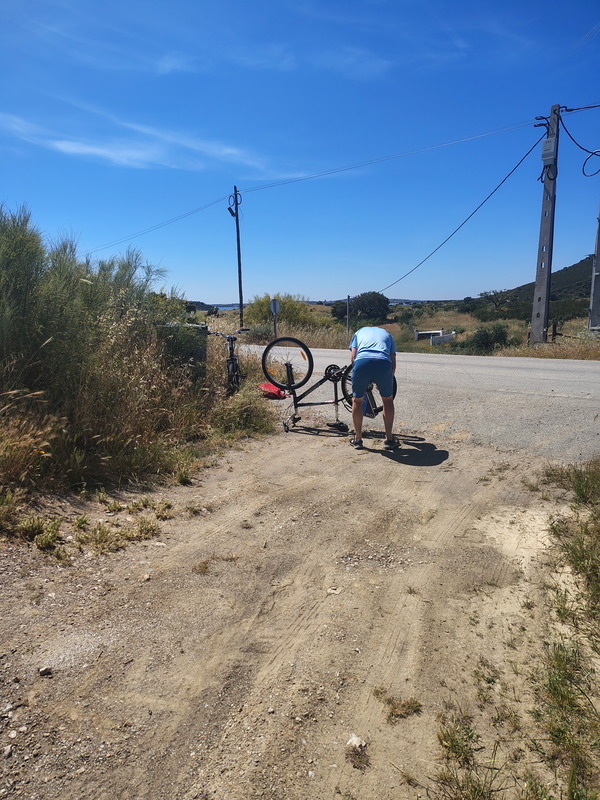
Ah. Amanda's bike turns out to have pretty knackered gears, and I have to do some emergency maintenance. I don't have all the tools I need, and even if I did, the mechanism is (to use the formal technical term) shagged. But I can fix it to the point where she has a low enough gear for the hills, even if she'll be doing a mad hamster-wheel impression on the flat.
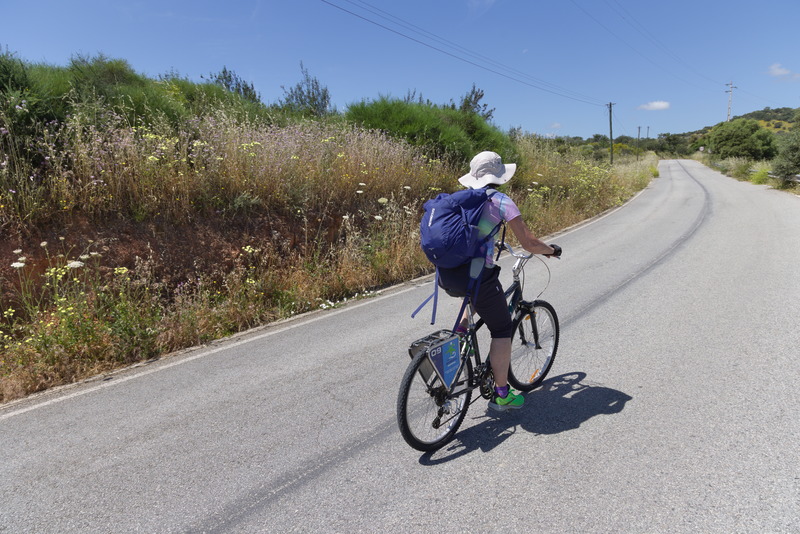
Yeah, not good, but it'll just about do.
If you've read our Girona blog, you may recall that the fancy road bikes Mark provided were enough to convince Amanda she needed to spend thousands of pounds on something speedy of her own: this is not such an experience.
My own bike isn't great, but at least it all works as well as can be expected.
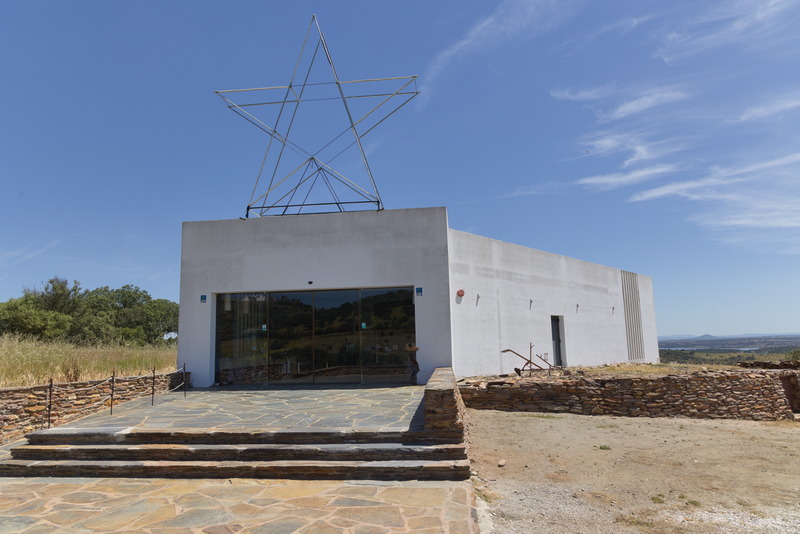
On the way, we pass the Alqueva Lake Observatory. It's all closed now, and as we've found is common, there isn't much English to tell us what's going on.
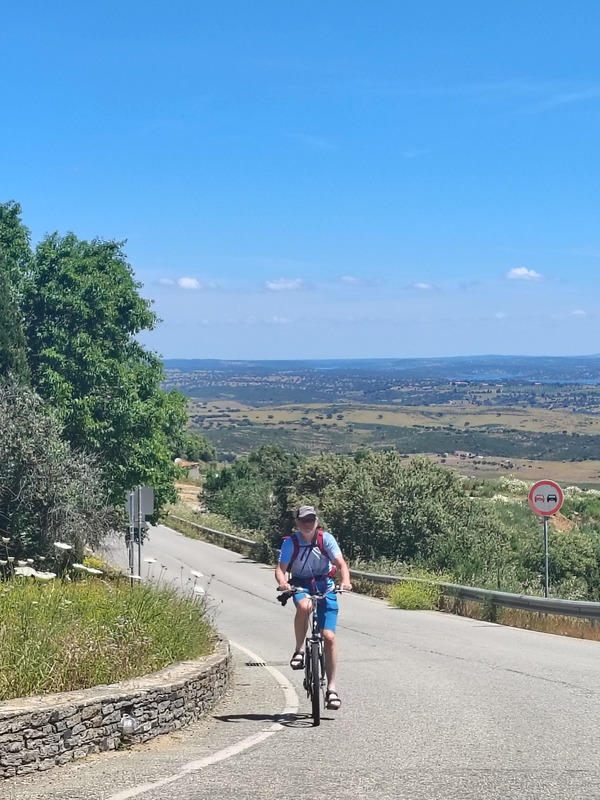
Nearly at the top of the hill and into the town.
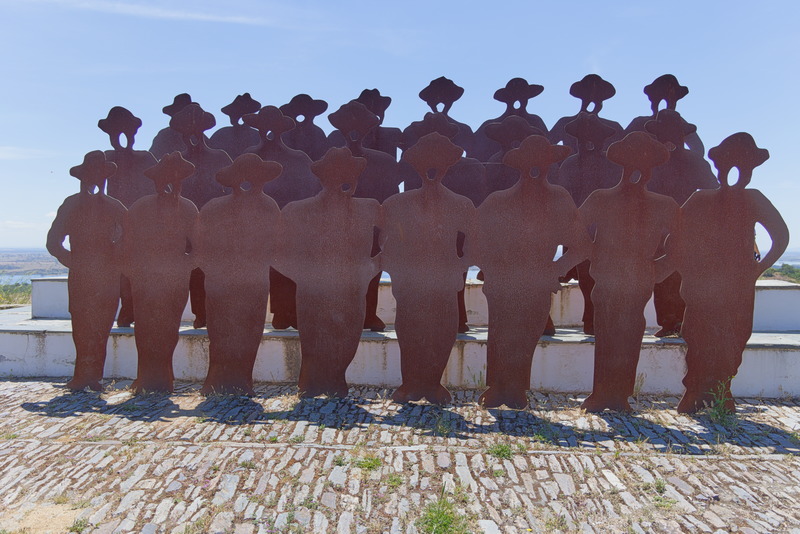
But first we need a deep meaningfully artistic moment.
This is the Monsaraz monument to the “Cante Alentajano”, a style of unaccompanied singing from the Alentejo region. I suppose it could be called “acapella”, except that Wikipedia tells us that, “It is said that the habit of singing without instruments was common in bull-herding as a means to coordinate efforts among the campinos”. Not really that churchlike.
It's right proper cultural, though. Unesco Intangible Cultural Heritage proper!
Pity we are so uncultured we just think “Ooh, rusty.” There are things Amanda and I understand in this world and things we don't, and why anyone thinks corten steel is a good idea is a prime example of the latter category. But just a mo... hmm... COR-TEN is a trademarked name dating back to the 1930s, when a tough steel which only rusted a bit but then stopped was a valuable industrial product. In many applications that's still the case today. Ok, I must clarify: why anyone thinks corten steel is a good aesthetic idea is beyond us.
We're just outside the mediaeval walls here, back on our bikes for the final bit of hill.
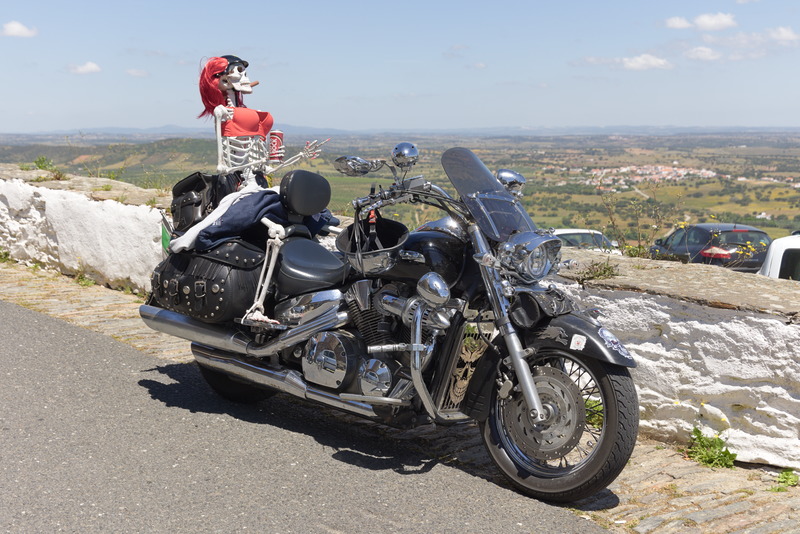
At the top we find some folk who've needed bikes with an engine to get up here, and I think it's clear that anyone that wimpy is never going to get a real girlfriend.
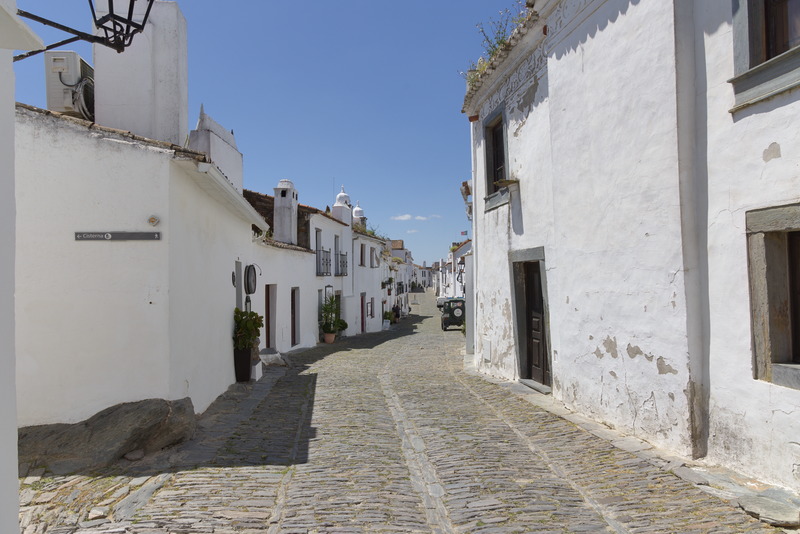
Another ghost town?!
No, not quite, there are other tourists to be found, and there are shops and bars catering to tourists, but it's still not exactly busy.
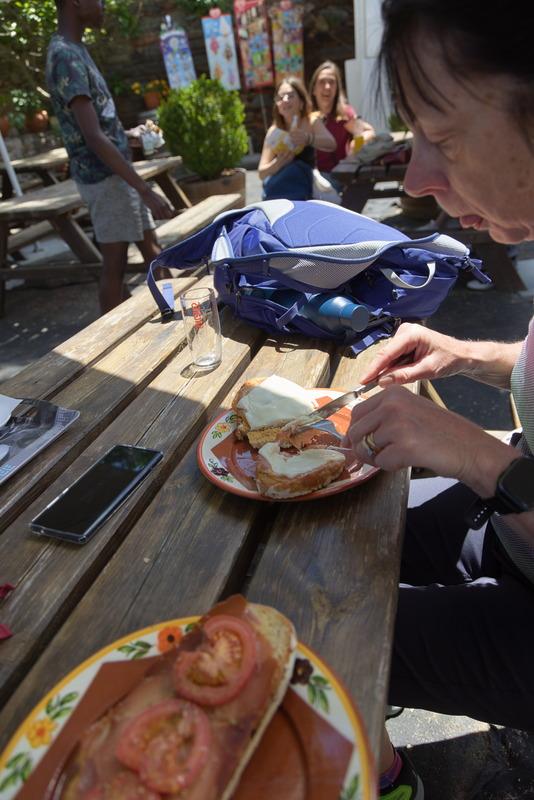
And to prove it, look, there are people in the background at the cafe where we are having some lunch.
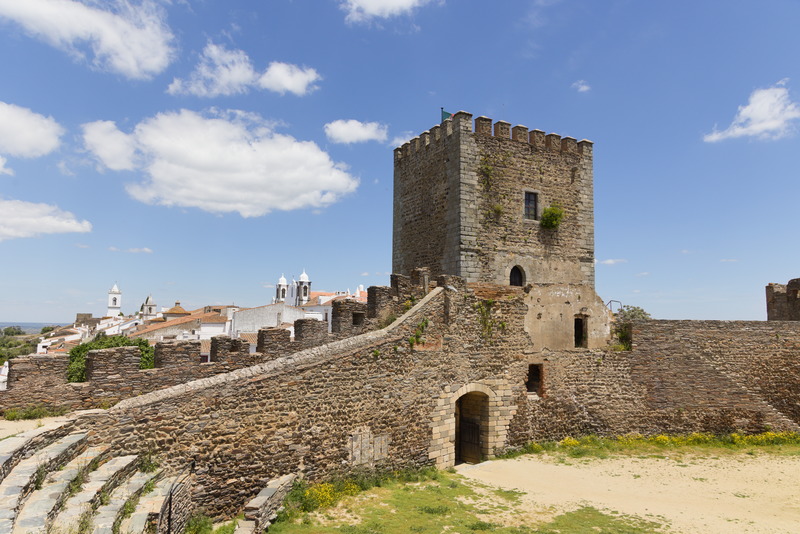
After lunch, we walk the walls of the castle.
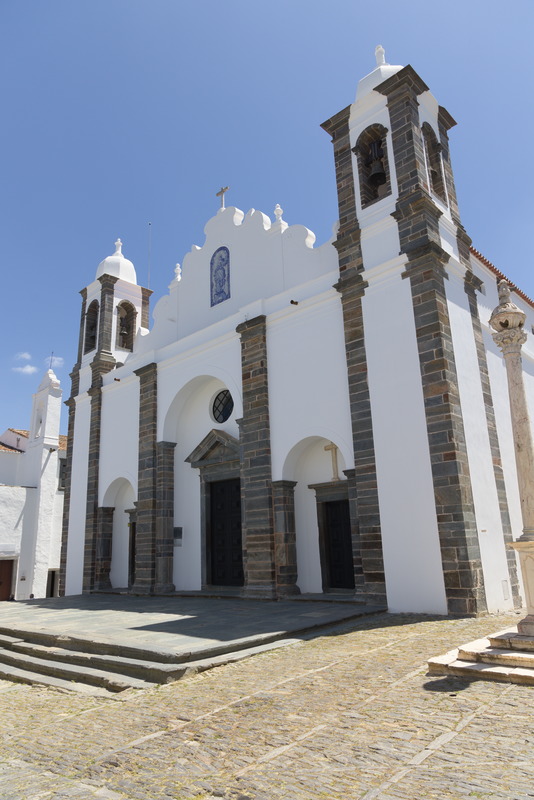
The Church of Our Lady of the Lagoon: presumably named for some historical water feature that predates the lake. Construction goes back to the 16th century, so it's unlikely that they would have been thinking of the Alqueva dam still half a millennium or so in the future.
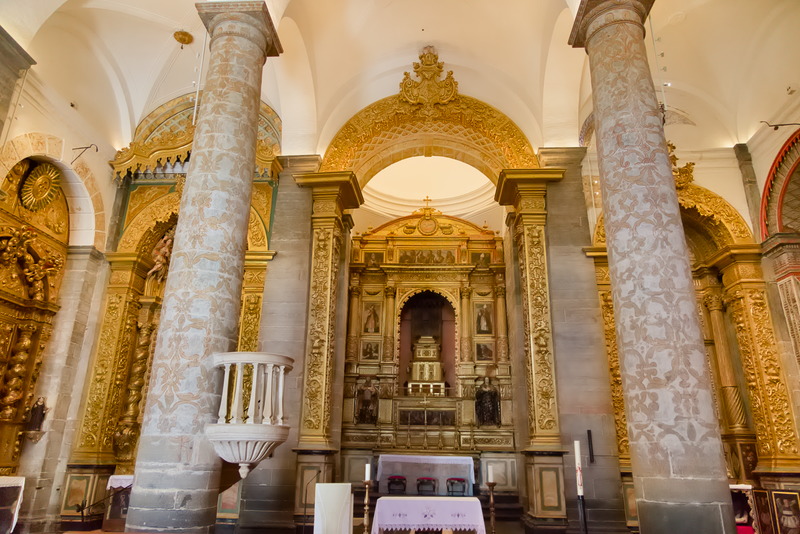
The blingtastic interior is very much at odds with the plain white plaster and grey brick outside.
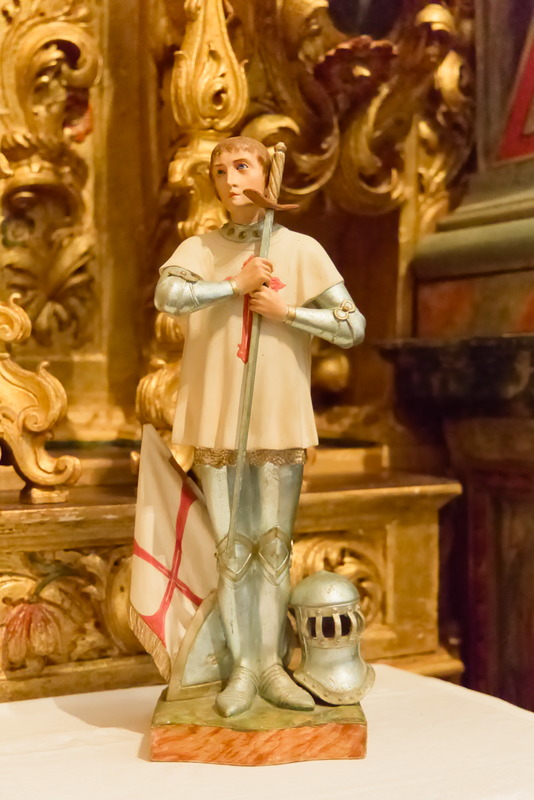
If he'd properly sharpened the blade of his sword, I don't think he'd be holding it like that.
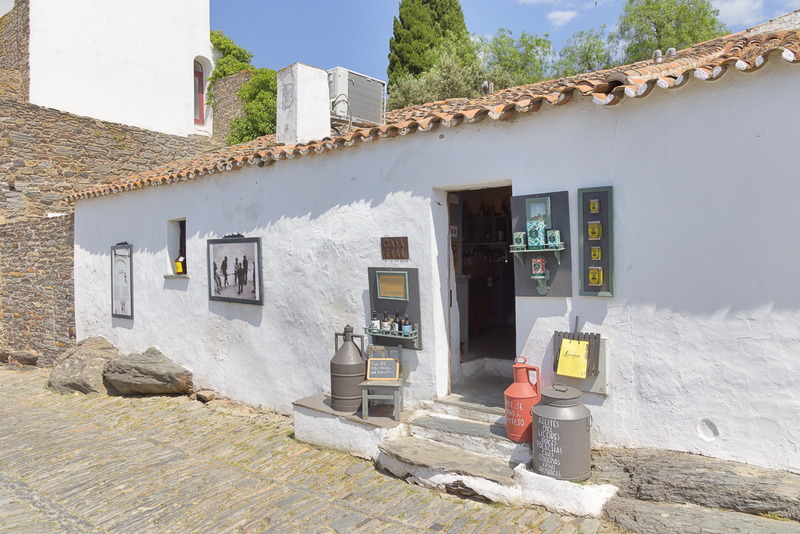
We do need to do some food shopping, but there's nothing like a supermarket or general store that we can find. This and another nearby place are good for things like wine, oil and other local products, and while we are adequately supplied with oil, there's always room for another bottle of wine or two.
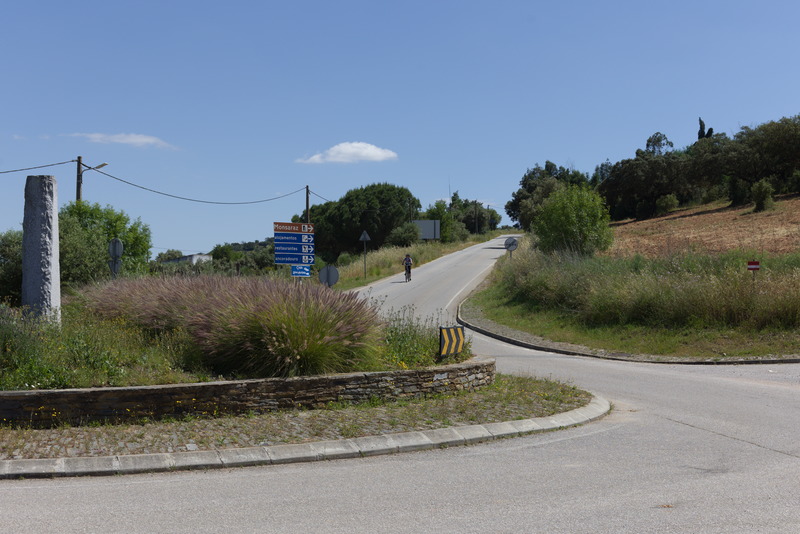
Amanda's flaky gears are much better for going downhill!
We still need to buy some proper food, so we're going to try nearby Telheiro where there is supposedly a supermarket.
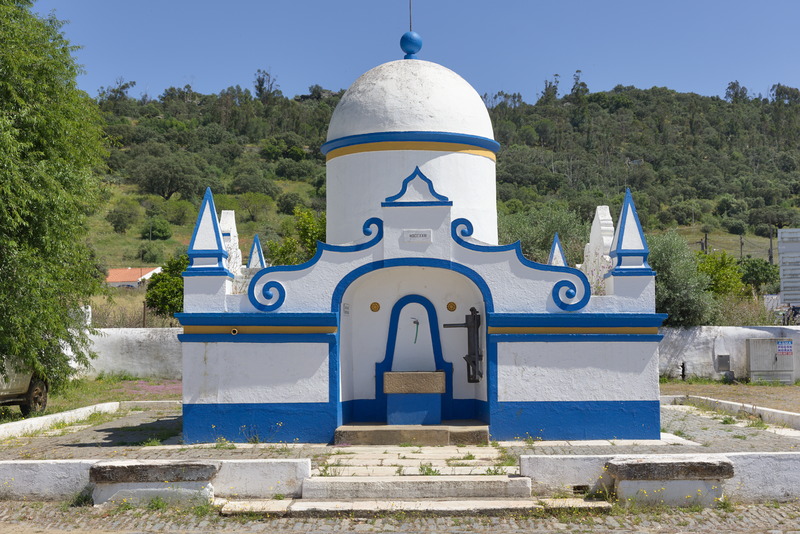
Now that is a water fountain! The plaque is a little to small to read here, but it says MDCCXXIII - 1723.
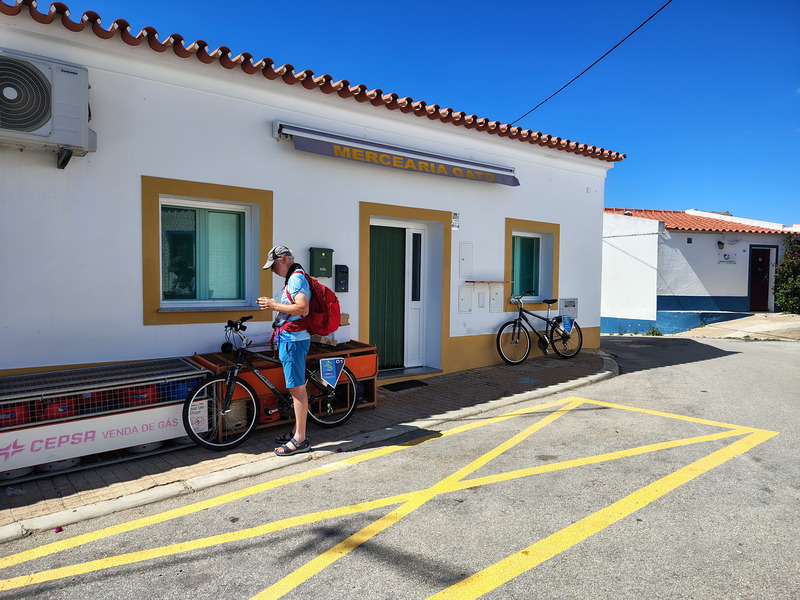
Aha, yes, the Cat Market has provided what we need to fill my backpack. It's not a particularly interesting place otherwise, so we'll start meandering back now.
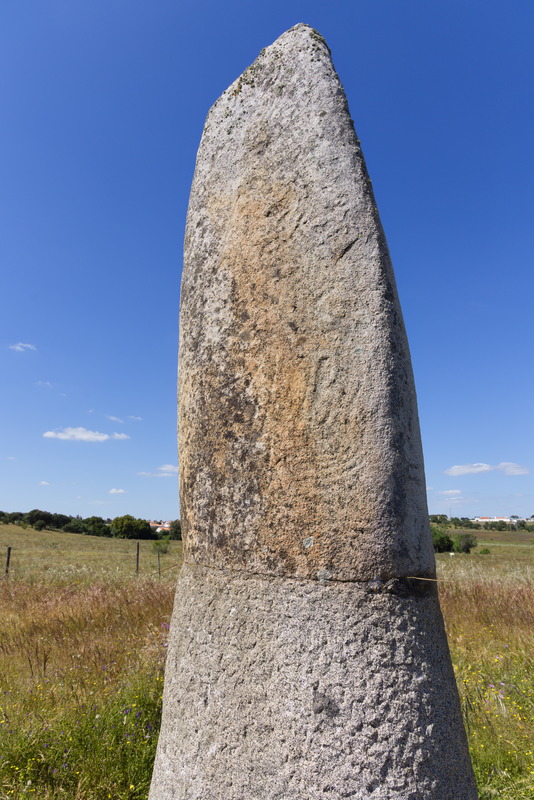
A little way off the road is another of these prehistoric standing stones, signposted “menir da Bulhôa”. It does look a lot like it's had a more modern repair with some cement or concrete, though. Ah, as with most things round these parts, the information online is a bit sparse but does exist. Its estimated age is from around 2,500 to 4,000 years old, and it was first identified in 1970 when it was found lying flat. Re-erected it's nearly 4m high. It's not known whether the engravings are original or later additions.
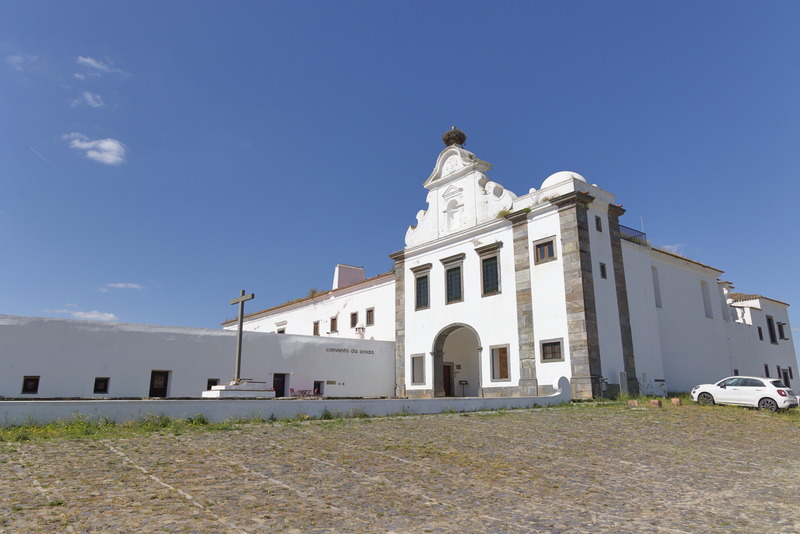
Looking for another megalith, we miss a track and find ourselves at the Conventa da Orada, which is no longer a convent but now a hotel. The website tells us, “The Convent of Orada was built between the years 1700 and 1741 and housed the Order of the Discalced Augustinians until the beginning of the 19th century.” (‘Discalced’ is a word we should use more often, don't you think?)
And do note another giant stork nest on the top.
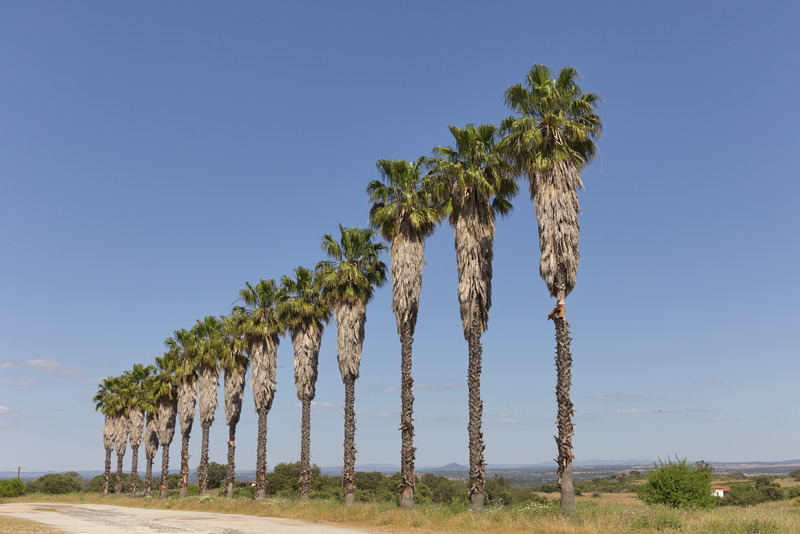
Sadly I'm quite sure that these don't fold down to clear the way for Thunderbird 2 to launch. You don't know what I'm talking about? Watch this clip from YouTube. Sixty - sixty! - years old now!
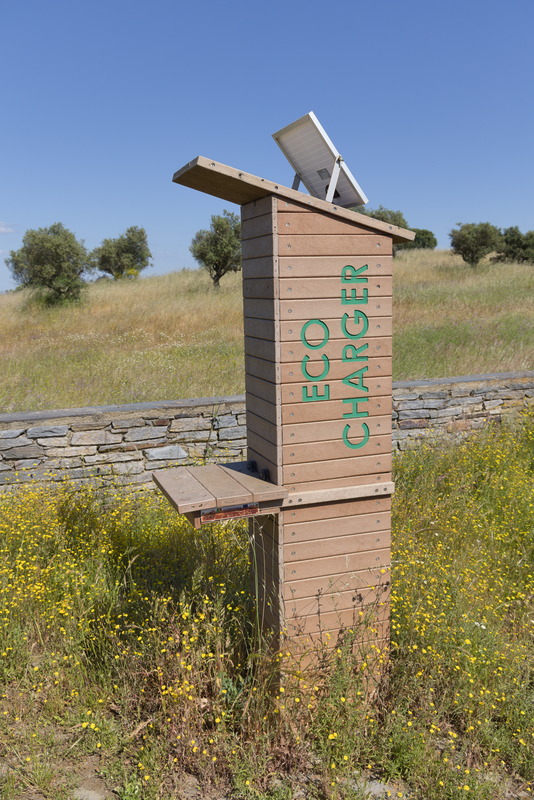
So if you are walking by the side of the road leading to the hotel and suddenly realise your phone is in need of a charge, your prayers have been answered (so long as you have your own USB cable with you). We have never seen anything quite like it.
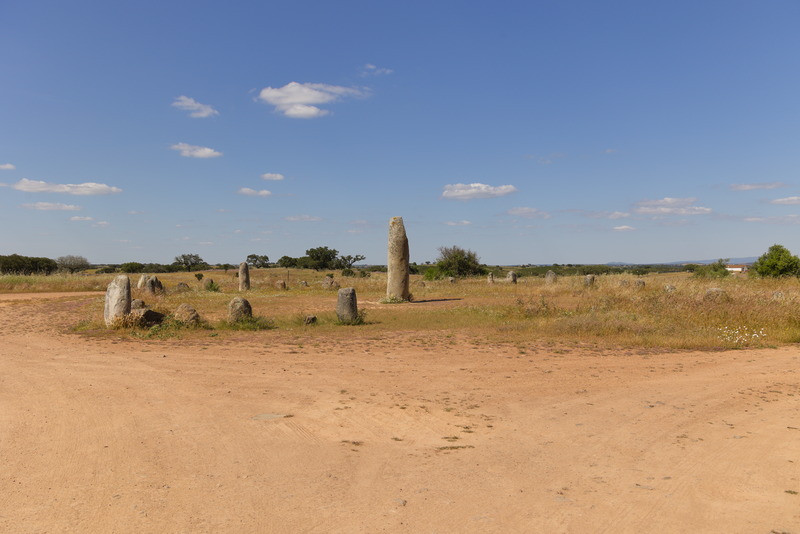
But this circle (which is actually a square, possibly wrongly reconstructed as mentioned earlier) is what we came to see.
I'm pretty sure we've never been anywhere remotely as well-endowed with megaliths round every corner.
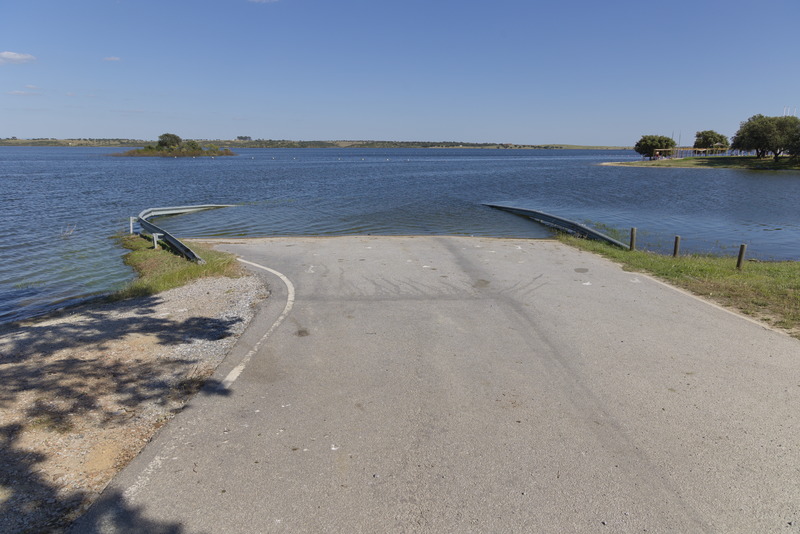
No, you didn't see this picture earlier. This is an entirely different road that disappears into the lake.
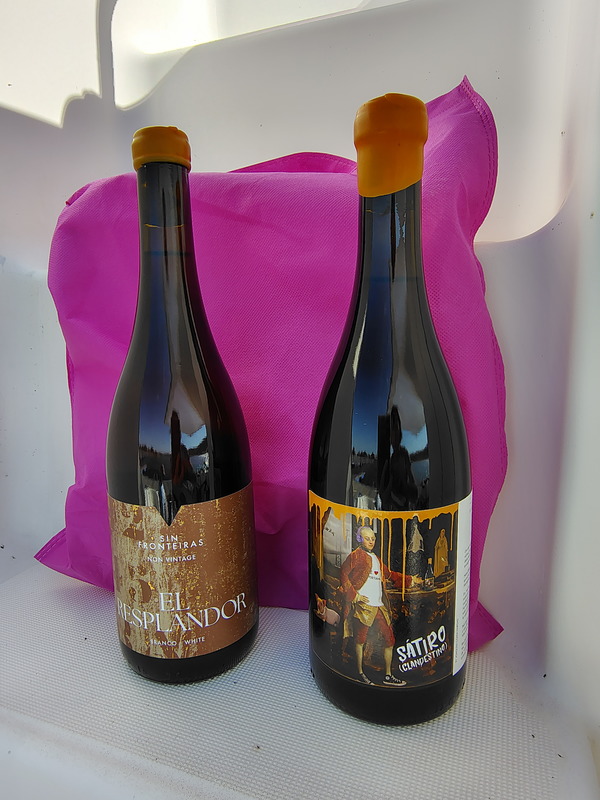
Back on the boat. These are wines we bought earlier, with the rather splendidly coloured canvas bag we were given. Worth it just for that! These bottles were around the €20 mark, so they should be decent, and the lady who runs the shop was very friendly and helpful.
And no, we're not going to drink them before bedtime. They haven't had a chance to chill yet! Fortunately, we have some we prepared earlier.
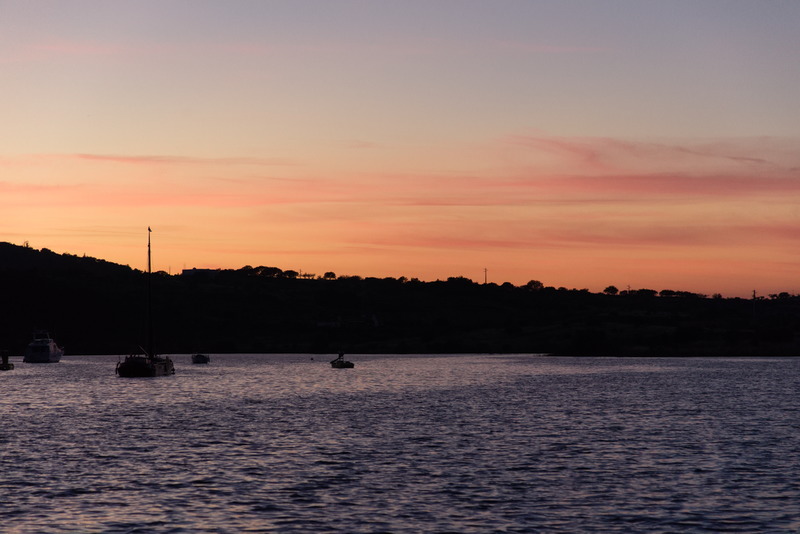
Another fine sunset.
⬅ previous ⬆intro next ➡