More than a wet weekend in Wales
⬅ previous ⬆intro next ➡Day 8 ~ May 22 ~ Hedd Wen: Porthmadog to Blaenau Ffestiniog and back by train
Today we have booked tickets on the Ffestiniog Railway, like so many places about half an hour's drive from our base.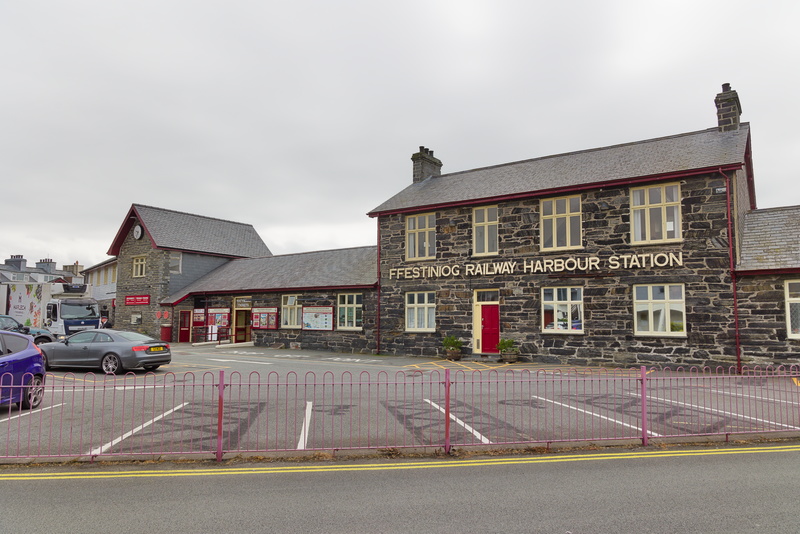
This is our end of the line, in Porthmadog. For some reason, the town is not part of the station name, but given the route that the railway takes, it would be seriously worrying to find oneself at any other harbour.
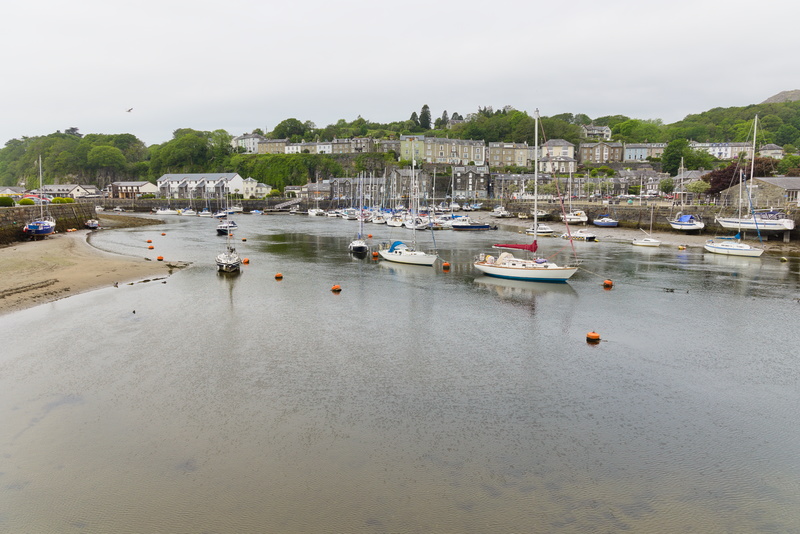
We're in plenty of time, so we'll just check out the harbour itself first.
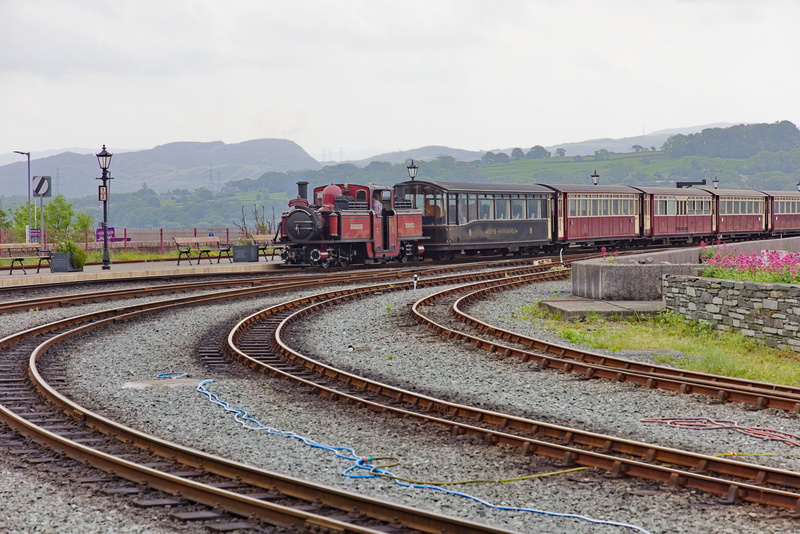
Ah, here comes our train. The workshop and depot – Boston Lodge – is about a mile away out of shot to the right.
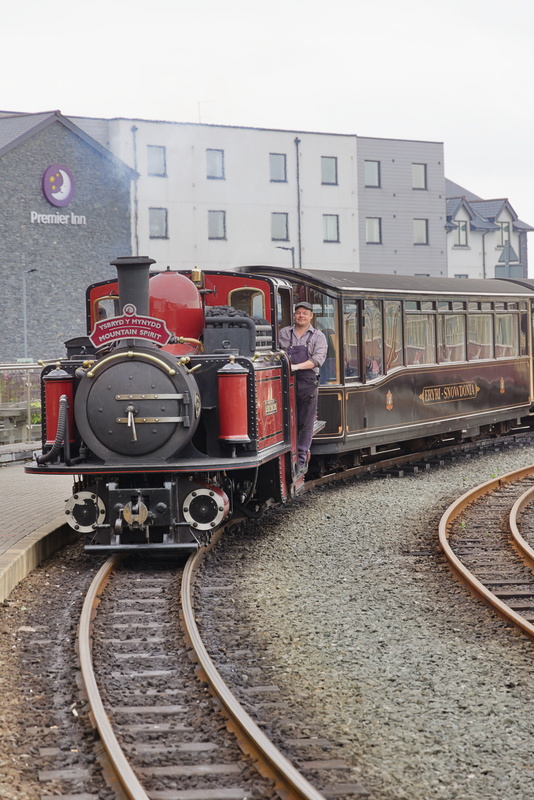
We could have stayed at the Premier Inn if we'd known. We wouldn't have, but we could have.
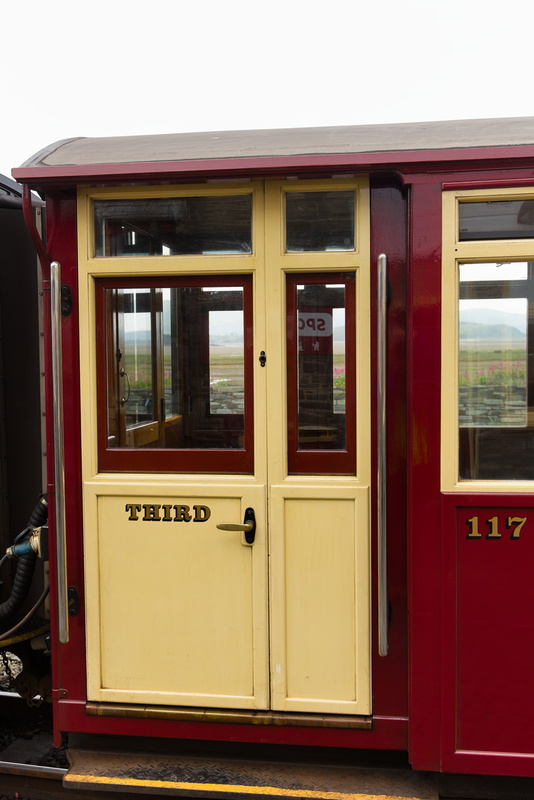
This is where the poor people go.
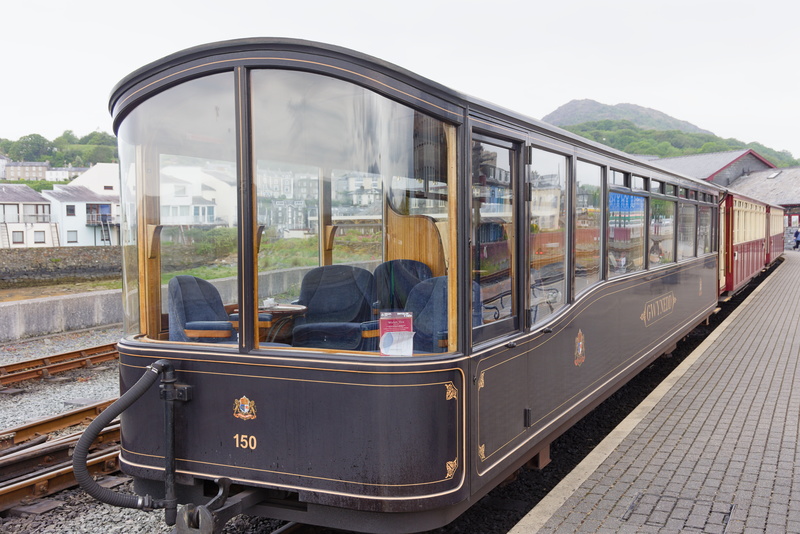
While we have booked seats in the observation car (known to her friends as Gwynedd).
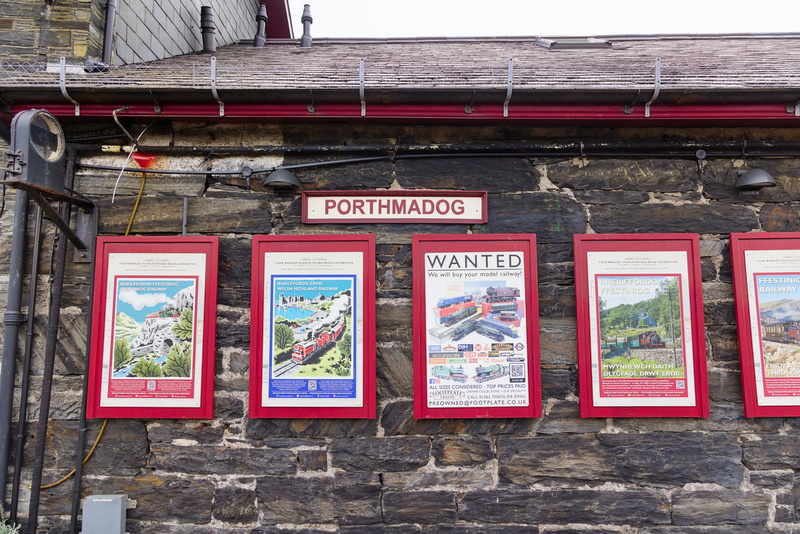
I'm not sure if the pictures in these posters are reproduced from vintage originals: they have that look about them; but the posters themselves are entirely contemporary, with QR codes and everything!
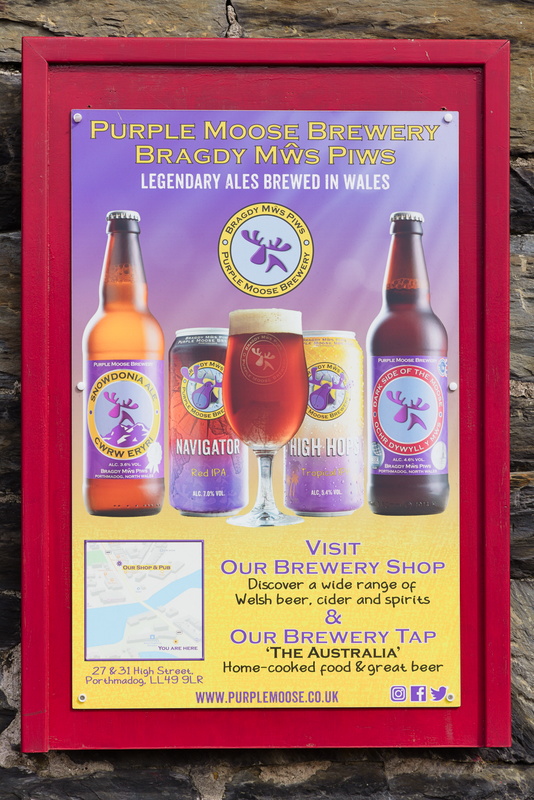
Ok, this one doesn't look vintage at all. [But remember it for later.]
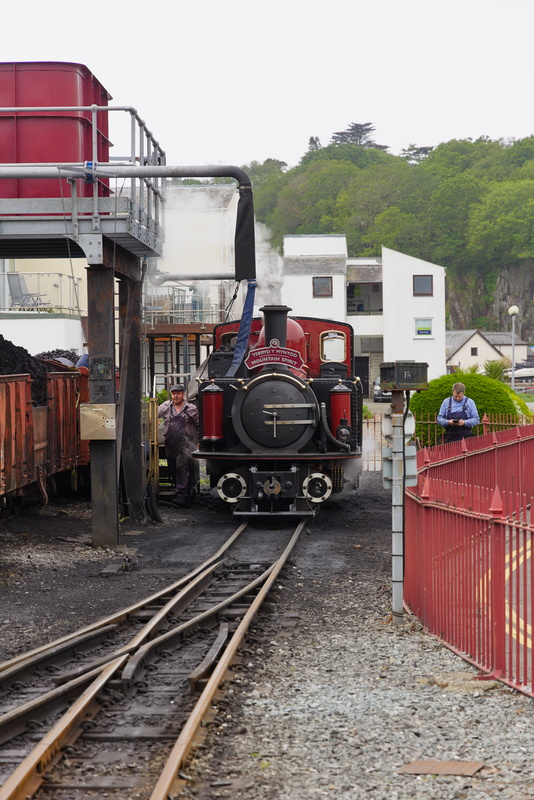
Filling up with water in preparation for the journey.
I'm a bit confused, though. The engine was definitely facing forward when it came in, and I can't see a turntable anywhere, so how is it now facing in the opposite direction?
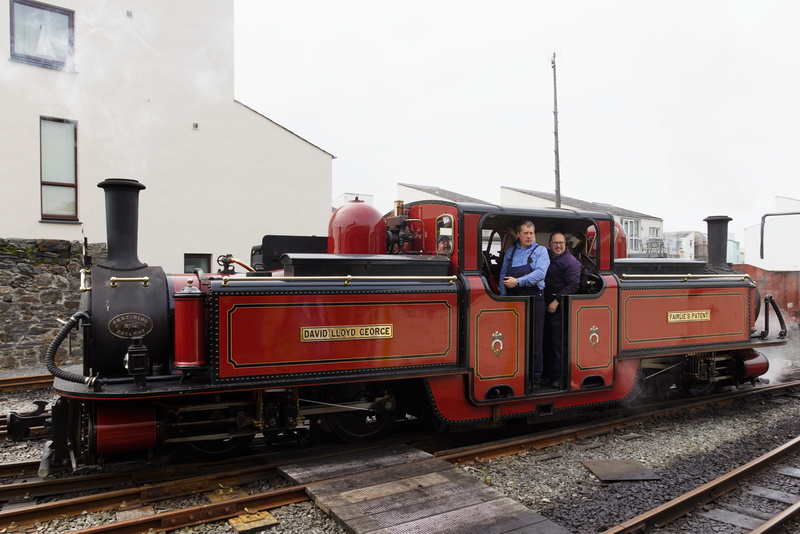
Blimey, it faces in both directions at once!
Time to get trainspottery...
This is a type of engine called a "Double Fairlie", invented by the Scottish engineer Robert Francis Fairlie, and the Ffestiniog Line was one of the first railways to use them. The first engine, “Little Wonder” was built and delivered in 1869, but “David Lloyd George” is from 1992, one of a series of modern units built at Boston Lodge. It was the youngest Double Fairlie in the world until the “James Spooner”, 2023.
It's switched onto another track to move to what will now be the front of the train, because we'll be heading back in the direction from which it arrived.
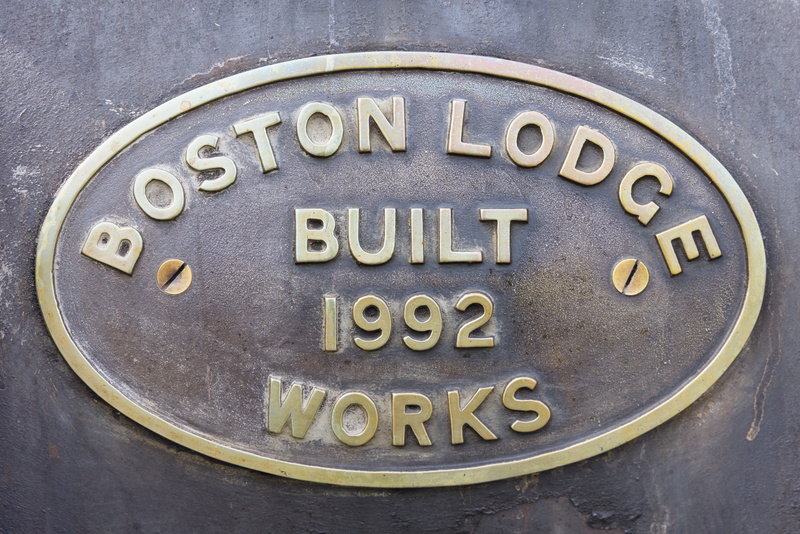
There can't be many steam engines of similar age.
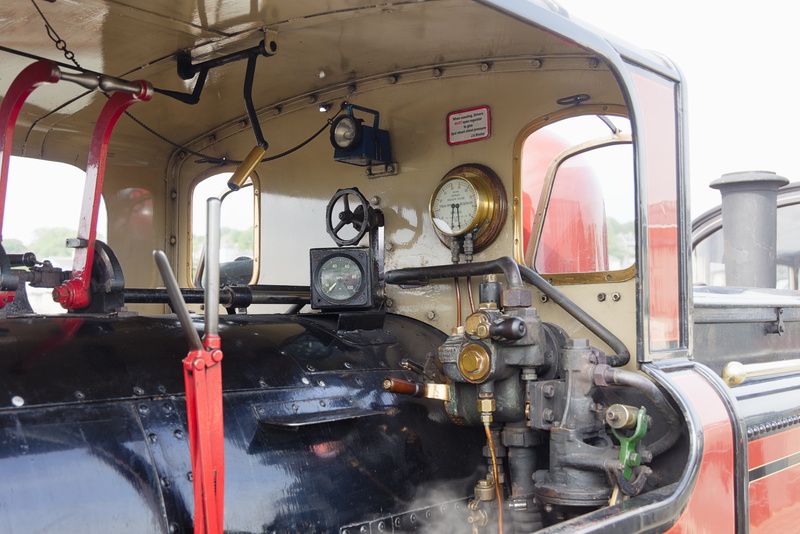
The interior certainly looks traditional: no digital displays here!
The dial in the centre is a little difficult to see without zooming in, but it's a speedometer that reads up to 100 MPH. I can't help thinking that's a tad optimistic.
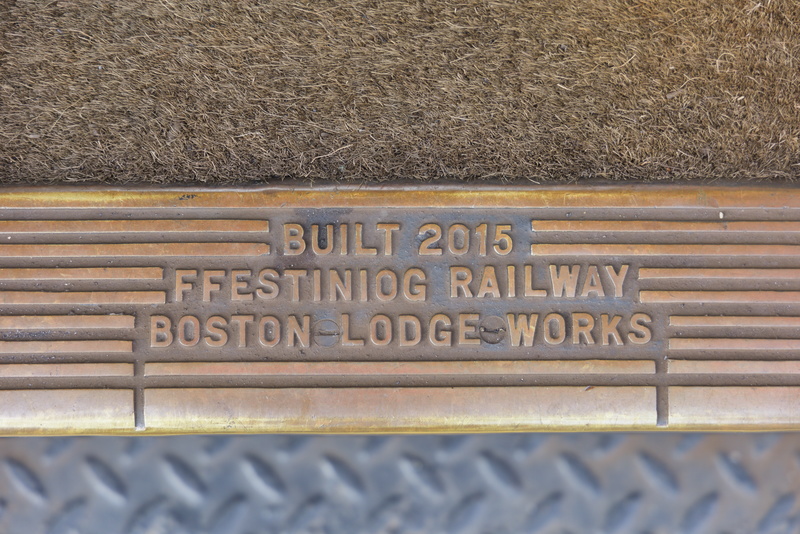
Crossing the threshold of the observation car, we see that it's even more recent.
We had no idea that so much ‘new’ heritage was being built.
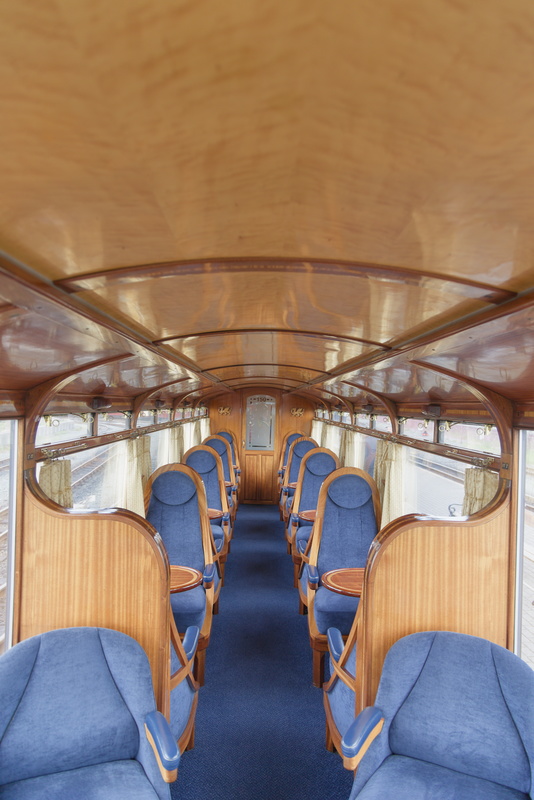
Very stylish.
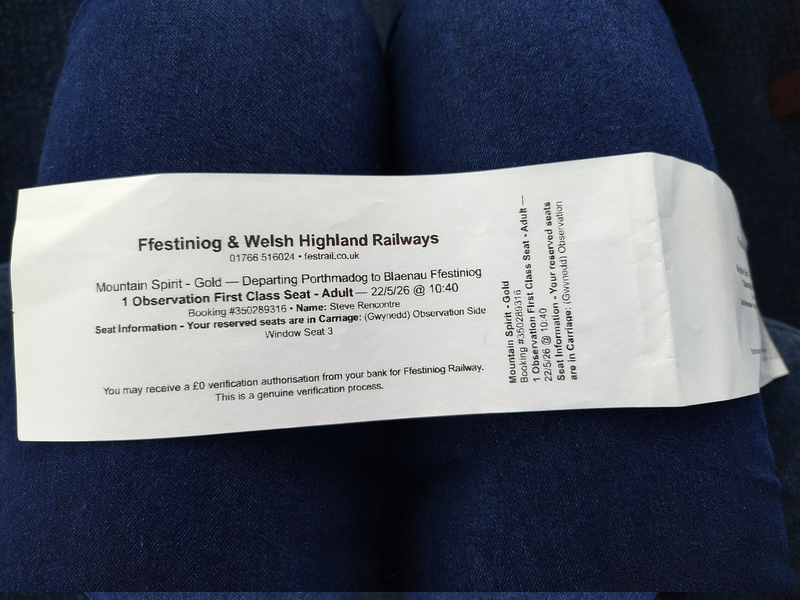
The tickets, it must be said, are a bit less grand.
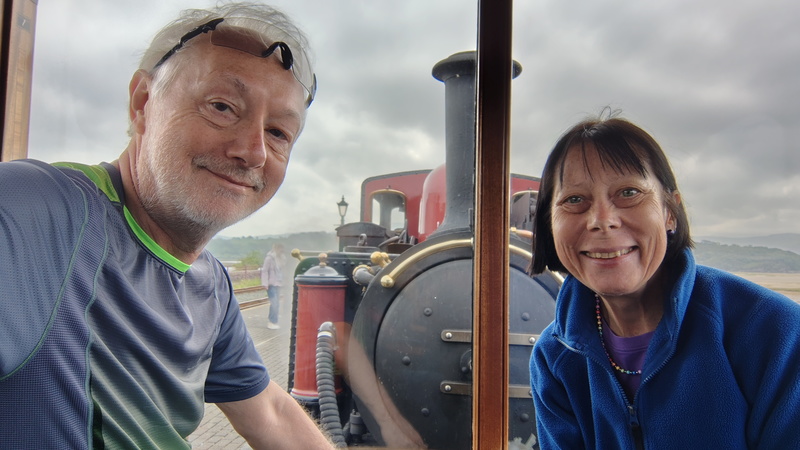
Nearly ready to go.
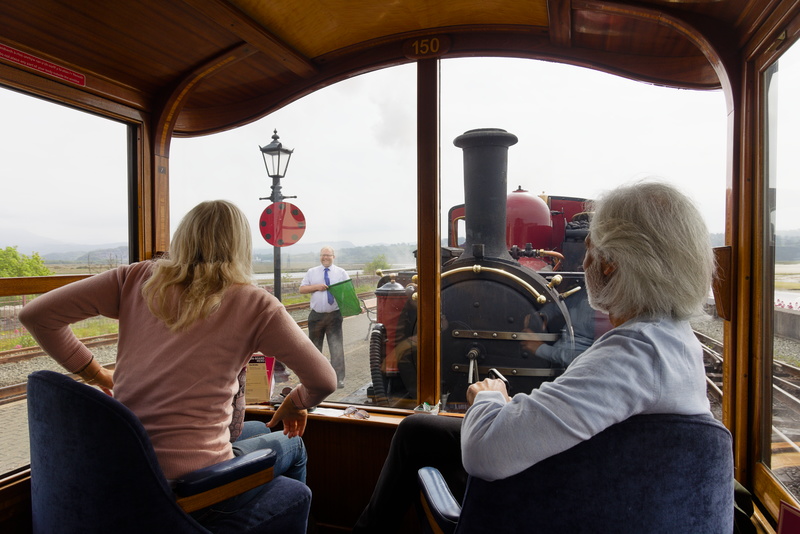
Our reserved seats are numbers 3 and 4, so when the holders of 1 and 2 arrive, we have to move back.
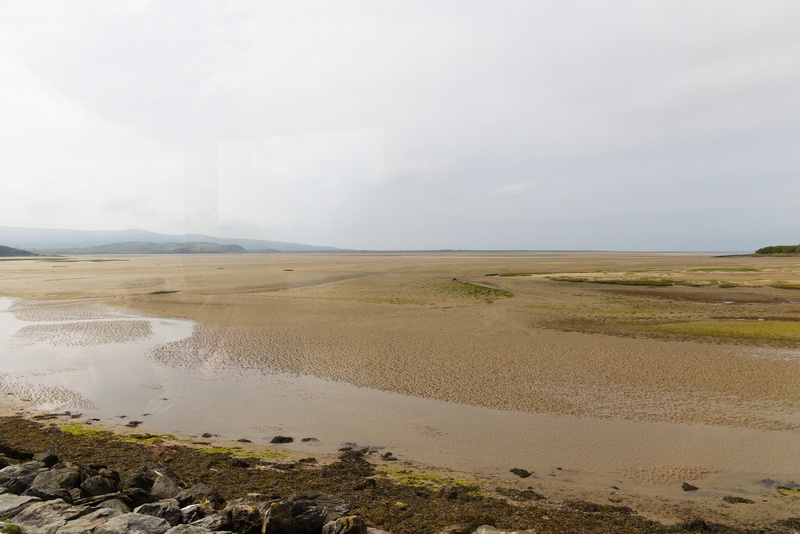
The tide is definitely out.
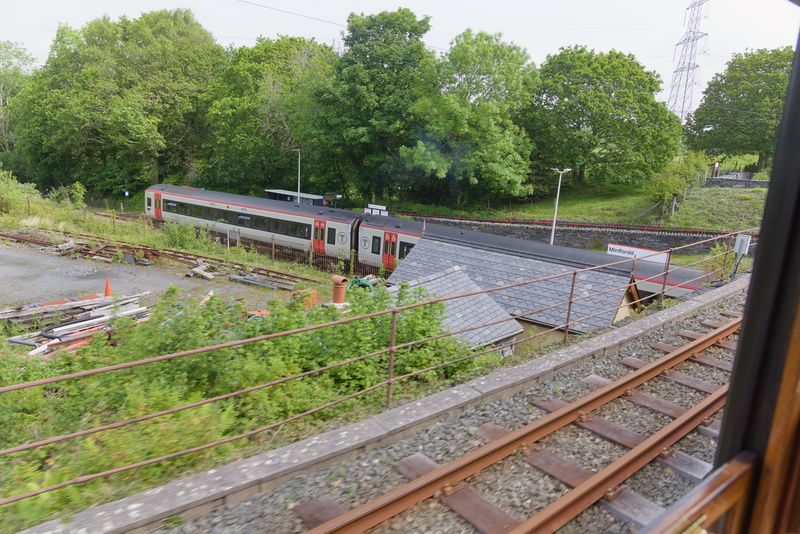
Minffordd is a station of two halves. As well as the Ffestiniog platform and building above, there is a National Rail line crossing at right angles below with its own facilities.
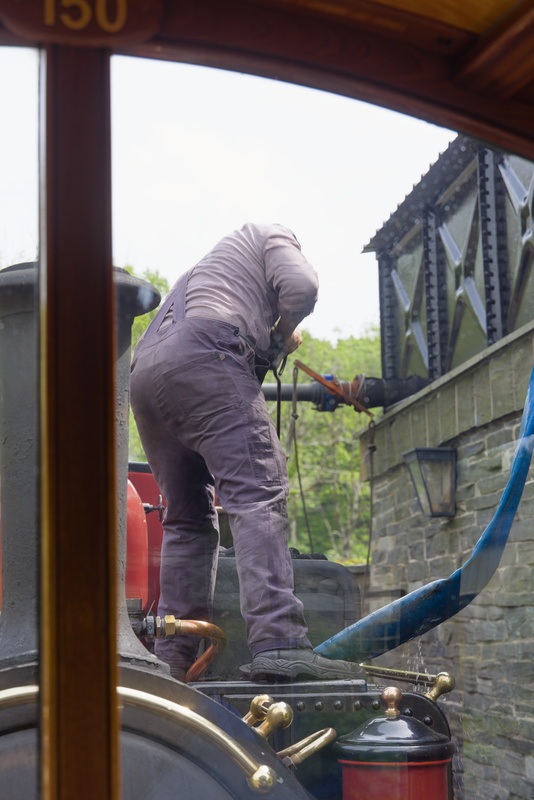
Tan-y-Bwlch station is about half way. We stop for a little bit longer than most stations while the engine water supply is topped up.
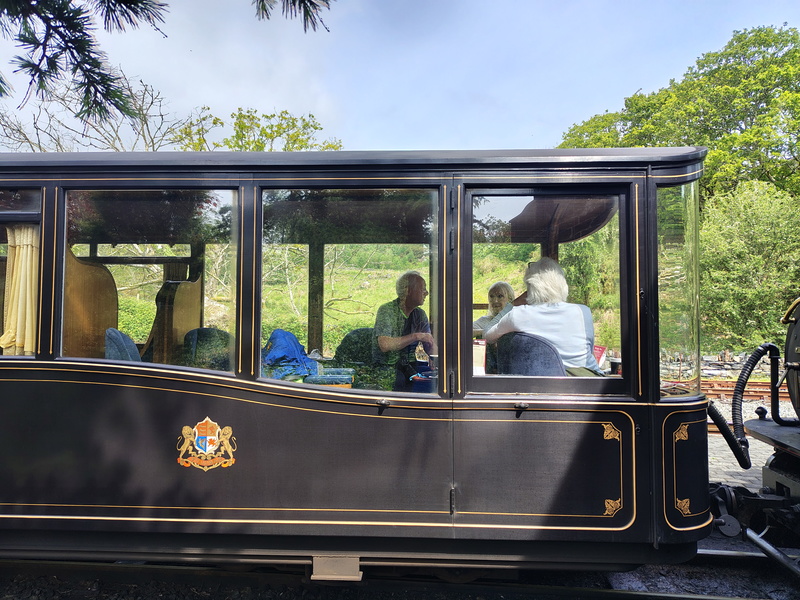
Amanda takes a walk outside the train while I'm deep in conversation with our fellow-passengers. (This division of labour will come as no surprise to most.) They are Gina and Oliver from Belsize Park, and it's her birthday today.
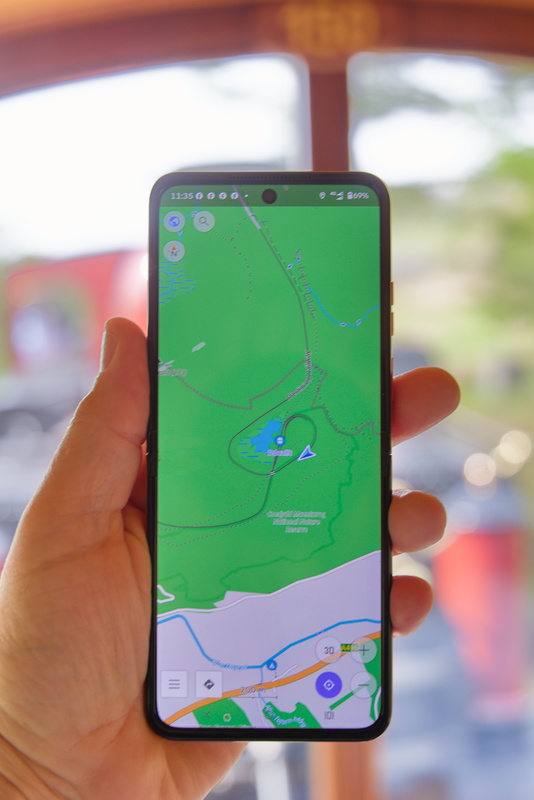
Now we have another rare – unique in Britain! – feature: the line curves around in a complete loop at Dduallt. In a moment we'll be crossing the top of the tunnel we just went through. Why? Because the original route is now underwater after the building of a reservoir for a pumped-storage hydroelectric power station! If you look closely at my phone screen, you can see just to the right of the operating track, a dotted line signifying the old route. (It's much easier to see directly at OpenStreetMap.)
The loop was the method used to get the additional height needed to follow a route above the reservoir.
For more about the power station, see Wikipedia.
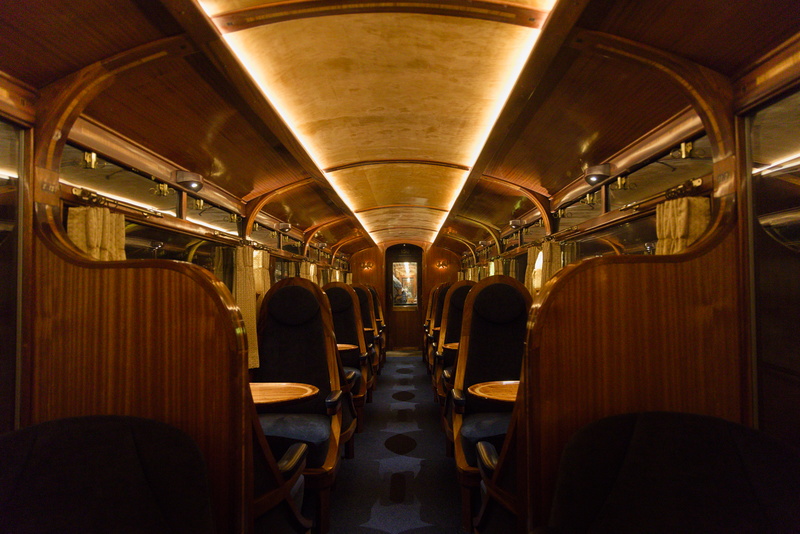
A little bit further along, there's another much longer tunnel, making the interior lighting appear rather dramatic.
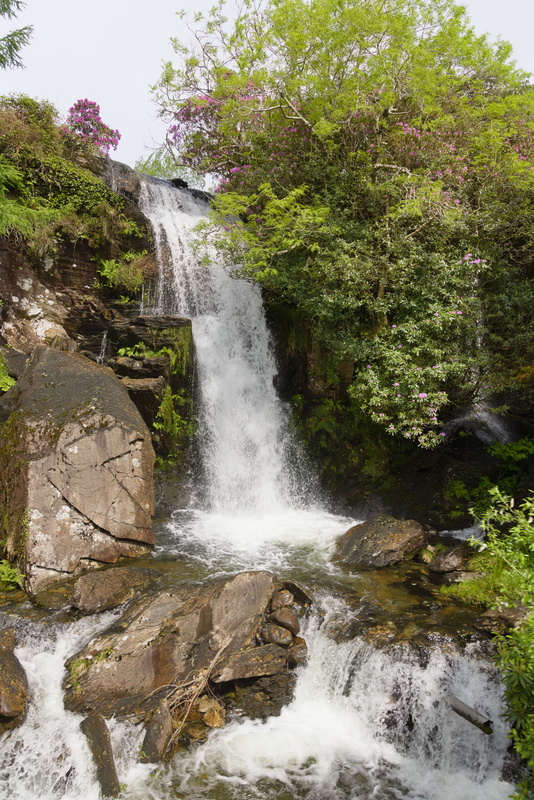
We pass this waterfall just before we reach Tanygrisiau station.
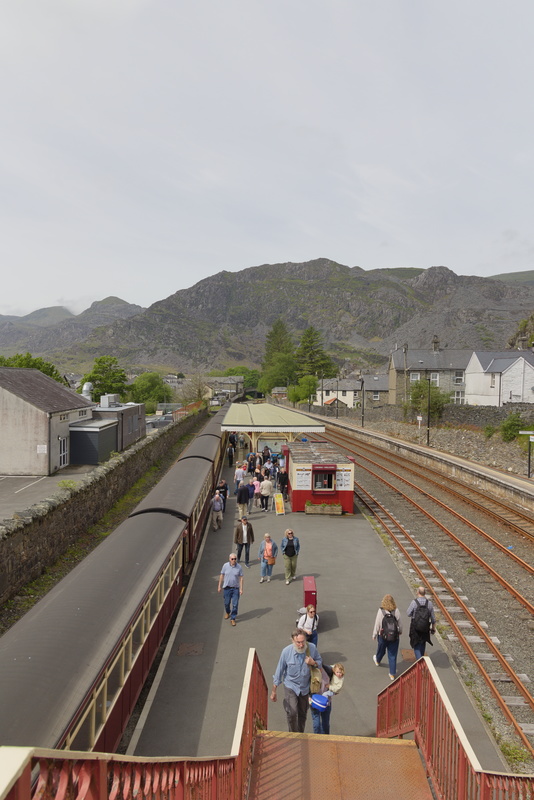
And this is Blaenau Ffestiniog, the end of the line for us (there is National Rail service here too). We have some time to explore here before we return.
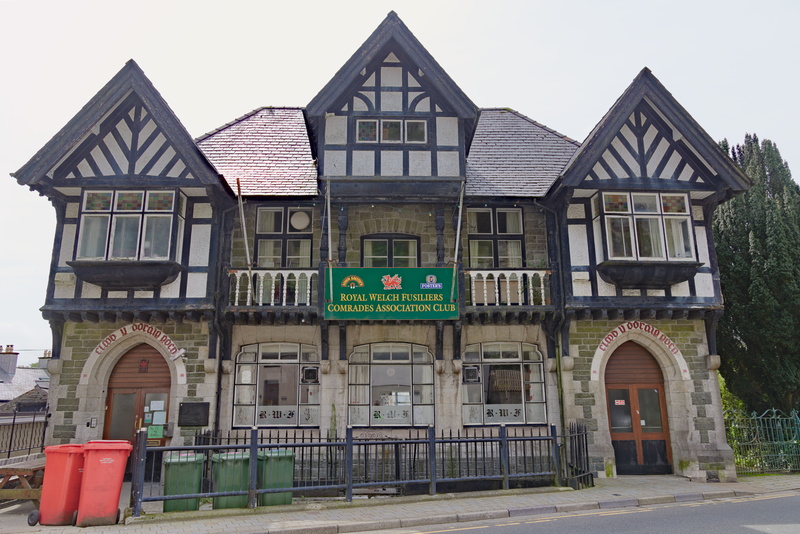
We've visited their museum, here's their club.
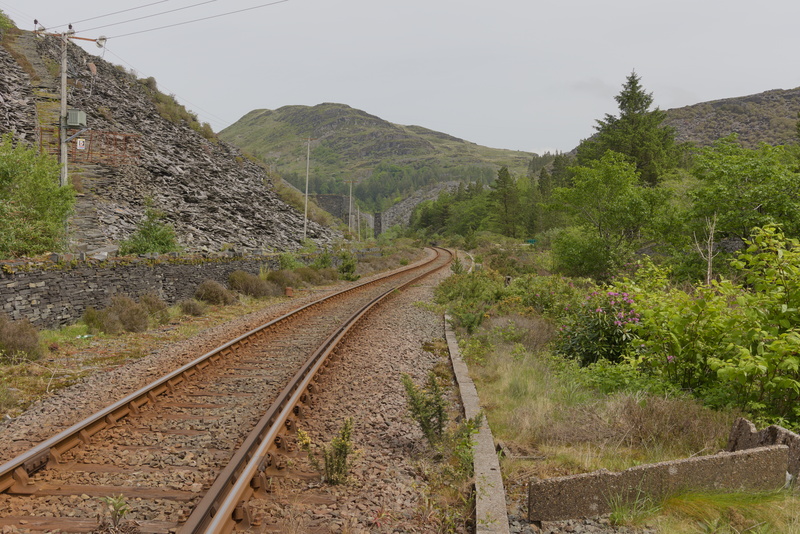
It's not a big place: it doesn't take long to walk out of town. This is the Conwy Valley Line, which is standard gauge and technically part of the National Rail network, but it's still primarily a scenic ride for tourists. There's a small mountain of slate on the other side, rubble from the nearby quarry which is the reason the Ffestiniog line was created in the first place.
According to the Welsh Slate website, “After being closed for more than a decade Ffestiniog Quarry is back in full production, due to the huge demand for Welsh slate.” Not that you can see anything of the quarry from here, but the Google Maps ‘satellite’ view looks quite impressive.
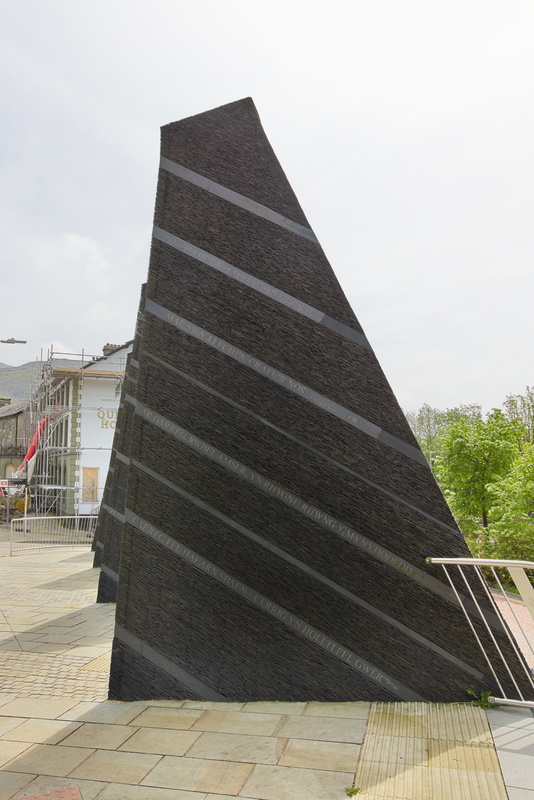
Returning to the station, we pass these sculptural monuments to the slate heritage.
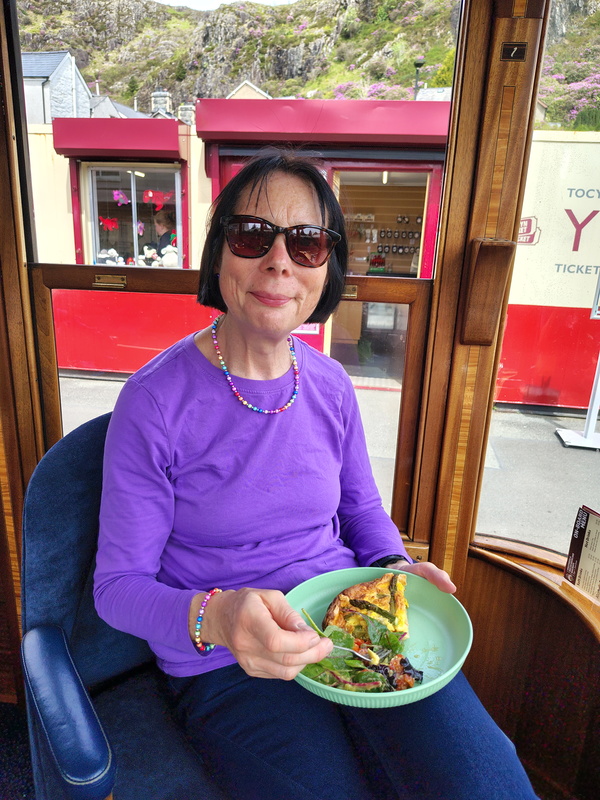
If you have a good memory, you may recognise our lunch, being the other half of the quiche I made for dinner a couple of days ago.
But note that Amanda is now (like me) sitting in the front seat.
Well, while we went walking in the slate hills, Gina and Oliver went to the pub and got drinking with another couple of passengers. Unlike us, they had been slumming it in Third Class, but discovered they could easily upgrade to First for the return journey and now they are all sitting together just a little further back enjoying a bottle or two of prosecco!
We have been invited to join them, but I don't think Amanda would be very keen on my knocking back the booze before hitting the narrow country lanes in the car.
Secretly I don't mind. Because the engine is now at the other end of the train, we have a completely unobstructed view to enjoy.
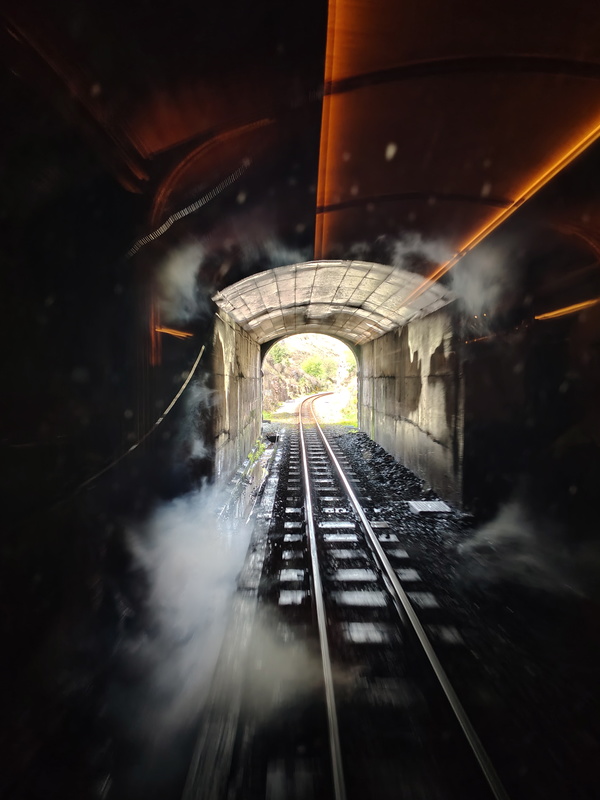
We re-enter the long tunnel. This is the New Moelwyn tunnel, the old one now being closed off and partially submerged.
There's quite a lot about this on the web, and a very full account is here on this Ffestiniog Railway Society page. Sounds a bit of a lark!
Don't confuse the aforementioned Society with the Ffestiniog Railway Heritage Group, who have their own pages on the Old and New tunnels.
And neither of them are, of course, the The Ffestiniog and Welsh Highland Railways Trust, the controlling shareholder of the Ffestiniog Railway Company which actually operates the line.
I trust that's all completely clear.
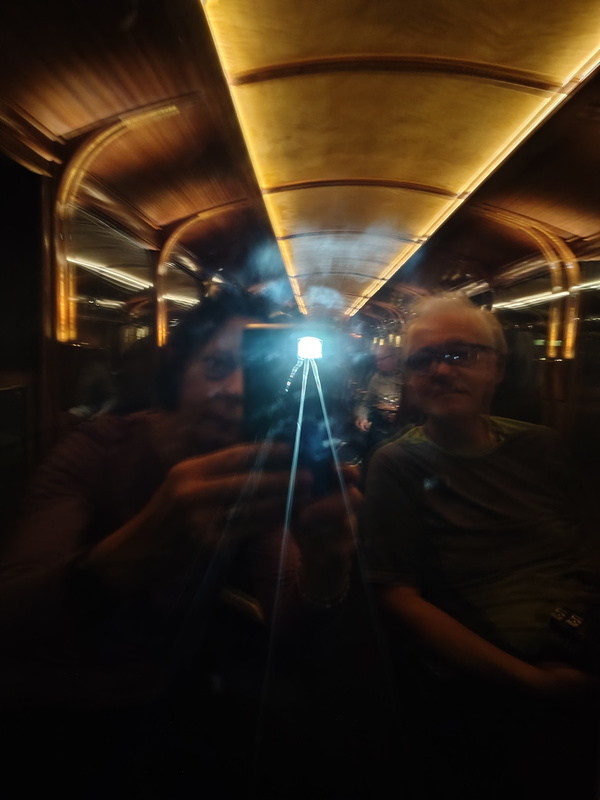
Amanda reckons it's her turn to get arty-farty on the photographic front.
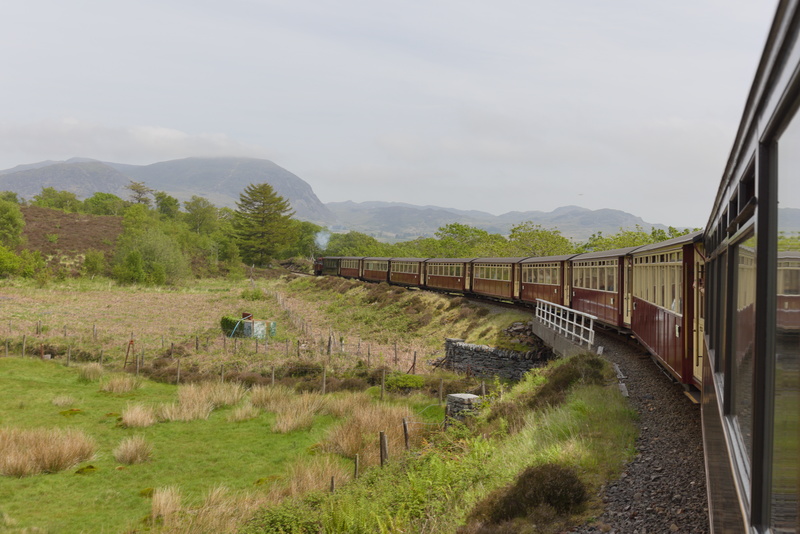
As we come back to the loop, you can see the bridge we'll be passing under shortly.
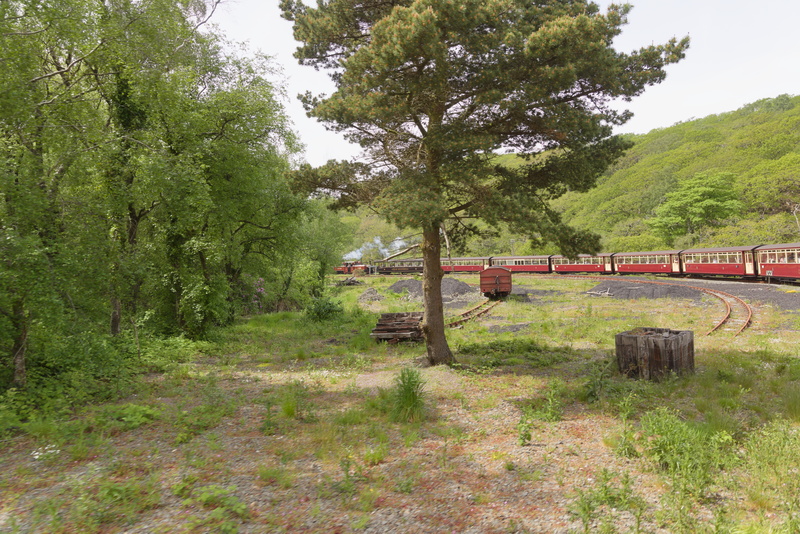
From this angle, it looks like it's another train entirely ahead of us. Just an optical illusion though.
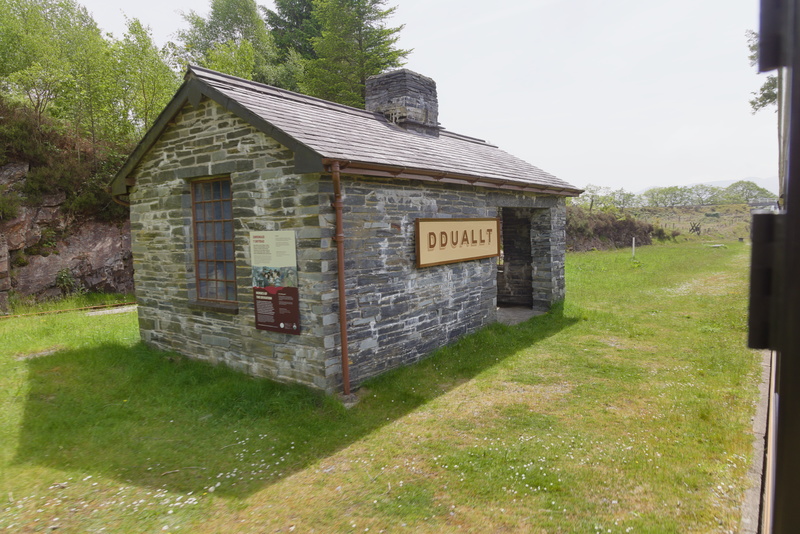
This is a real station, although the trains only stop on request. There's literally nothing to do if you get off other than walk in the nature reserve and there's no easy way of getting back other than on this very train, so unsurprisingly we have passed it without stopping in both directions.
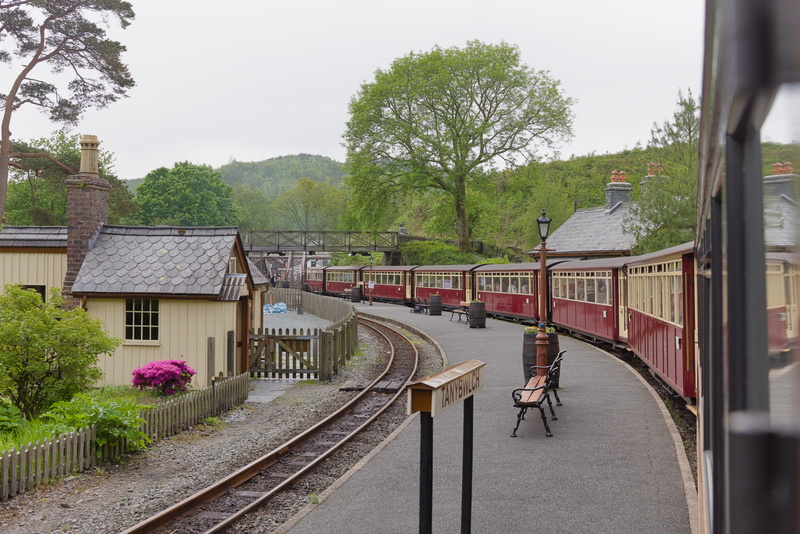
Another nice view of the train and the station at Tan-y-Bwlch.
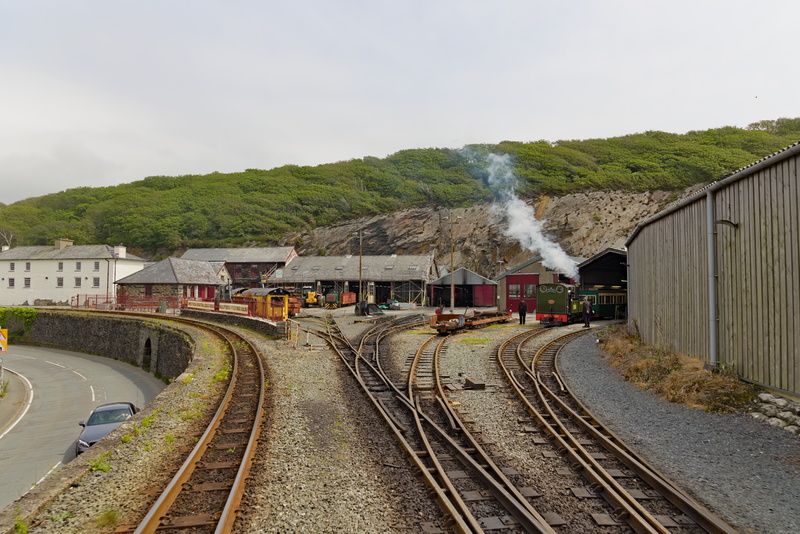
We pass the Boston Lodge works again.
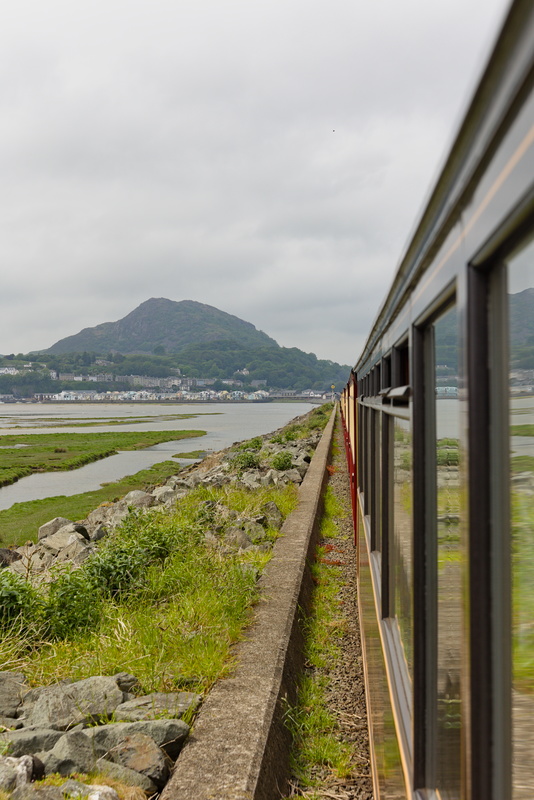
And it's straight across the Cob – the causeway – to Porthmadog now.
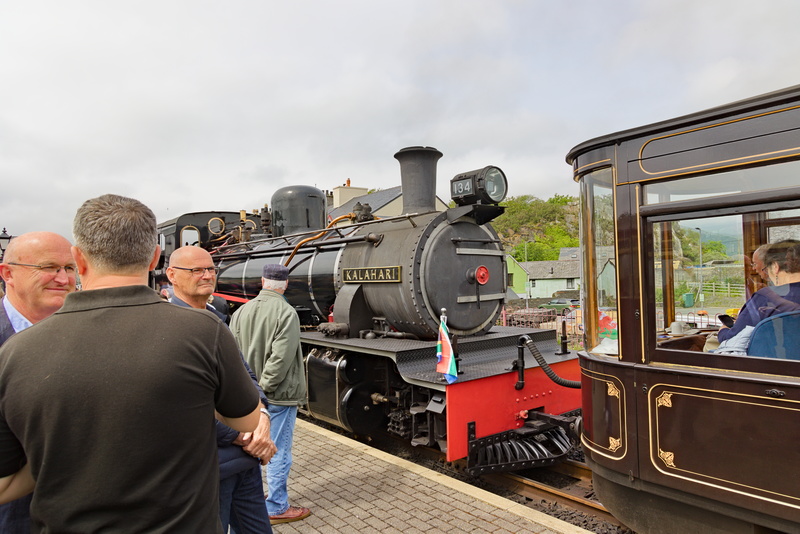
Another service is getting ready on one of the other lines, with a locomotive called ‘Kalahari’. I'm not sure if we've technically visited the Kalahari Desert, but we've certainly been to the wider Kalahari Basin area in Namibia and Botswana. Note those two country names...
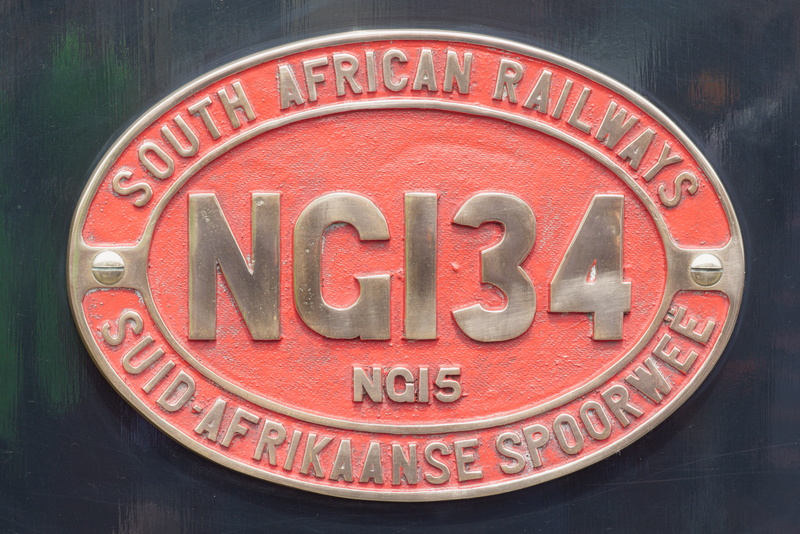
...neither of which are the Republic of South Africa.
This being a trainspottery thing, the WWW is awash with information. Wikipedia has, of course, a substantial article on the NG15 class in which it tells us, "On the Avontuur Railway, the Class NG15 was nicknamed Kalahari, inappropriately so since its previous stamping ground was across the Namib desert to the west of the Kalahari."
Anyway... After being sat down most of the day, we want to stretch our legs a little before we leave, so we start by walking back across the causeway towards Boston Lodge.
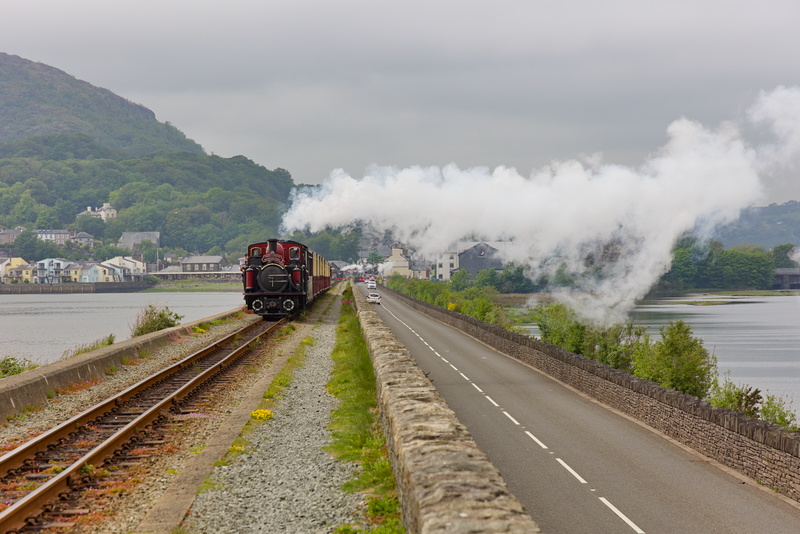
And Mountain Spirit is on its way home to bed.
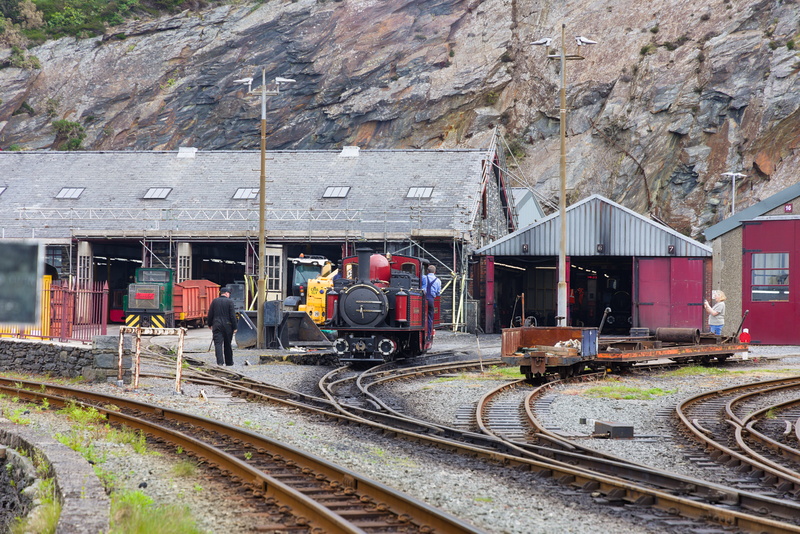
Goodnight!
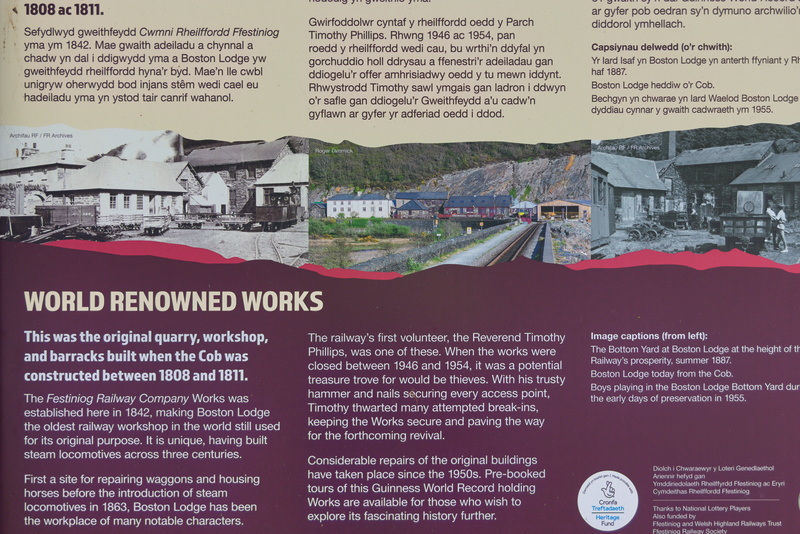
Some information about the works on a display board.
It's possible to visit here, but only as part of a guided tour and we'd need another day for that.
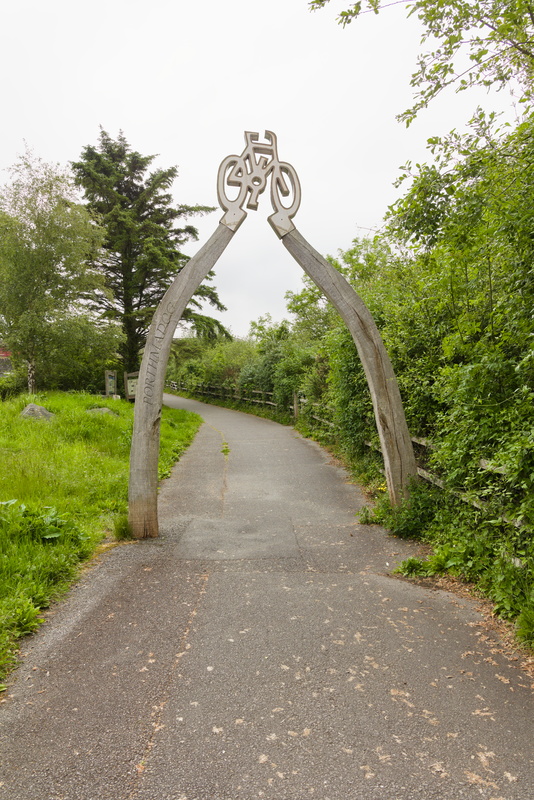
Away from the railway line on the other side of the road, we do rather like this cycleway arch.
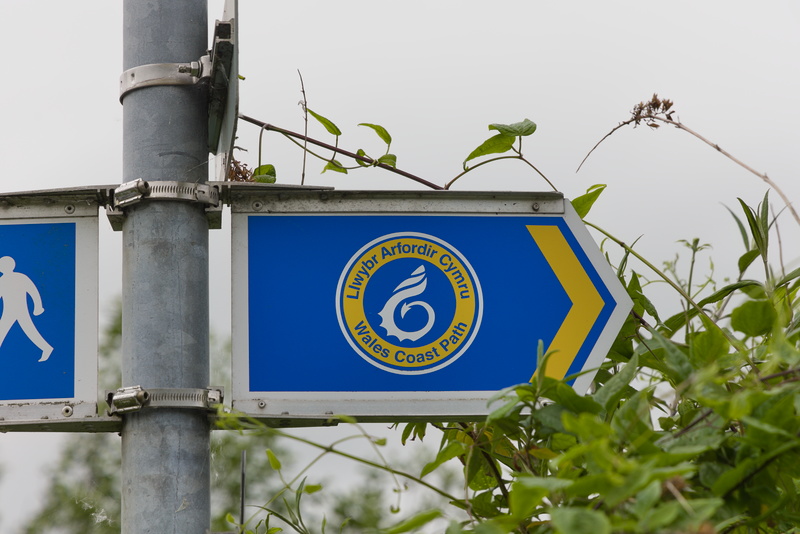
All roads lead to the Wales Coast Path. We saw this sign when we started at the Severn Bridge parkrun, the opposite side of the country! I think it's stretching a point to call the bank of a river the ‘coast’, but then again, I suppose there's no obvious point where the line can be drawn. Clearly the land facing out to the Irish Sea must be coast, and surely Cardiff is a coastal city, and when exactly does the Bristol Channel become the Severn Estuary...?
Google's AI Overview tells me, “The accepted dividing line between the Severn Estuary and the Bristol Channel runs directly south-to-north from Sand Point in Somerset to Lavernock Point in South Wales” but this is AI being overconfident, and while some use this definition, others consider it much less well delineated.
So yeah, ok, “Wales Coast Path” is arguable at Severn Bridge if you're being pedantic, but as regular readers will know, I am never pedantic [exceptions apply].
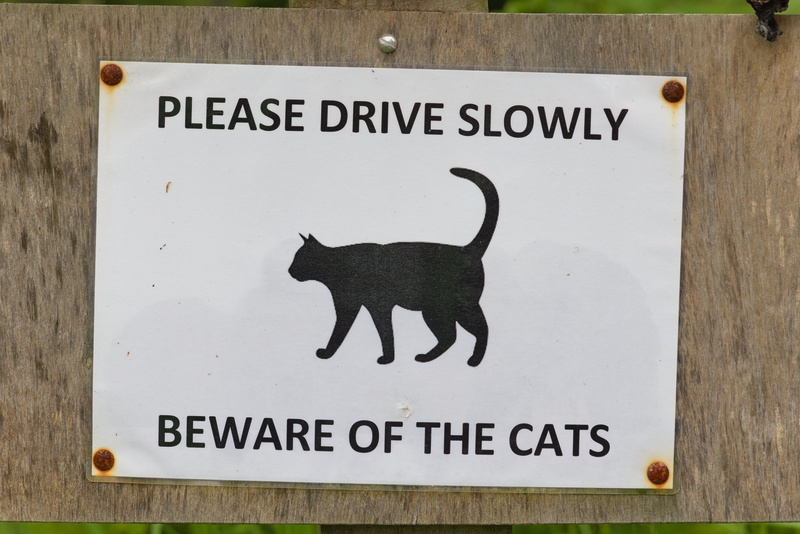
Conversely, absolutely no controversy there!
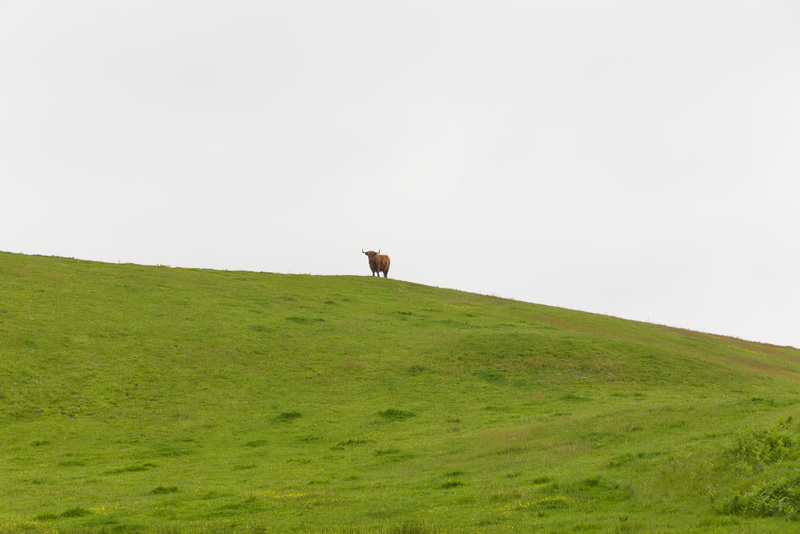
Hmm... no cats; will a distant Heelan Coo do?
We would like to get a bit closer, but we can't. He will have to remain enigmatic on the skyline.
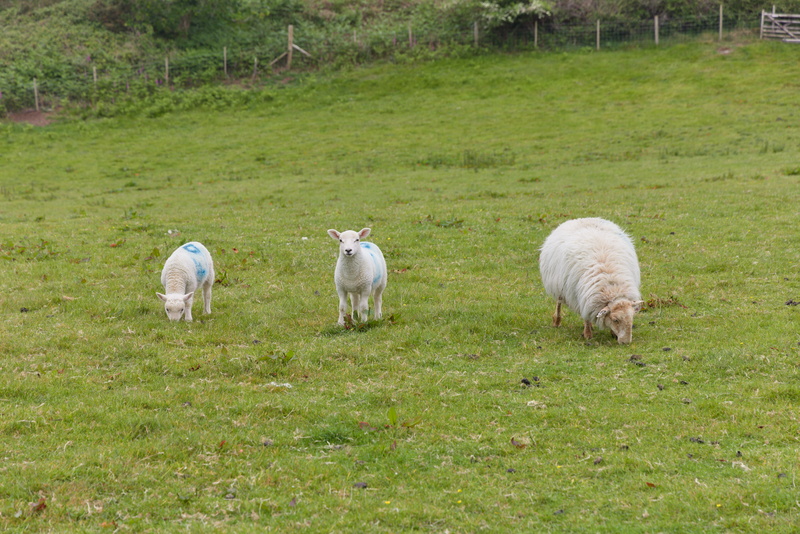
And some sheepies. We like sheepies too.
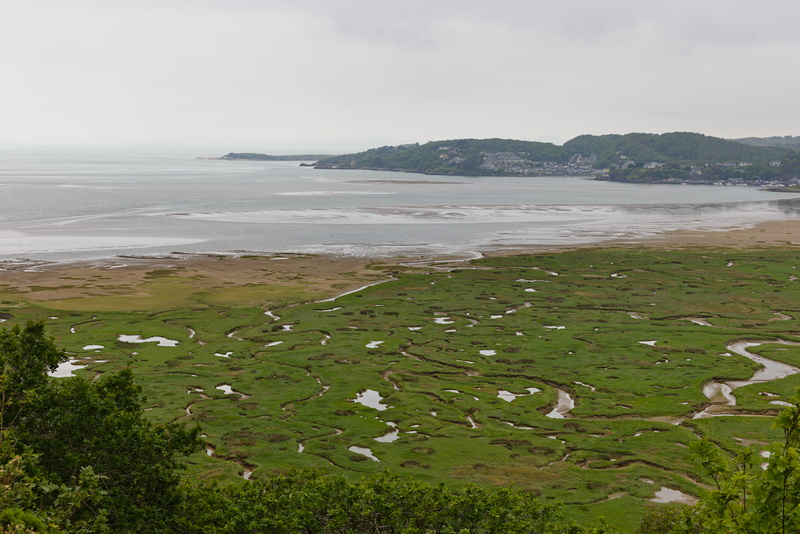
Looking back down over the Afon Glaslyn estuary, you can see how vast and flat it is, now almost full of water after being almost nothing but sand as we left this morning.
It's been a fine walk, we're heading back to town now.
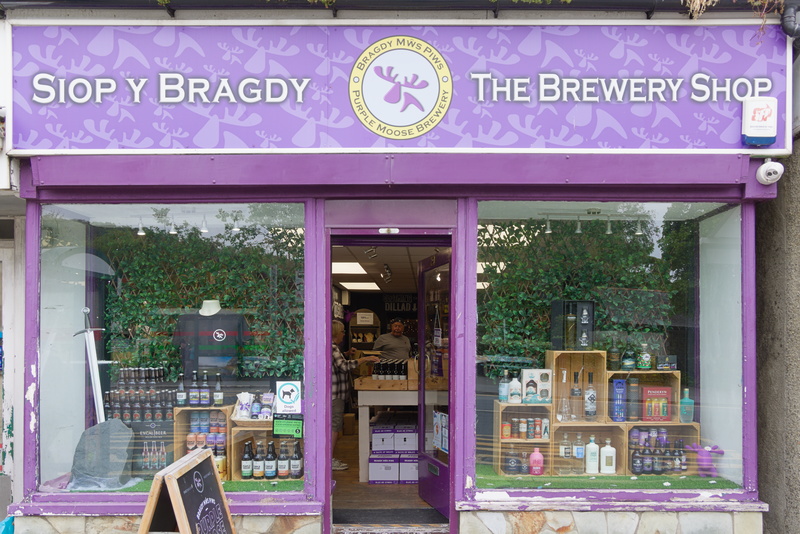
So do you remember that beer advert poster from earlier? This is the very place. We (well, I) chat about beer and we (well, I) buy some.
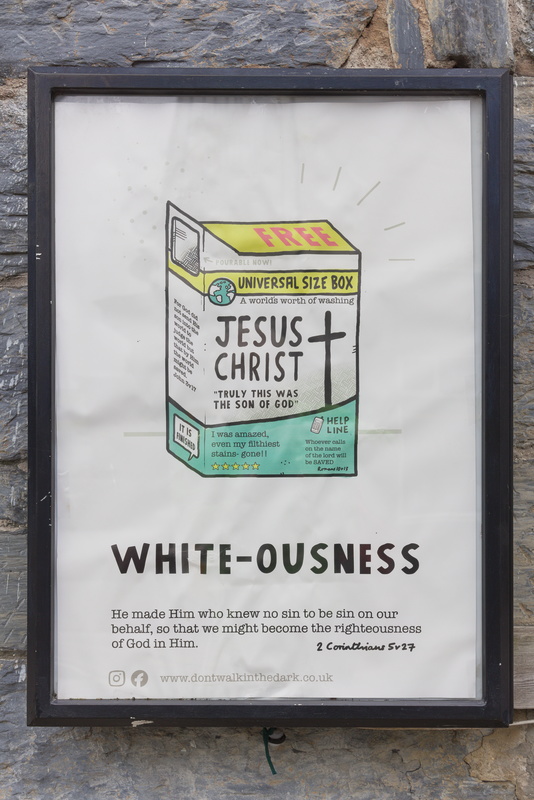
I don't think this is deliberately racist (though I strongly suspect their Jesus is not some swarthy Middle-Eastern type), but it does come across as a bit, err, “not very DEI” shall we say? It is noticeable, though, that this part of Wales really isn't that diverse. Shirley Bassey would definitely stand out. (Gosh, she'll be 90 next year and she's still singing! Boggle!)
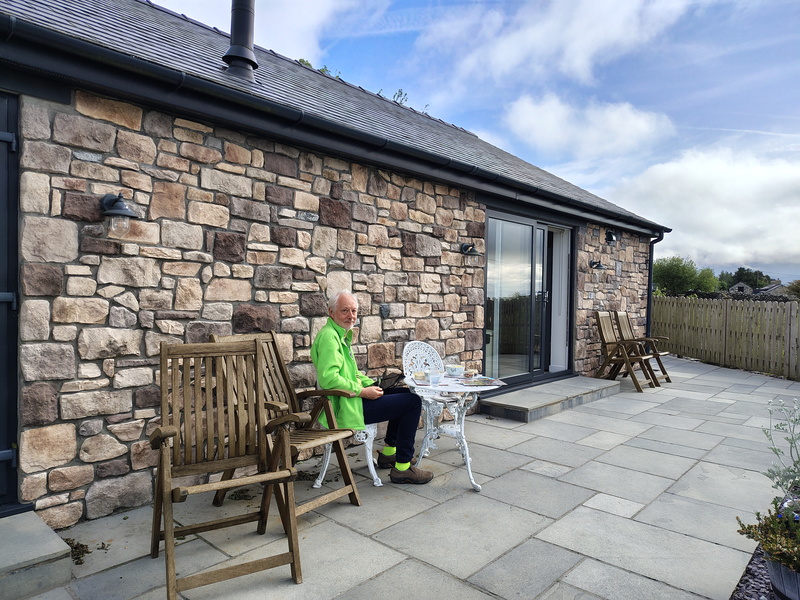
And back at Hedd Wen, having eschewed Prosecco on the train, I now sit in the not-quite-sun with a G&T and some nibbles. Shortly I will go inside and make chicken satay for dinner.
⬅ previous ⬆intro next ➡