That Wasn't There Last Time We Looked!
⬅ previous ⬆intro next ➡Day 10 ~ 24 May ~ Amiera to Évora
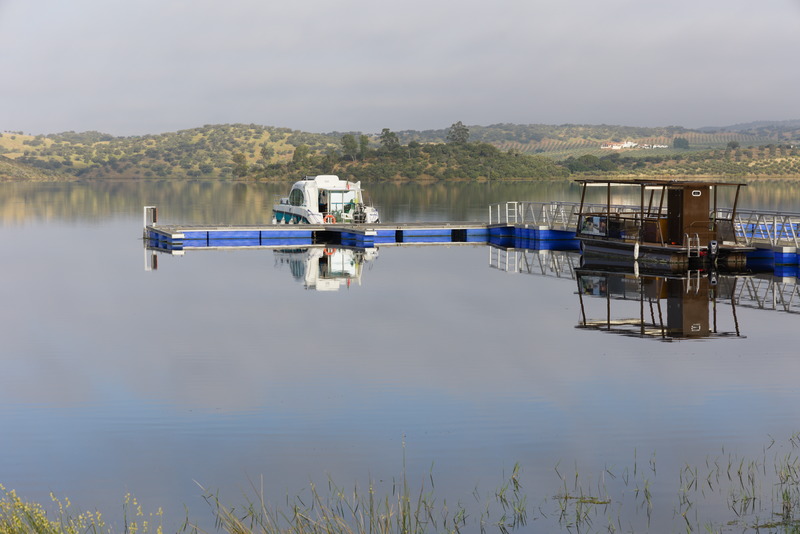
The lake is even smoother this morning, as we get ready to make the short hop back to the marina.
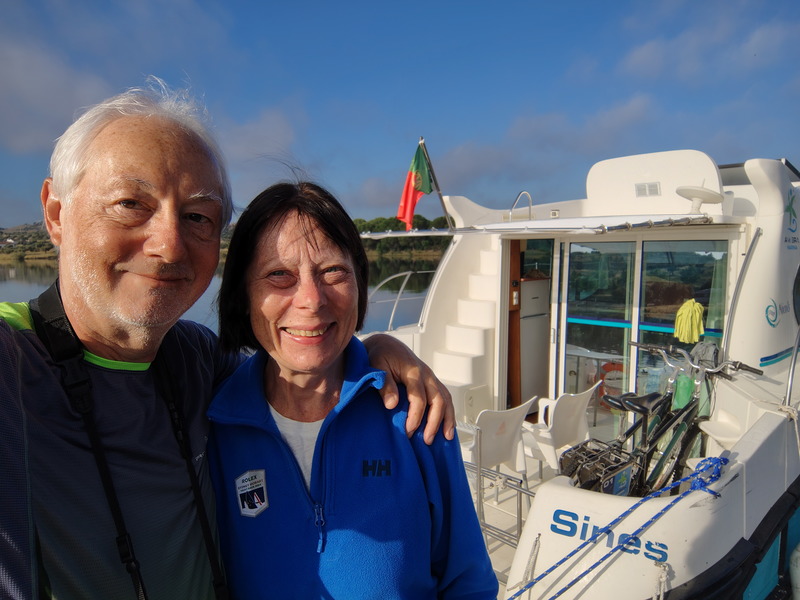
We bid farewell to our boat. It has served us well.
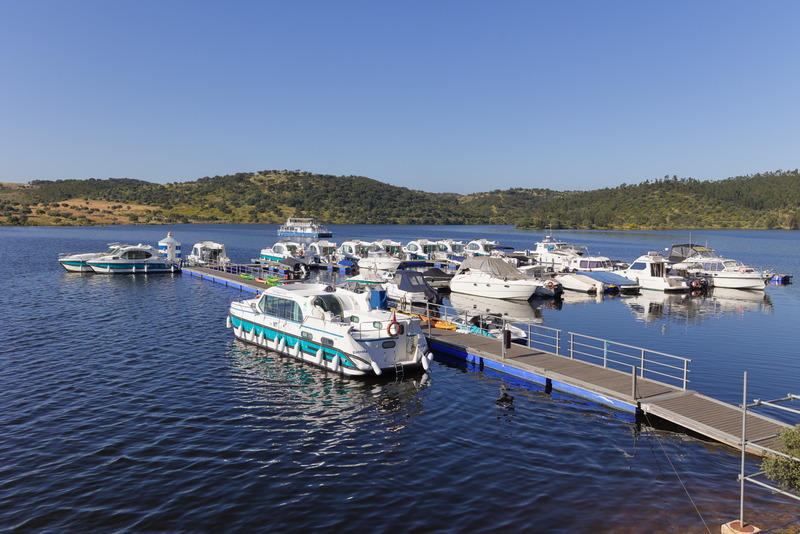
Looking back, I think this is more boats than we have seen the entire rest of our time on the lake.
We're not going straight back home, though, we are spending a couple of nights in Évora, which is a World Heritage city with some interesting things to see. We're going to take an extremely not-straight-there route, though, because we saw a picture of an amazing aqueduct and thought we'd like to visit it if possible. Well, it turns out that the town of Elvas is only twice as far as Évora, and in totally the wrong direction, but hey, we've still got plenty of time.
Ah.
Oh bugger, to use the technical term.
What happened?
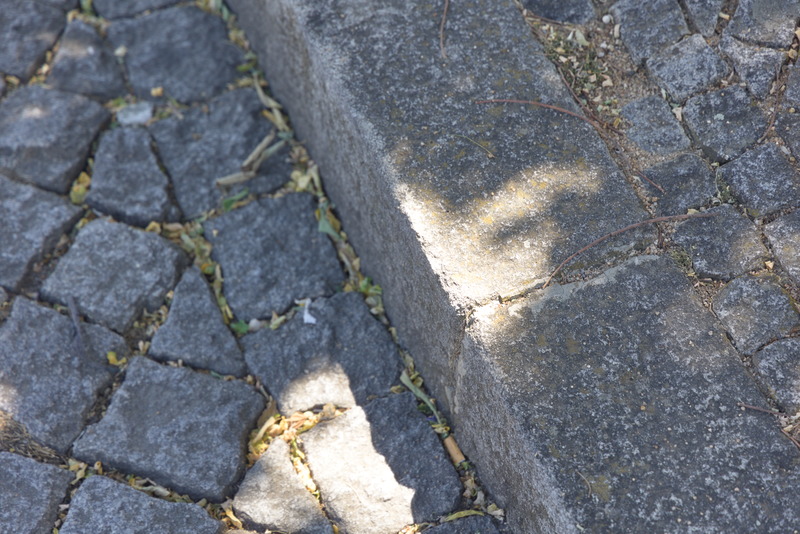
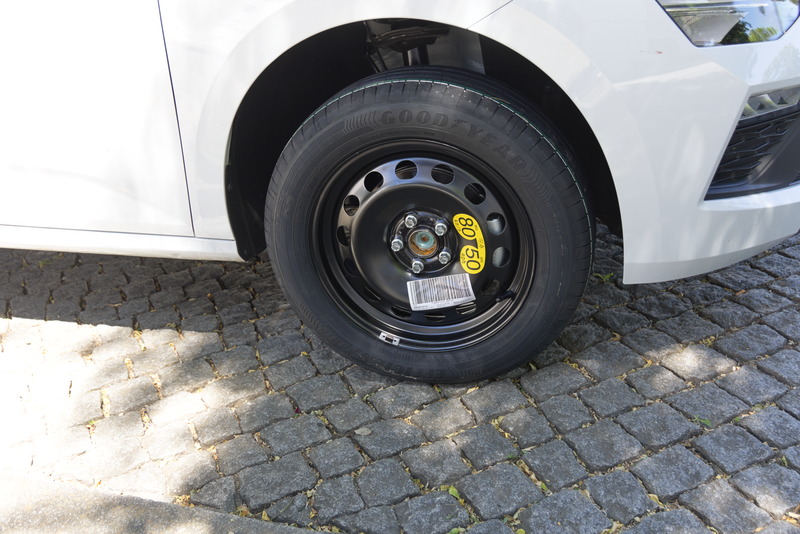
Well, see this kerb? It's very high and sharp, and if you are trying to park an unfamiliar car and have misjudged where the wheels are, and hit this sharp edge at the wrong angle, your tyre goes bang! and deflates rapidly. This is what has happened.
The car has a spare wheel, but it's the emergency-use-only type, limited as you can see from the yellow sticker, to 80 km/h (50 mph). Fortunately, we don't have all that much driving to do, so we can live with it for now. I call the hire company and explain what's happened, and they say that if I'm happy to drive it that's ok with them. That's good, it means we don't have to wait around or fill in loads of forms or anything, we can just get on with our day.
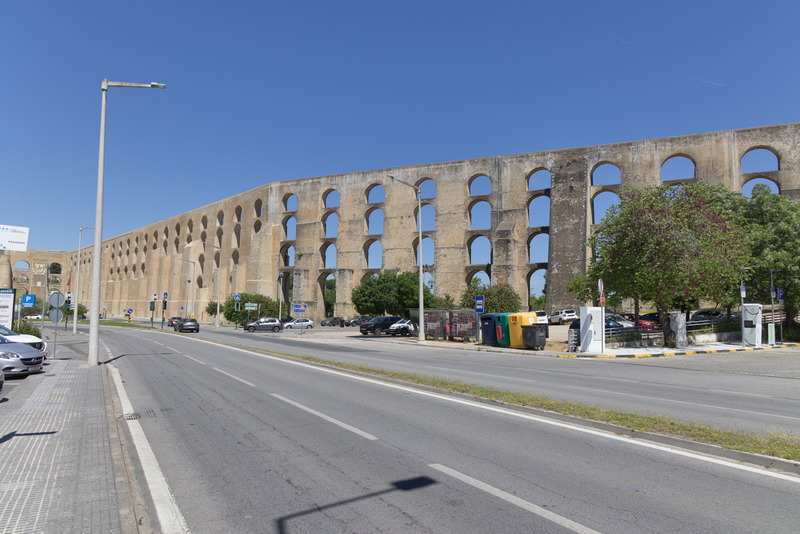
So this is what we came to see. It's indeed very big and impressive.
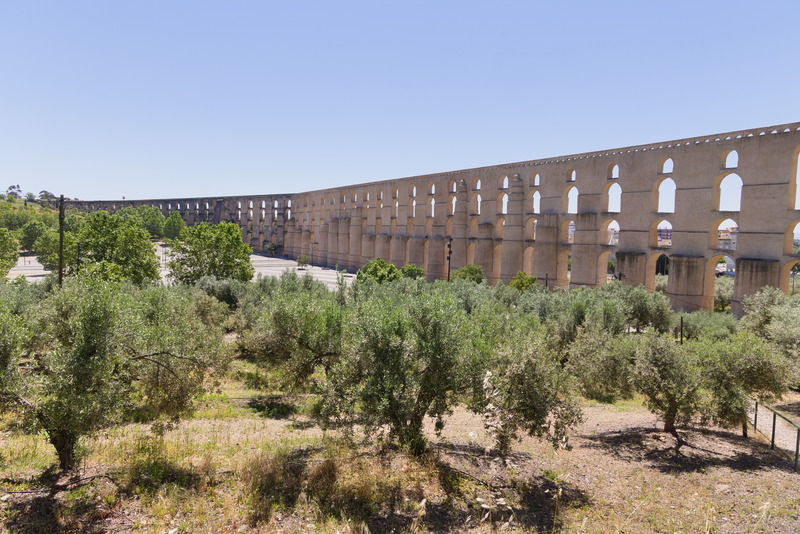
From the other side to the main road, you can get an even clearer view of how well preserved it is. Actually, ‘maintained’ would be a better word than ‘preserved’, because it's been a functional piece of civil engineering, not just a tourist attraction, for hundreds of years.
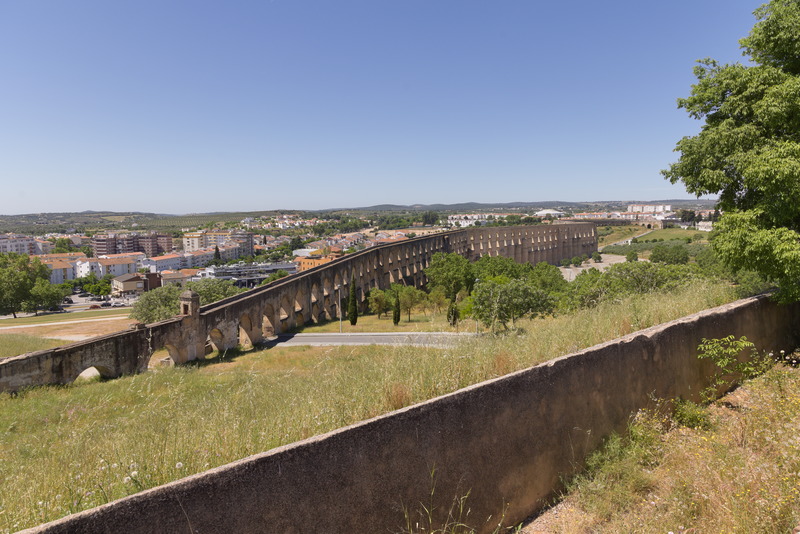
And from here, you can get an idea of how far it stretches. The elevated section is about 1.6 km – a mile! – long, and the total length of the watercourse from the source to the storage cistern in town is 7km.
Works first began in 1529, although it took almost a century to complete. Wikipedia has more detail, of course, and you can check out the UN World Heritage listing number 1367 for the town which gives some more context.
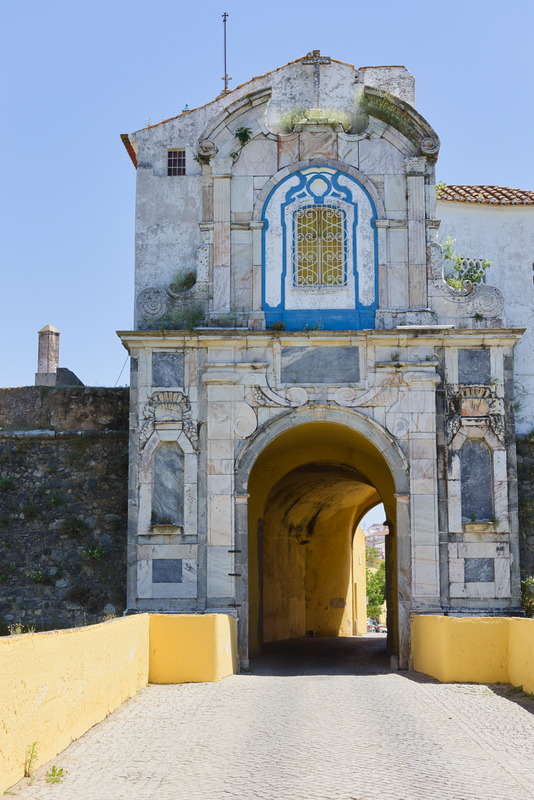
Following a road parallel to the aqueduct takes us to this gatehouse into the mediaeval city.
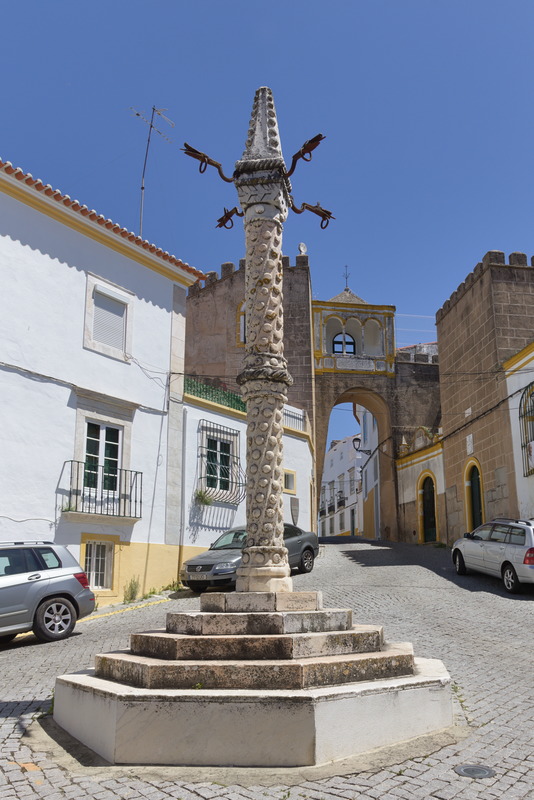
In a square, the pelourinho - the pillory - of Elvas.
Originally places where convicted criminals would be tied up and possibly whipped in public, they became more symbolic representations of justice, and this one doesn't really look like it would be all that good as a whipping post. Originally 16th century, it was destroyed and then rebuilt from the pieces in the mid-20th.
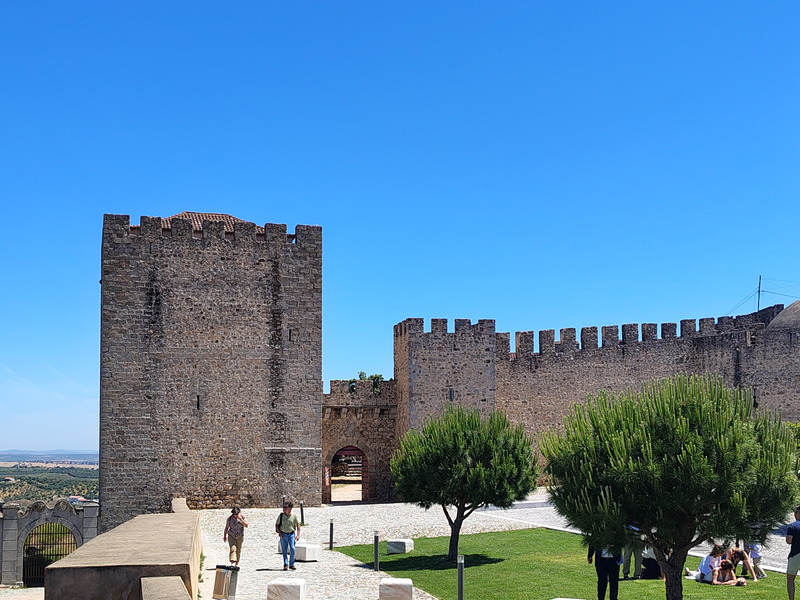
There's a castle, but there isn't much to see here.
A stroll back to the car and we are on the road again, quite gingerly at first for obvious reasons. But the car seems fine, no steering or handling problems, so it looks like it's just going to be an annoyance rather than a disaster. The route we're on is hardly a motorway, so the tyre's speed restriction is not an issue either for now.
Amanda has also found the Ducal Palace of Vila Viçosa in her guidebook which looks worth a stop and is right on our way.
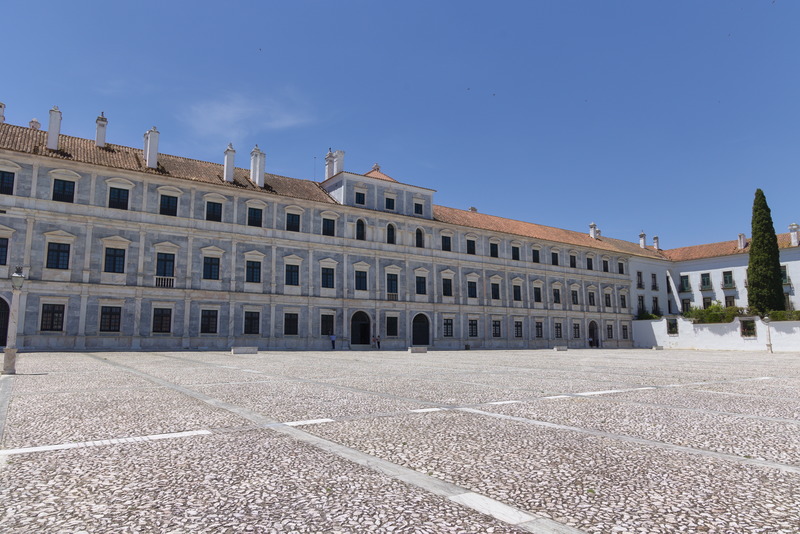
There it is, quite grand looking across the square.
Ah... You can only visit by guided tour.
Ah... The guided tours are only in Portuguese.
Ah... Photography is not allowed inside.
We're a bit in two minds but decide to go in anyway. There is at least a guide book in English.
The no-photo thing is rather annoying, as there's quite a lot to see and we can't do more than guess at a few words of the guide's descriptions. If you understand Portuguese or can find a tour in English, it's probably worth a trip just to see it, but otherwise only recommended if, like us, you are passing directly through anyway.
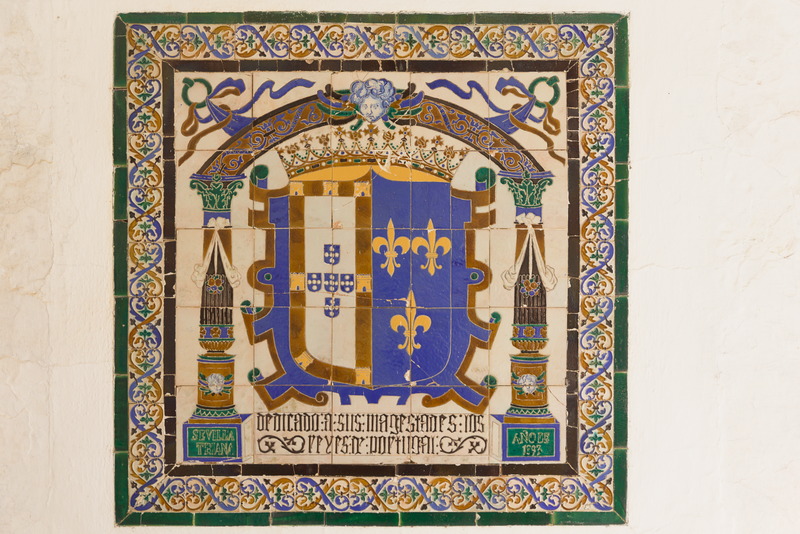
As we leave the building, I can take a picture of these tiles on the wall!
Let's have a little stroll around town before we move on.
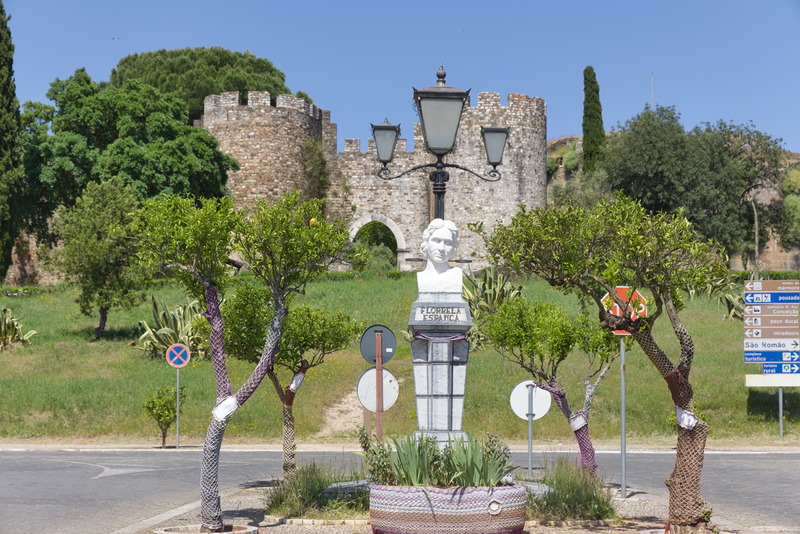
Across the road is the gatehouse of the castle, which we aren't going to visit. The street art is a bit curious, though. And who, you may ask is Florbella Espanca?
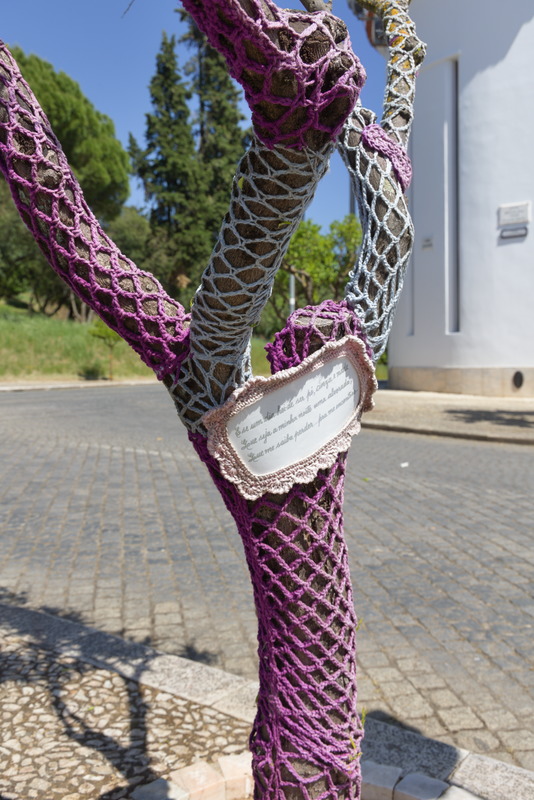
Well she was a Portuguese poet who was born in the town, and there are excerpts from her works on the trees. This one is from a poem called “Amar!” - “Love!”, and it translates as,
And if one day I am to be dust, ashes and nothing,Couldn't have put it better myself.
May my night be a dawn
May I know how to lose myself, to find myself.
I'm reminded slightly of Yayoi Kusama's “Ascension of the Polka Dots on the Trees” installation at Melbourne earlier in the year (blog link), but who is the artist here? This web page in Portuguese (as translated by Google) explains all.
The Vila Viçosa Grandmothers’ Club wants to keep the art of crochet alive and to that end has taken matters into its own hands and is responsible for decorating several spaces in Vila Viçosa. The latest, inaugurated yesterday on the occasion of World Poetry Day, is located next to the Bust of Florbela Espanca.Ok, next stop Évora!
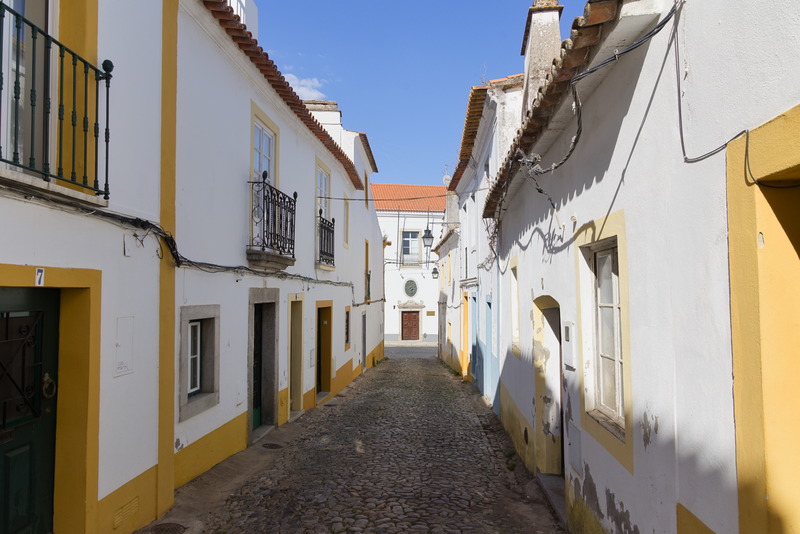
This is the street with our apartment (just behind me as I take this picture). Fairly obviously we can't park the car here, and in fact we haven't even tried to drive up to drop our bags. We've parked just around the corner in a nearby square.
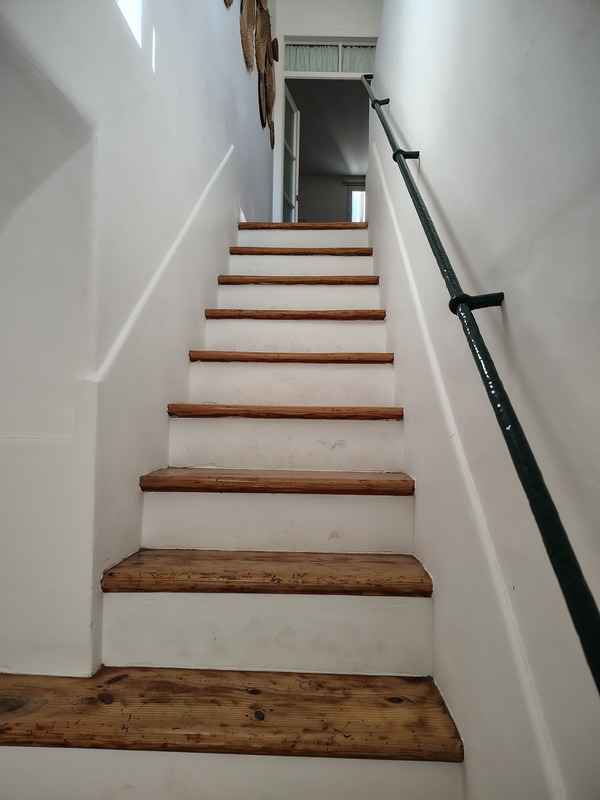
Ok, it's up some stairs, but not too bad. We've certainly had a lot worse than this.
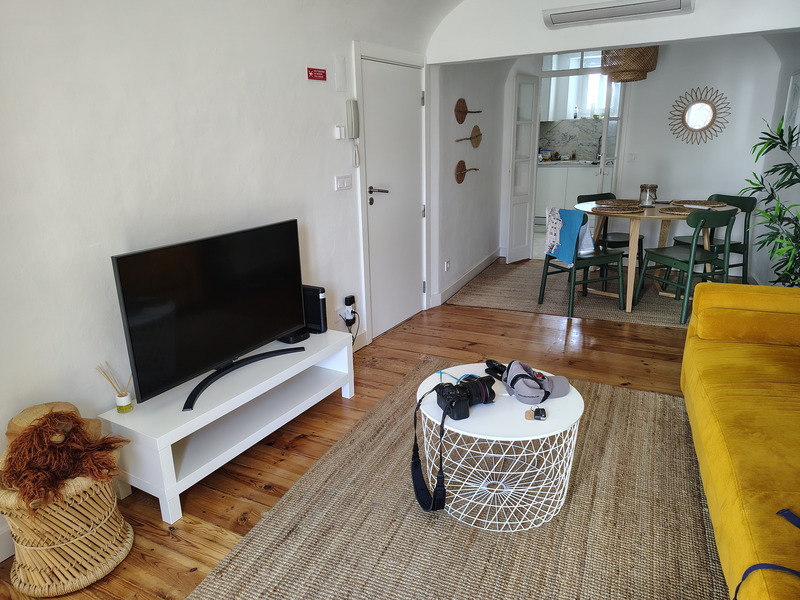
A nice spacious lounge-dining area that leads on to the kitchen.
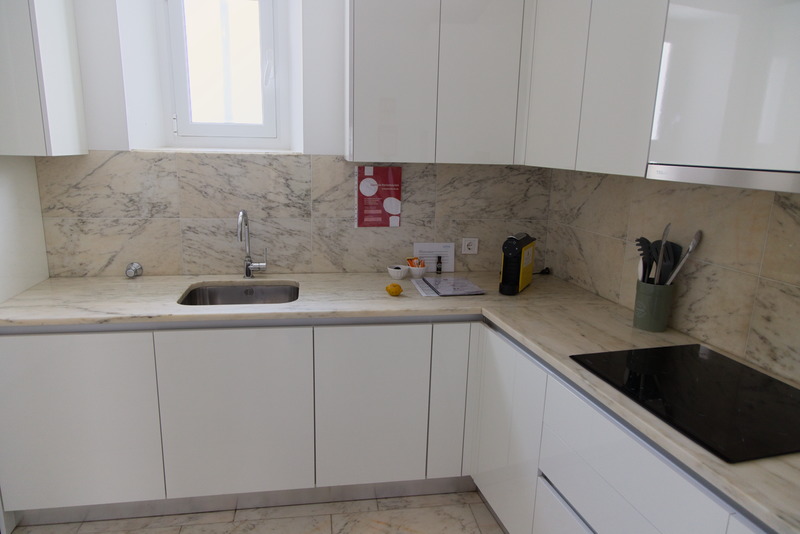
Coincidentally not a million miles away from our own in style! Just out of shot, there's a decent built-in oven and microwave too. This is definitely one of the better-equipped self-catering apartments we've had.
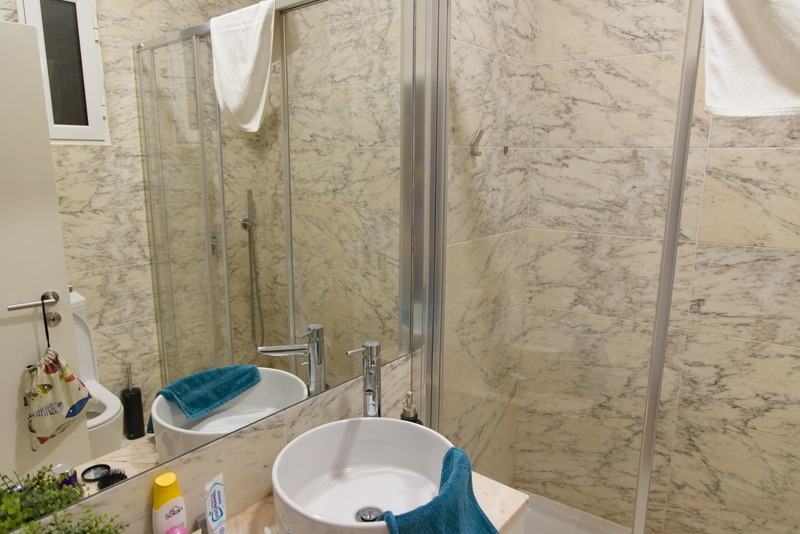
No bath in the bathroom (Amanda does like a bath), but otherwise clean and good-looking, and everything seems to work.
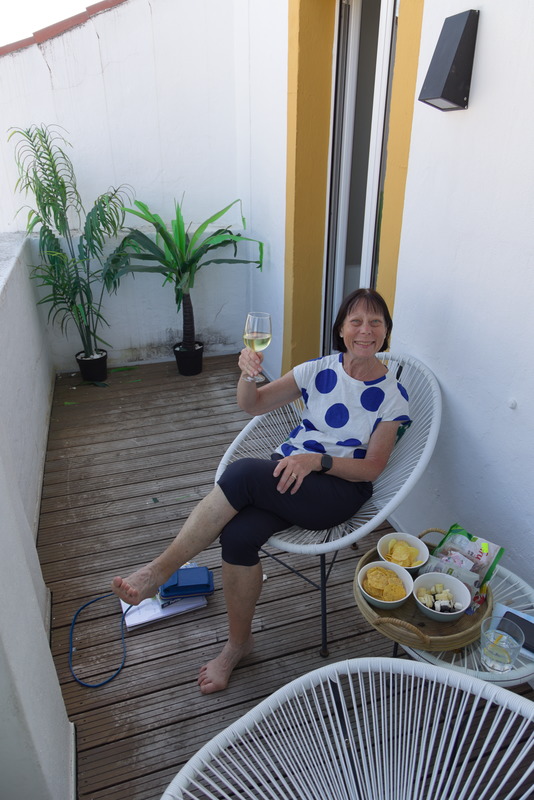
The benefit of climbing those stairs, and one of the main reasons for choosing this apartment in the first place, is the fine little roof terrace.
Now I have to be honest and admit we don't have all that much of a view from here, but it's still an excellent little spot to enjoy some drinks and nibbles in the evening warmth.
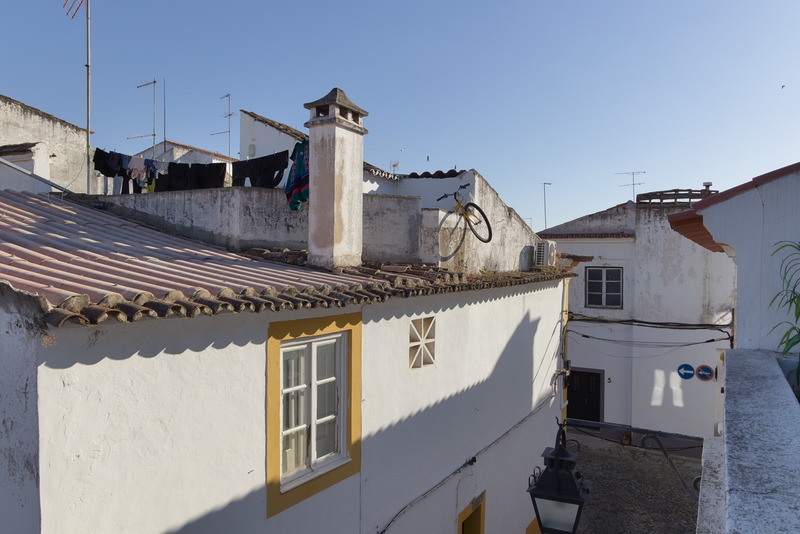
This is what we look on to. It's maybe not wild nature nor mediaeval strongholds, but the white and mustard-yellow houses are not unattractive. And we can always entertain ourselves speculating on why our opposite neighbour hangs a bicycle over their balcony wall.
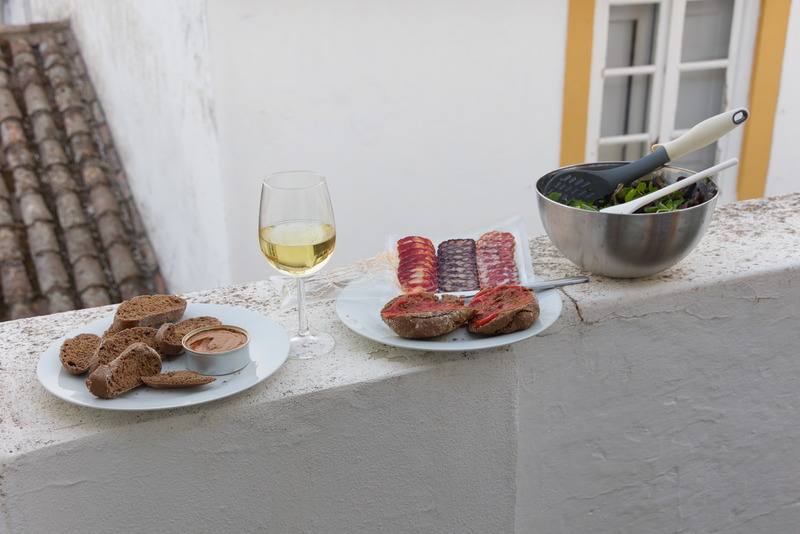
Dinner is very simple tonight. Just some bread with baba ganoush (or similar), charcuterie and a bit of green salad I've made. Oh, and a glass (or even two) of excellent local wine.
I should perhaps explicitly state here that, as we had hoped, the food and wine we've been having is almost infinitely superior to our experience from 1991. Now fairly obviously, we've a lot more money to spend on them now than we had then, but that's not really the reason.
We still remember the seafood platter we had at La Rochelle in 1989 (like I said in the intro: our first ever foreign holiday together, when my Peugot 205 GTi 1.9 was brand new and we sang along to Heart's Bad Animals with the sunroof open; but never mind blogs, we don't even have a paper diary from that trip!) and I still don't think we've had seriously better since. Certainly not at the replacement for the Seafood Bar at Heathrow T5 last December!
Portugual in those days just wasn't up to the same standard.
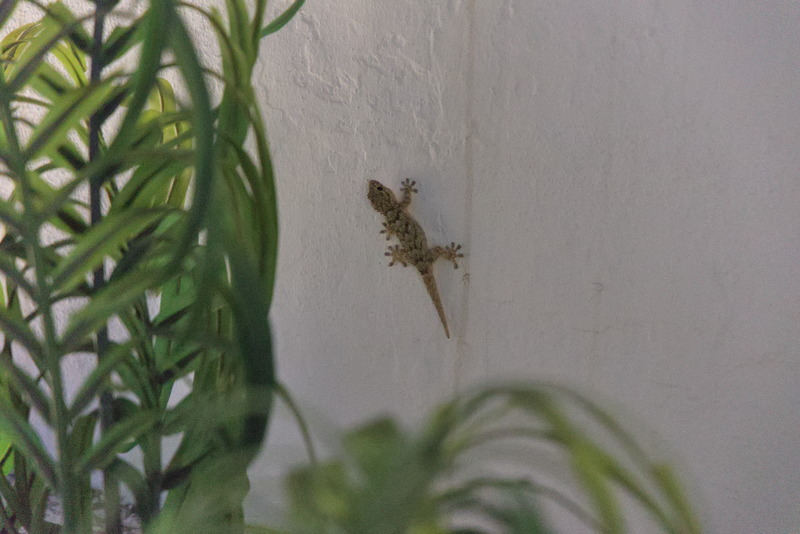
We have a friend!
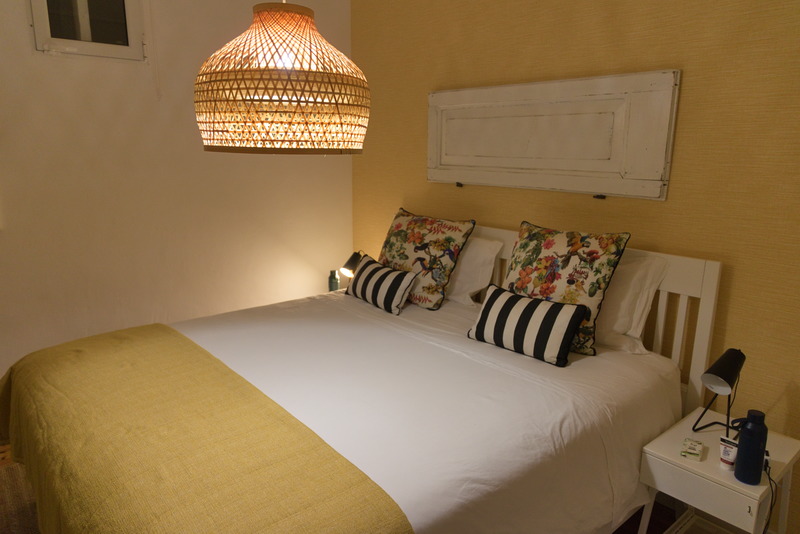
The bedroom decor is a little less interesting than the rest of the apartment, but it's comfortable enough and we sleep well.
⬅ previous ⬆intro next ➡