That Wasn't There Last Time We Looked!
⬅ previous ⬆intro next ➡Day 11 ~ 25 May ~ Évora
Today we're just going to walk around and explore the town a bit.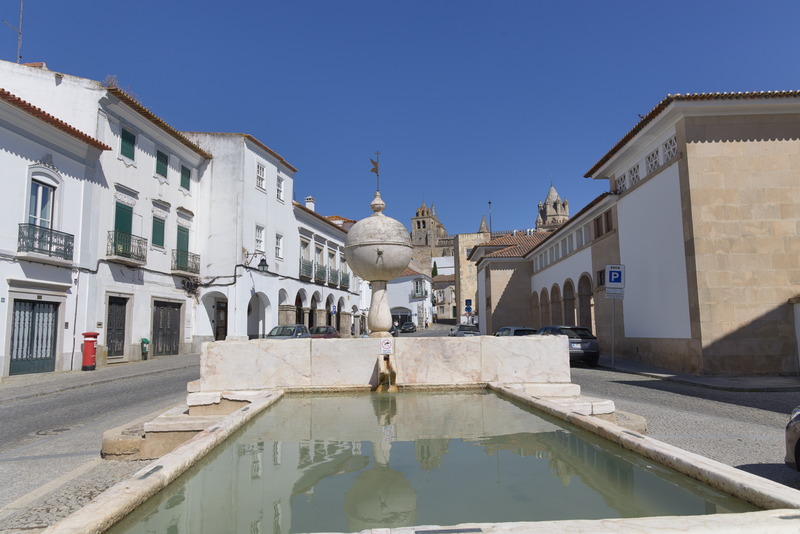
Starting with the square where we've parked the car (it's just behind us).
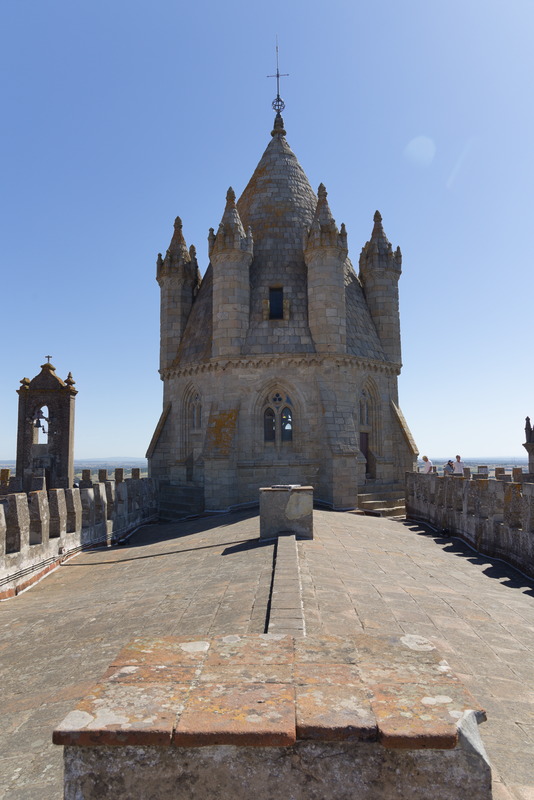
The roof of the cathedral. If you look at this place on Google maps, it is labelled
Catedral de Évoraso we're clearly doing the full-on tourist thing.
18th-century landmark
with tower views
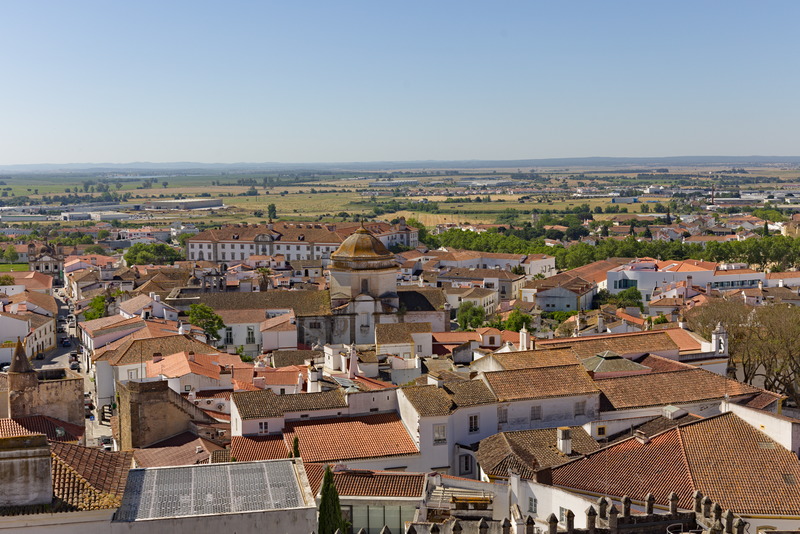
Yep, a view.
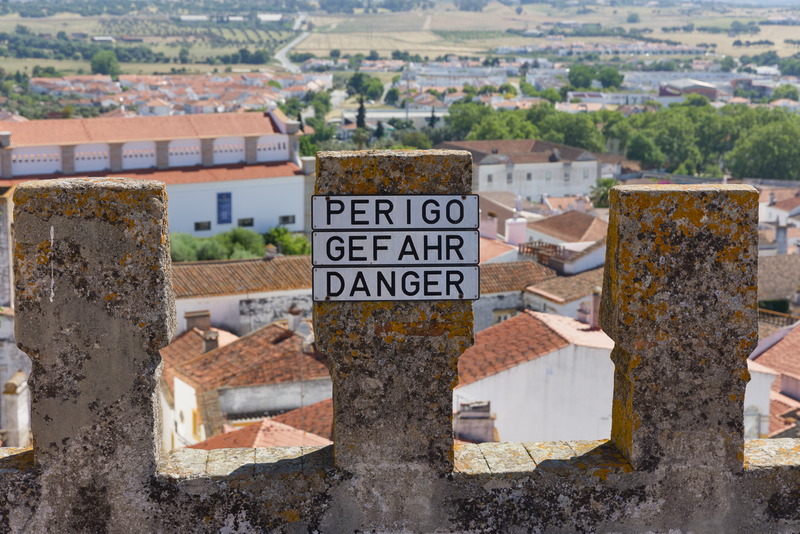
The Portuguese take health and safety very seriously, and they clearly worry that visitors need to be warned about the risks of falling off the parapet. Note, however, that the warning is in Portuguese, German and English: possibly they're not too fussed if a Spaniard or Frenchie plunges to their doom.
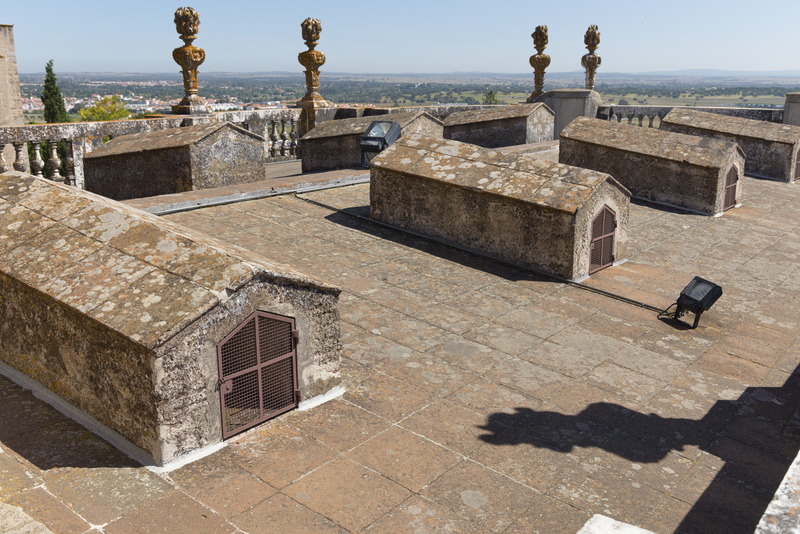
We don't think these are dog kennels, but, well, what? Chicken coops? Gargoyle hutches? Google search finds a myriad of similar photos and text articles, none of which tell us more than we already know: that we're on the cathedral roof. I throw the question open to the audience: any ideas?
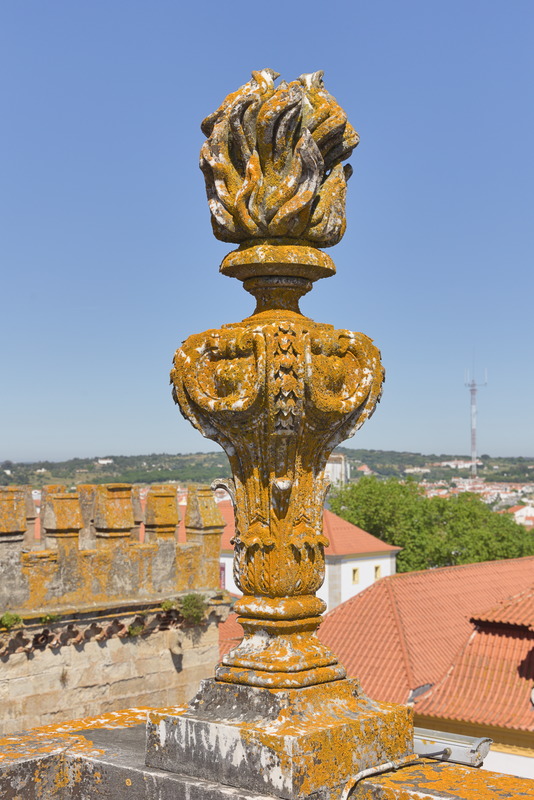
I think these must be symbolic flaming stone torches, but am open to offers on this one too.
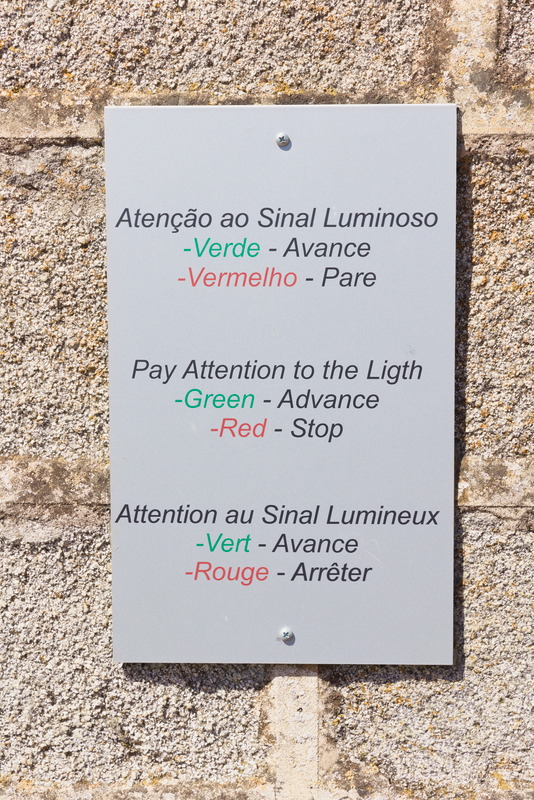
The stairway up here is quite narrow, and I imagine that in the height of the season the visitor numbers get a bit silly, so they have this traffic ligth system. Pay attention to the ligth!
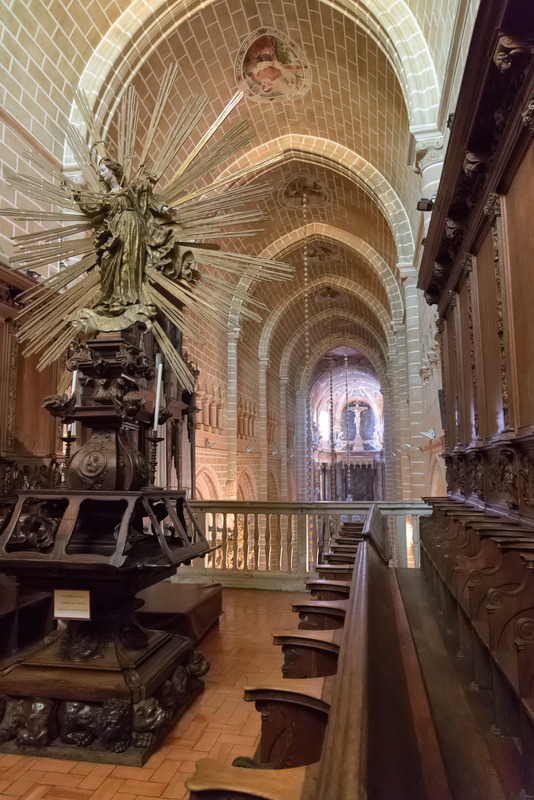
Inside, but still well above the ground, this is the “high choir”. A plaque tells us,
As all the Romanic and Gothic churches, Évora's Cathedral had inYou are at least now better informed.
the beginning no high choir. Only on the XV and XVI centuries, with the
development of polyphonic music high choirs were built.
This high choir is one of the most remarkable ensemble of
renascentist art in Portugal; built in the time of Évora's Bishop D. Afonso
of Portugal (1486-1522). The choir has been edificate under the
pontificate of Infant D. Henrique, first Archbishop of Évora and future
King of Portugal - the year of 1562.
Built in oak wood, it is lined by two ranks of chairs with carved
arms and has 43 seats above and 31 bellow. The gallery is decorated by a
high rank of 22 pictures. The 35 panels above the low ranks of chairs
represent hunt and everyday life scenes.
The great Renaissance organ, also made of oak, is considered one
of the ancient in Europe - it has the same age as the choir.
In Rocócó stile, the big reading desk placed in the middle of the
choir, is made of exotic wood. On it is placed an image of the ‘Mater
Dolorosa’
[sic]
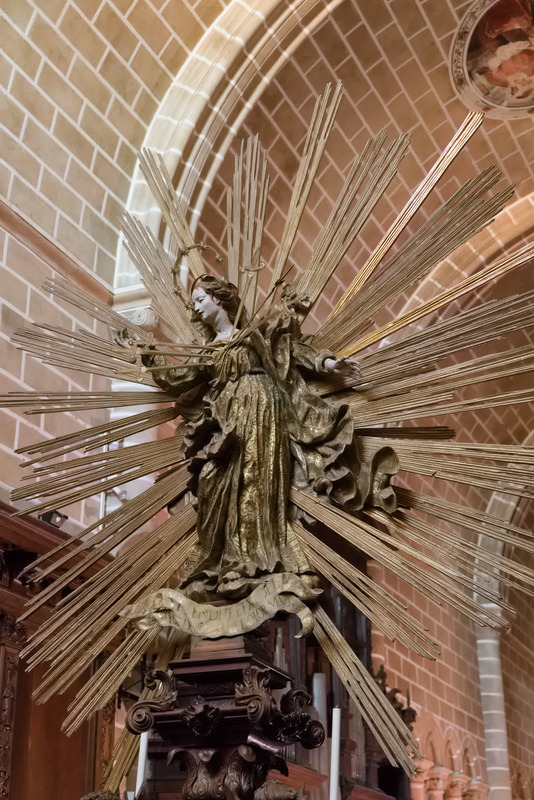
Me, I was just taken by the striking Mater Dolorosa.
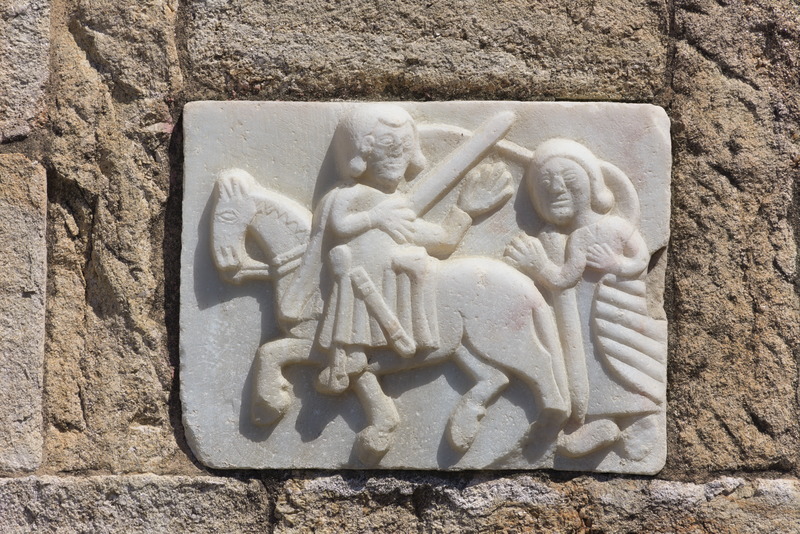
I don't know whether this obviously modern panel is meant to be a ‘restoration’ or a simple replacement of an original beyond repair. Or whether it's just a new chapter in the story of a still-living building.
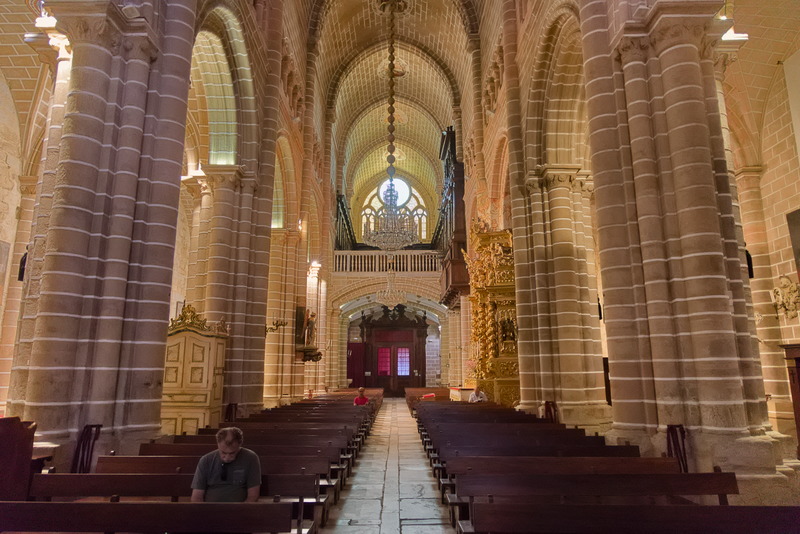
Finally, we see the cathedral interior from ground level. The nave is quite plain, but very elegant.
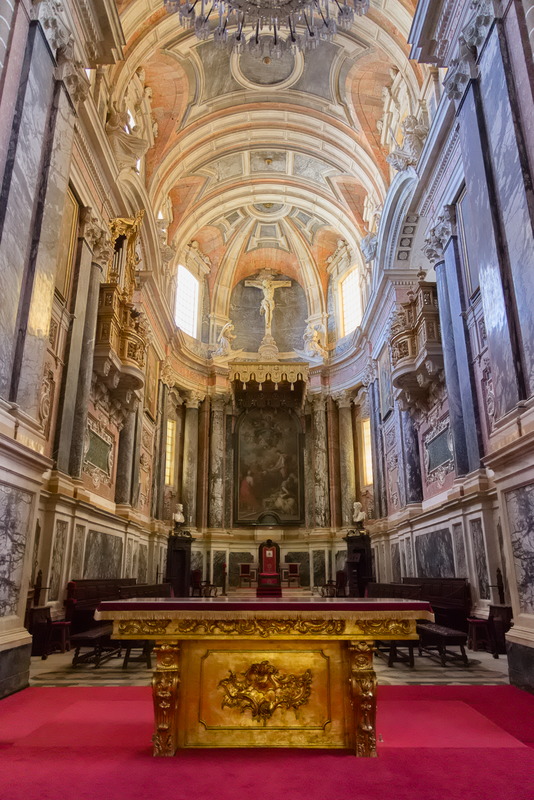
But the chancel and the apse turn up the bling!
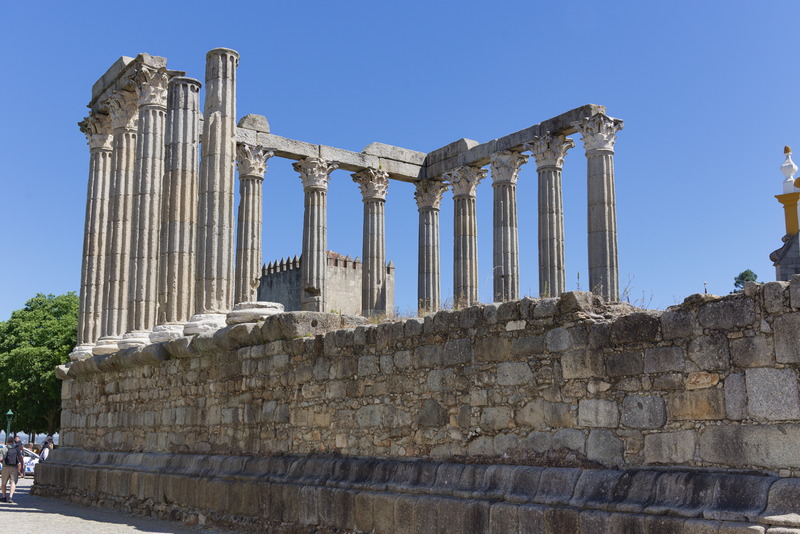
The ruins of the Roman temple.
It's more historically and culturally significant than you might think looking at it, but we don't know this as of now, so don't pay all that much attention. It's a popular backdrop for wedding photos, according to visitevora.net and I think I saw a few selfie queens, though I would generally have been trying to get pictures without them and therefore have no proof.
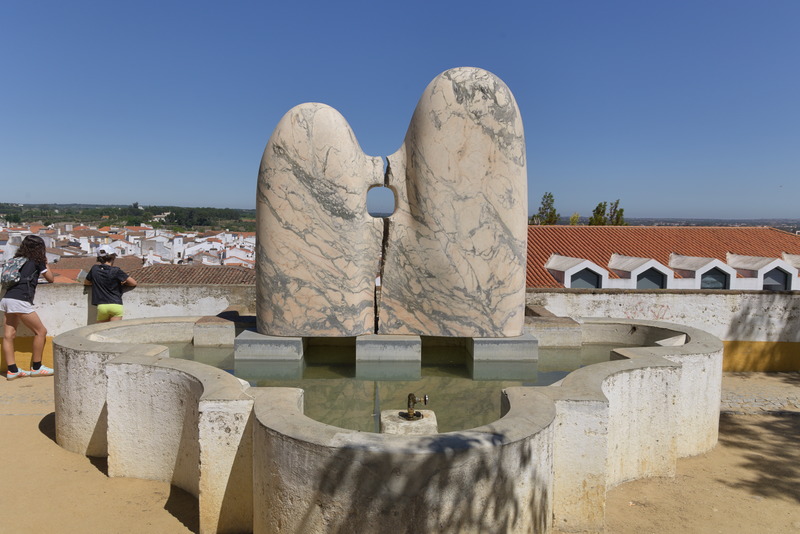
More art. Can you guess?
It's popularly called “The Kiss”, and it's by Japanese artist Syoho Kitagawa, although Google's AI Overview says “The sculpture is officially titled “La pleine lune s'abime dans la mer agitée” (The full moon sinks in the rough sea).” and that squares with some non-English websites I've briefly looked at.
But yeah, sorry, gotta be shallow again here; it's ok but.
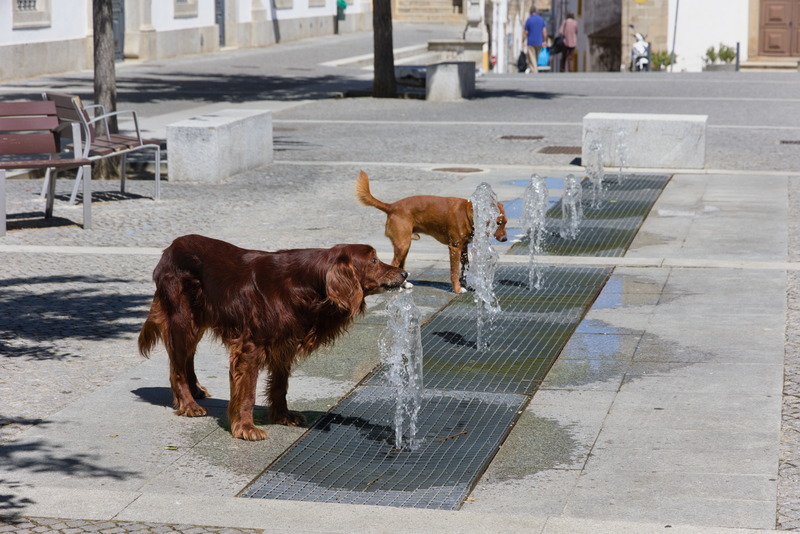
More art. But...
The dogs don't think this is art, they think it's a multi-user drinking fountain.
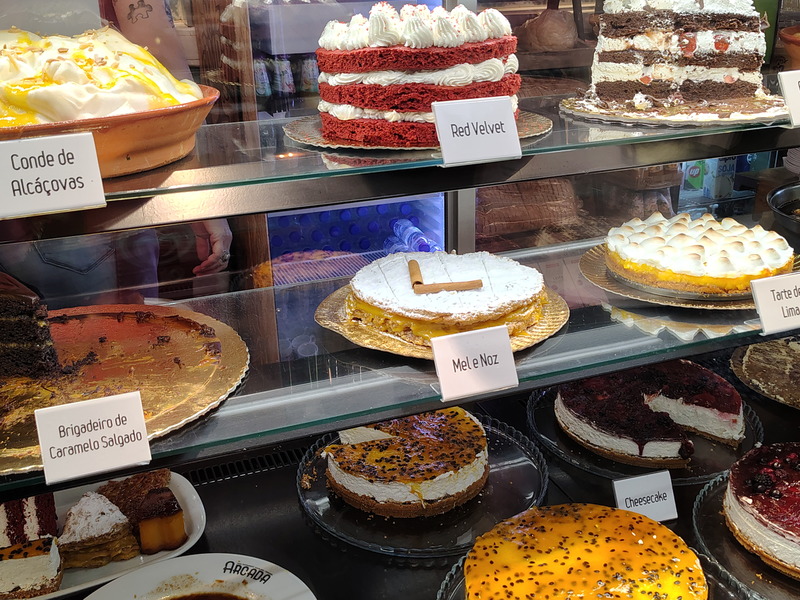
A cake shop display window. Nothing to be seen except some cakes? It's not as simple as that.
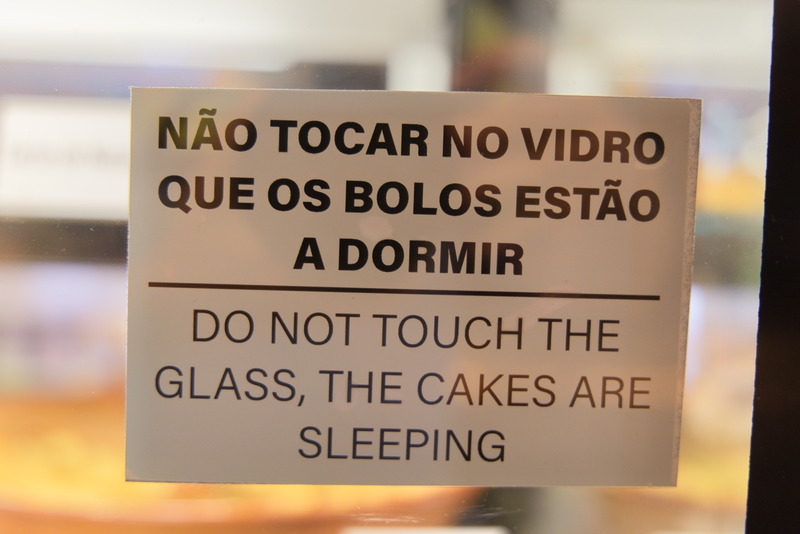
There you go! I hope you are not the horrid sort who would disturb a poor sleeping cake.
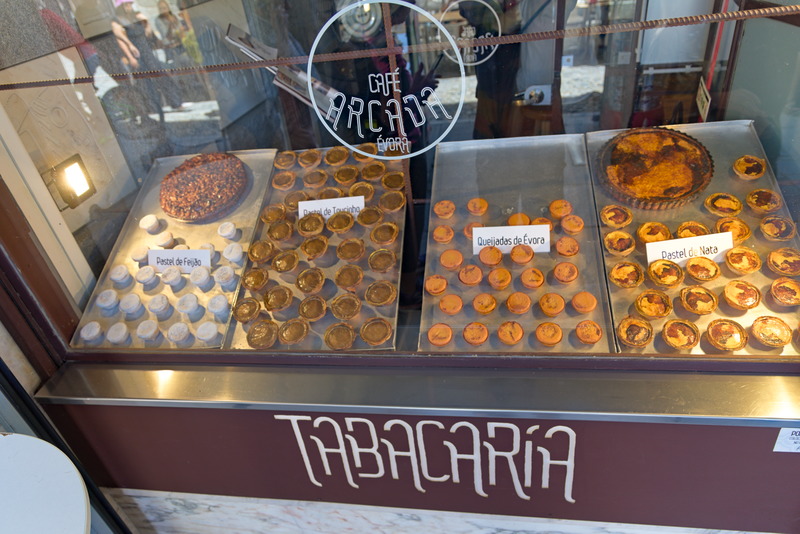
Pasteis de Nata may get all the publicity, but they are far from being the only Portuguese tarts.
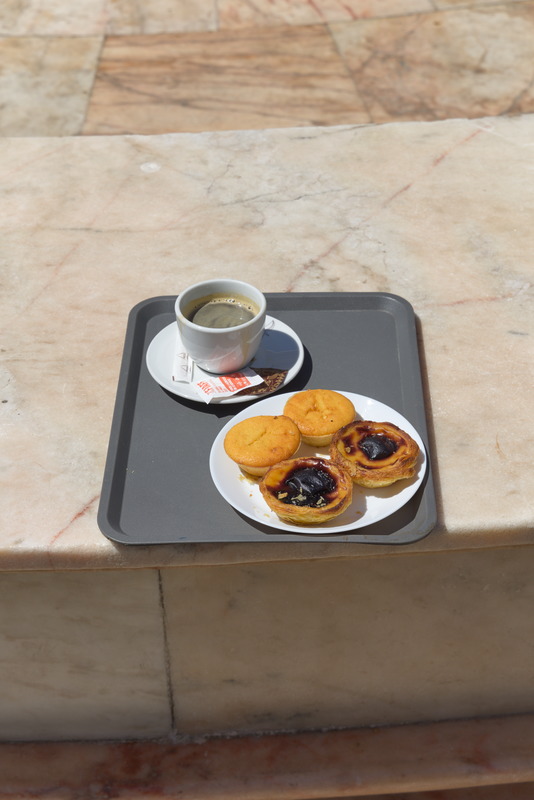
Think we'll have some for elevenses, and very nice they are too.
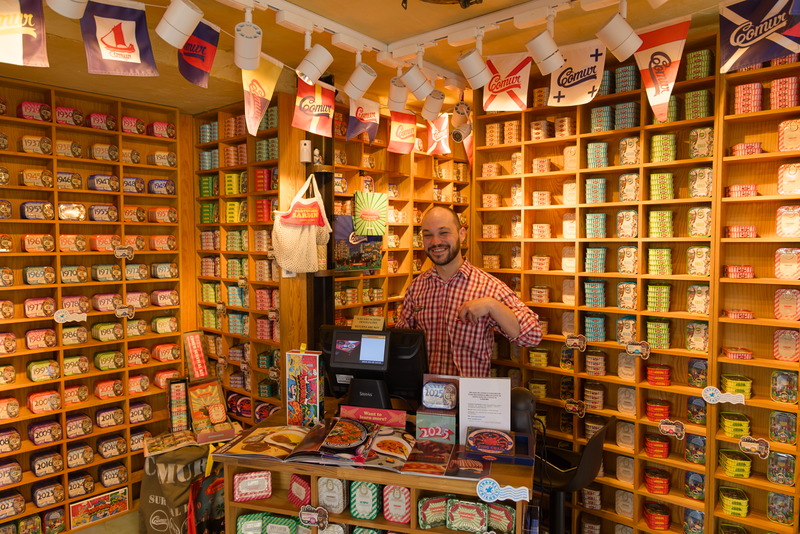
You know how a tin of sardines is something that lives in the back of a cupboard, possibly for centuries because they don't actually go off or anything...? Not in Évora! This is a shop that specialises entirely in tinned sardines and other fish, and even literally gold-plated ones! We are talking seriously artisanal stuff, which is something we'd never even thought about in this context. We have a fine chat with Mr Man, and he is easily convincing enough for us to want to give his wares a try.
We take a selection including the aforementioned gold and another labelled “1965” in honour of Amanda's birthday.
I fear it has cost a bit more than Aldi own-brand, but in the grand scheme of things, even expensive sardines aren't that expensive. [Ok, maybe the gold leaf and the lobster lifted the sardine average.]
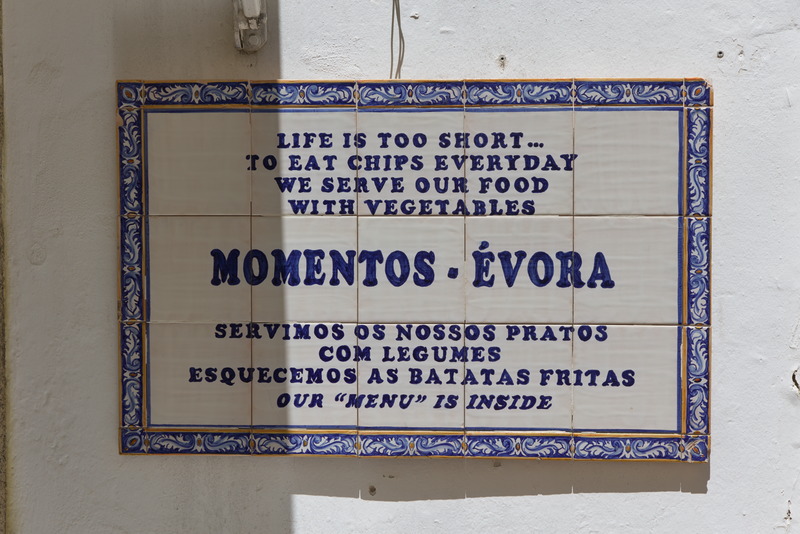
This so reminds us of our previous trip! Even the locals must have got a bit bored with 1991 cuisine.
We don't actually go there, but if we weren't self-catering, it would be high on our list of places to try.
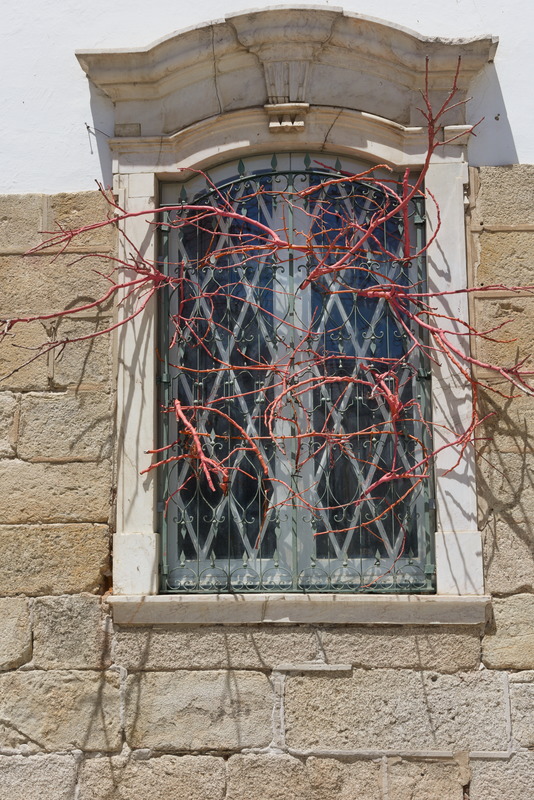
I think this is something to do with some upcoming city festival; if not, it's a bit weird.
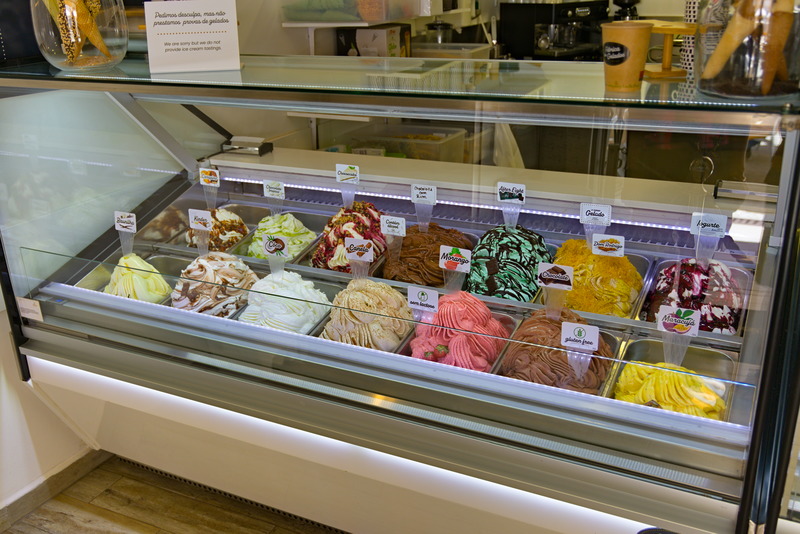
Ice cream? Churlish not to.
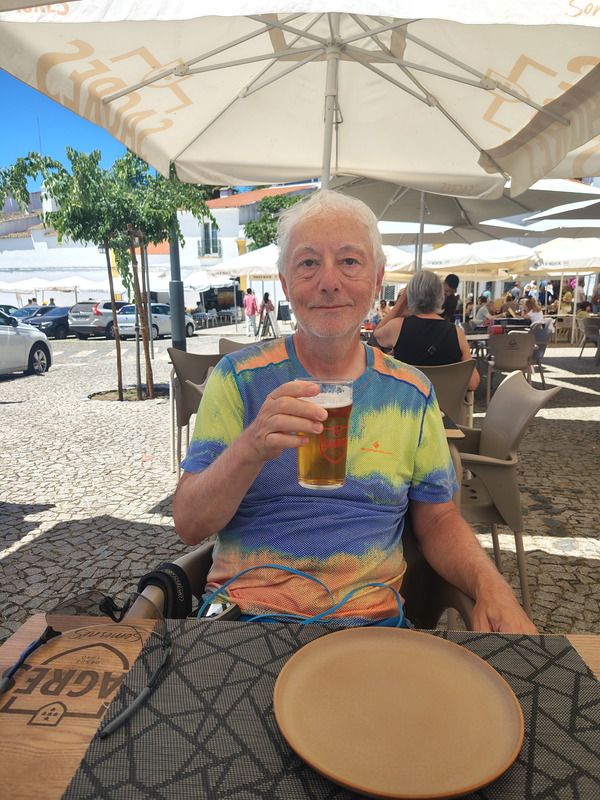
And now it's lunchtime, but a similar principle applies: “Beer? churlish not to.”
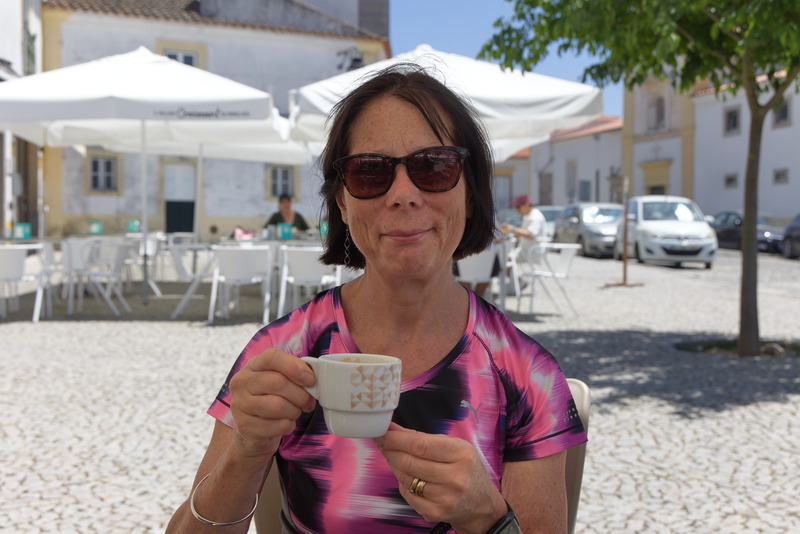
Amanda will have a coffee though.
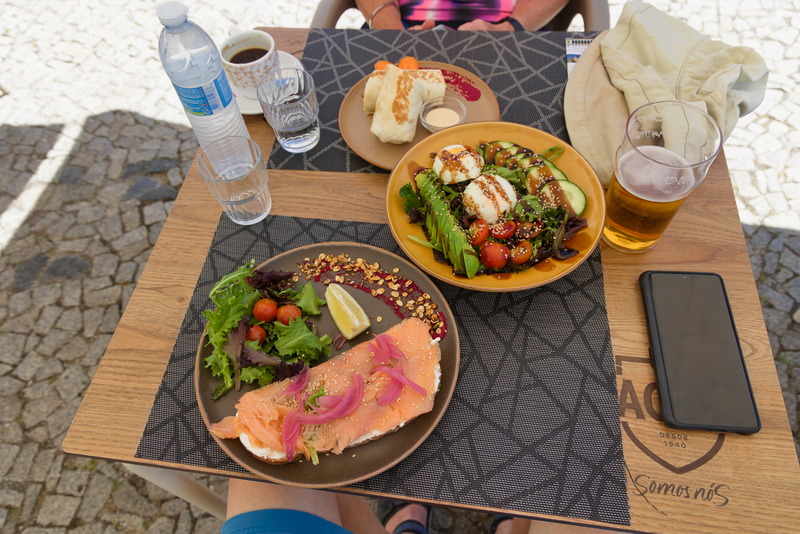
We can't complain about the quantity, although the shared salad is way too gunky for Amanda's taste. (And we both agree that it contains far more cucumber than any bowl of salad ever needs.)
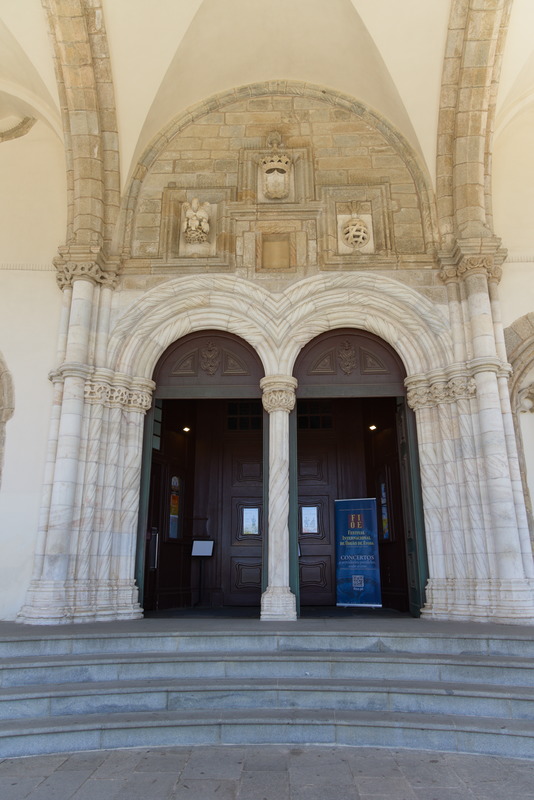
Into another church: St Francis this time.
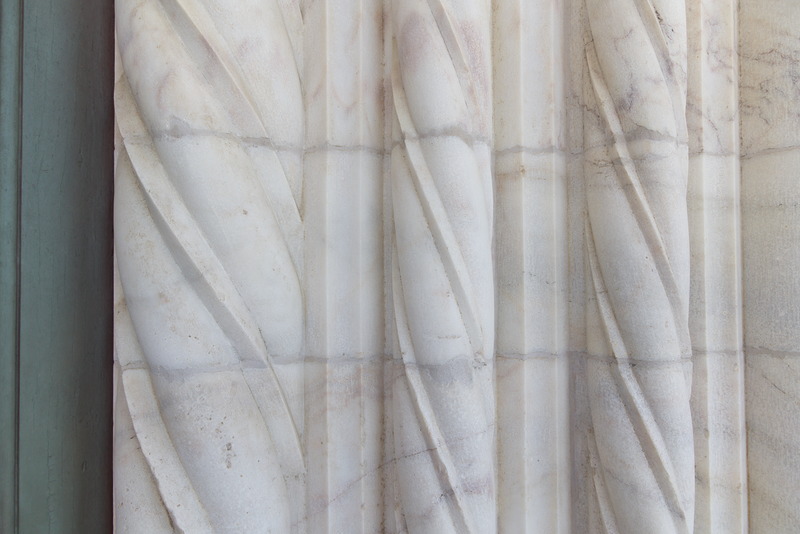
We're very taken by the fine carving of the marble pillars.
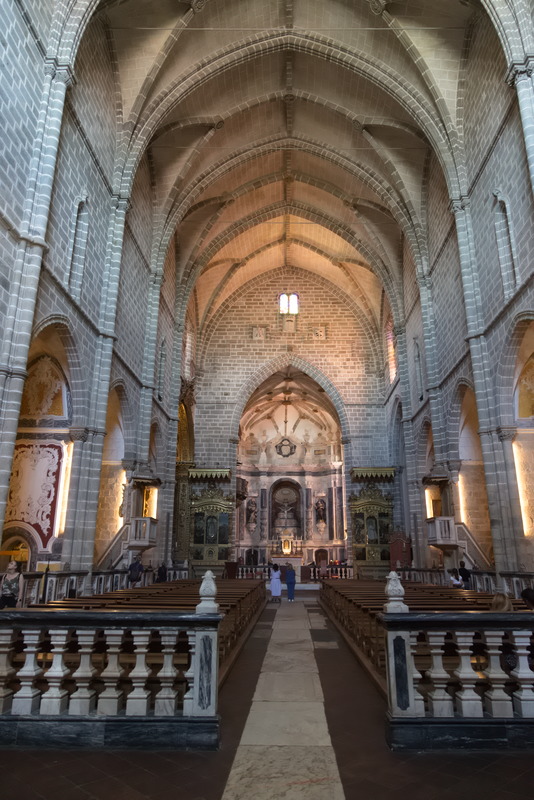
It's big enough. Apparently it's the largest nave of its kind to be found in Portugal. What is its kind? “Groin vaulted” it would seem, which is a technique invented by the Romans. This example seems atypical, though, compared to what is online. Compare this example from Wikipedia's article.
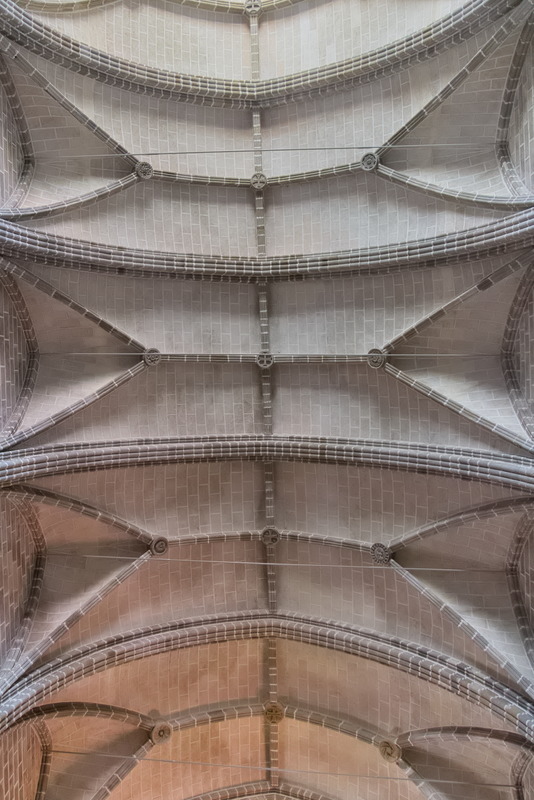
It's a kind of hybrid I think, but you'd best find yourself a more expert guide to Gothic architecture if you want the real low-down.
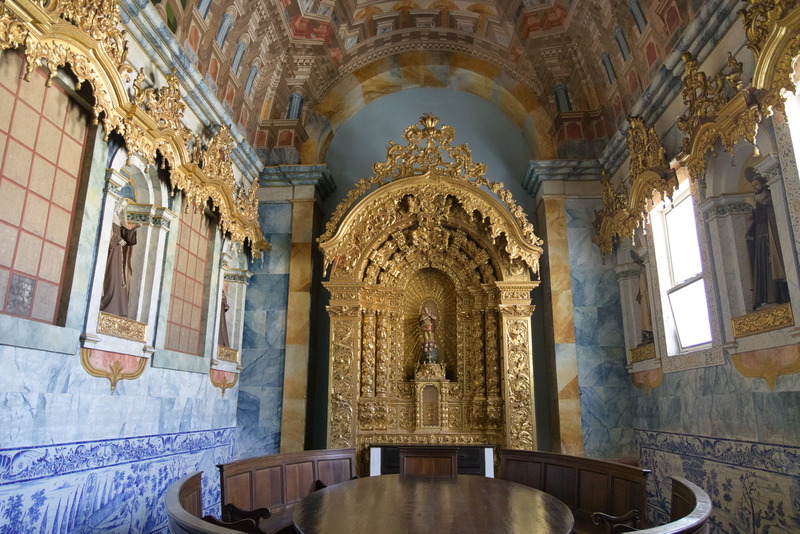
Now this is what you call a meeting room!
Strangely, although you can find any number of near-identical photos to this with Google image search, you will be hard pressed to find any description of what the room is. I couldn't find anything at all, even on the official website.
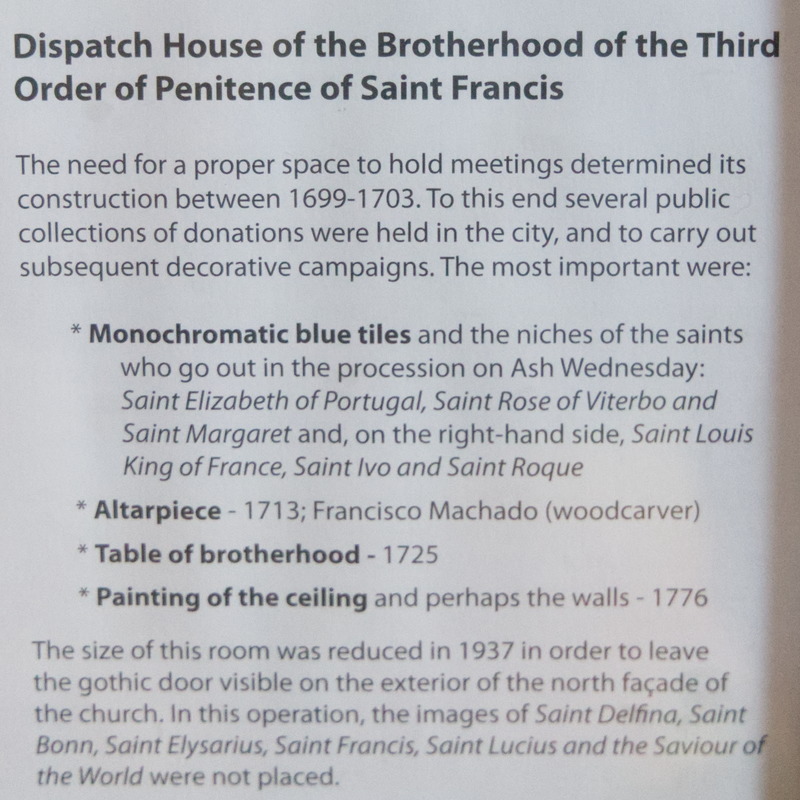
Fortunately, there's an information board in the room, and I took a picture of that.
What you will find online, but not here, is all about the “bone chapel” next door. The “Capela dos Ossos” was created by Franciscan friars in the 17th century, using around five thousand exhumed skeletons to decorate the structure. I can't remember now whether we didn't realise this at the time, thought it too gruesome to visit, or just didn't feel like paying the entrance fee.
But here's the Visit Évora page if you're curious.
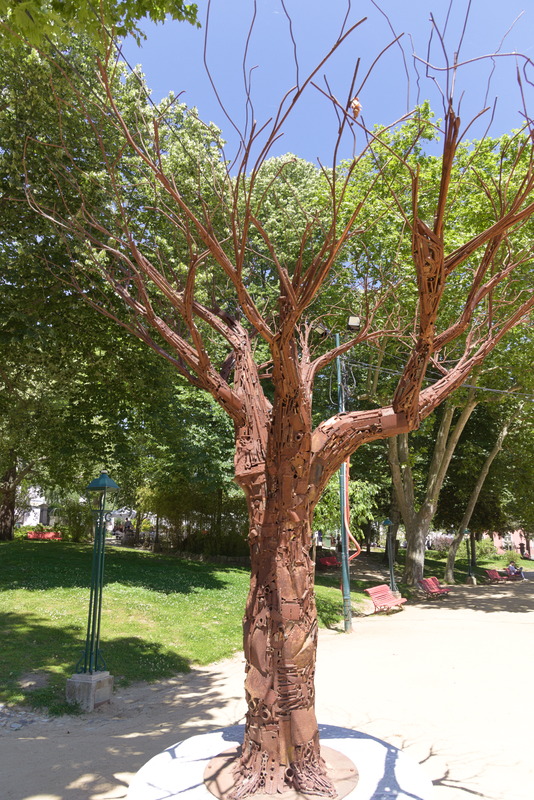
We walk through a small park with a curious metal tree.
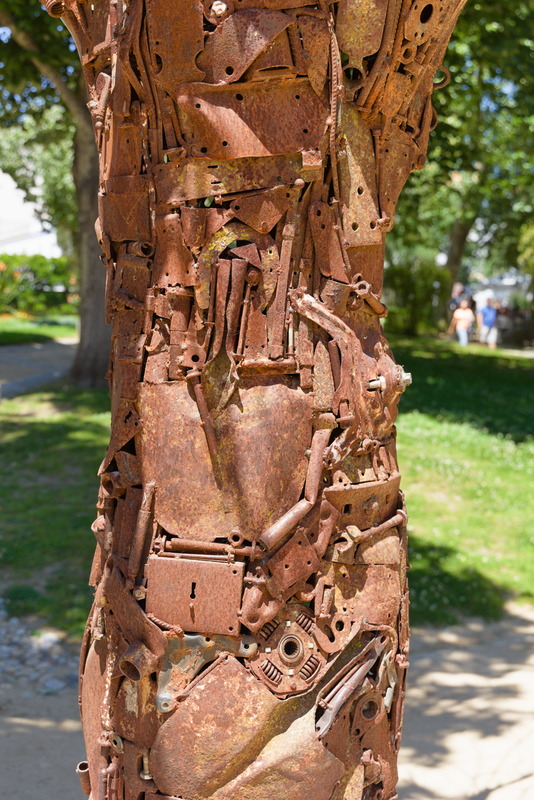
Close up, you can see it's made from all manner of bits of scrap metal welded together and allowed to rust.
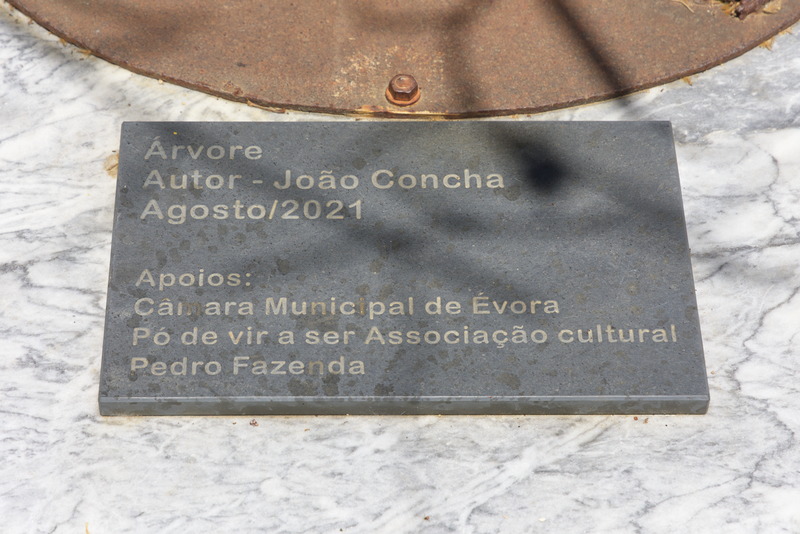
Google the artist's name and you find somebody else entirely! A man from Lisbon who describes himself as a “visual artist and illustrator” and all of his work is on paper. Even more confusingly, he was born in Évora before moving to Lisbon at the age of 18.
‘Our’ João Concha still lives and works in Évora, and doesn't have his own website, but can be found on Facebook and Instagram.
One of the few pages I can find says of the tree, “[It] was in the main Praça Giraldo for many months last winter. Although it is still on display to the public, it has now been moved to one of city’s parks and there is an active petition in place by residents of Évora to get the town hall to move it back.”
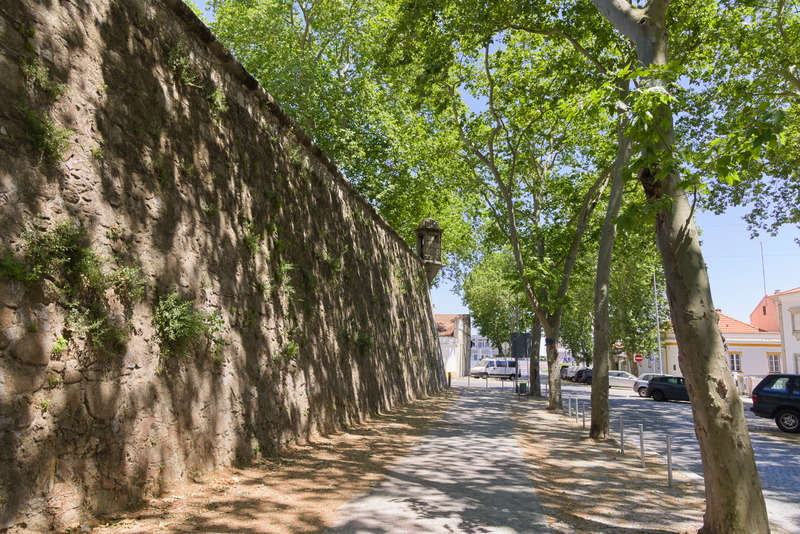
The city's mediaeval walls are still largely intact, so let's walk along the outside for a bit.
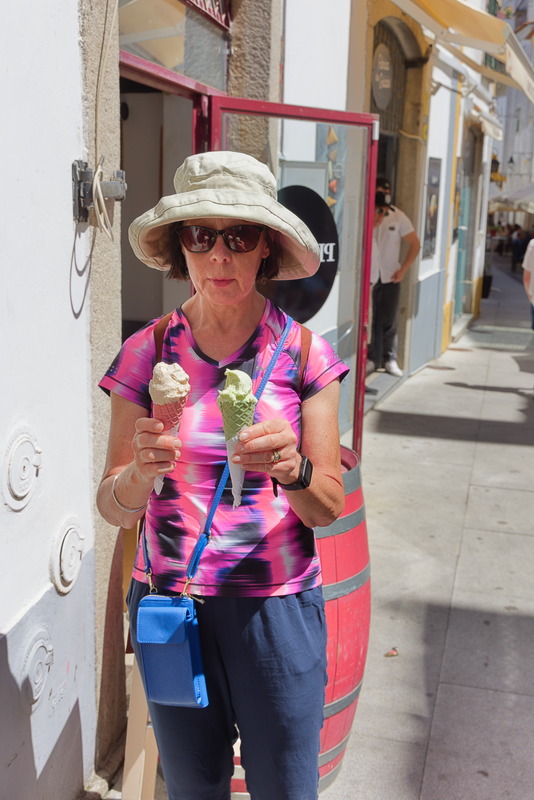
Is it time for another ice cream yet? What a silly question.
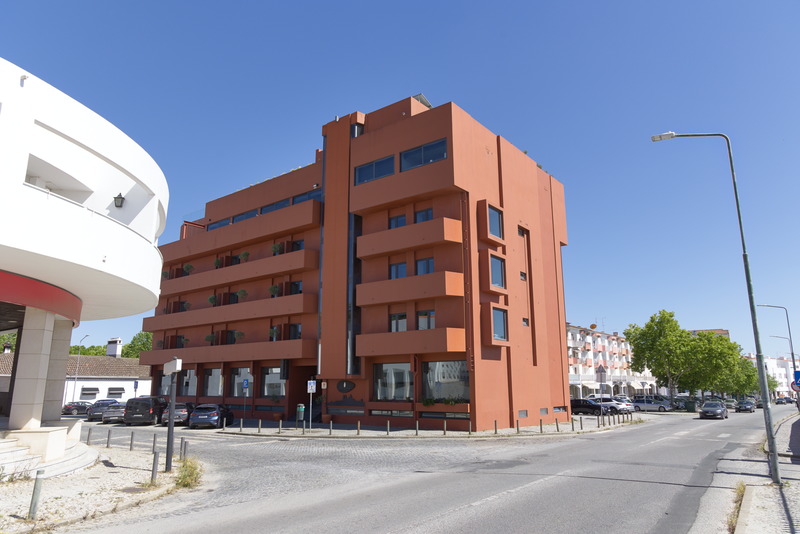
And a brief diversion into the less mediaeval parts, on our way to a supermarket where we can get some supplies. The shops inside the walls are pretty limited.
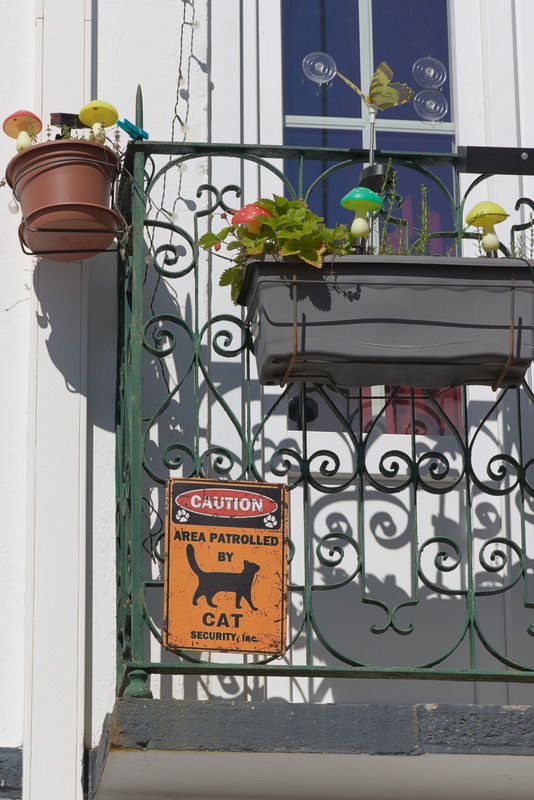
Miaow!
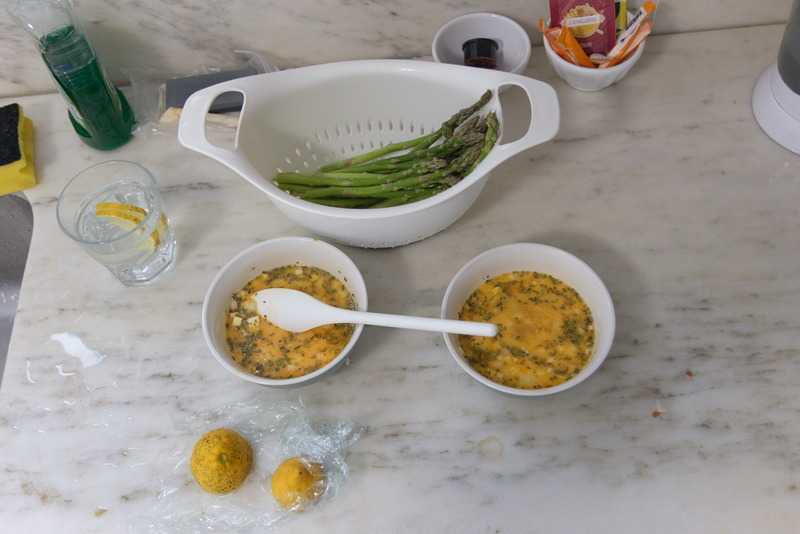
Back at the apartment, some dinner prep. I'm going to make some frittata (or something frittata-like, anyway), and I'm improvising an asparagus steamer with a plastic colander. Oh, and my G&T uses one of our foraged lemons from Alqueva.
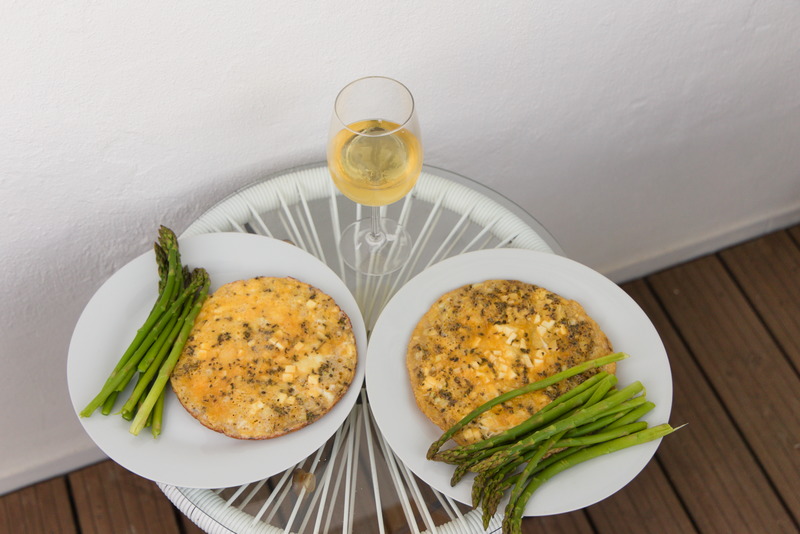
Done.
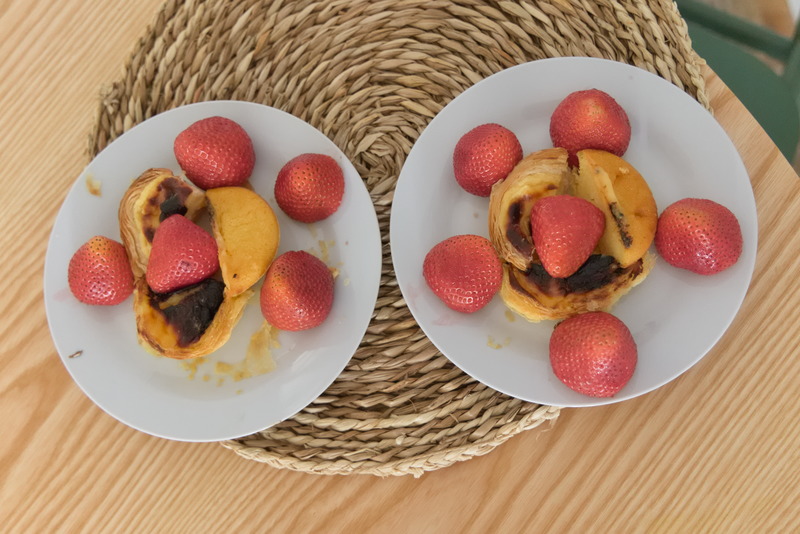
Pudding is more ‘curated’ than actually made, but none the worse for that.
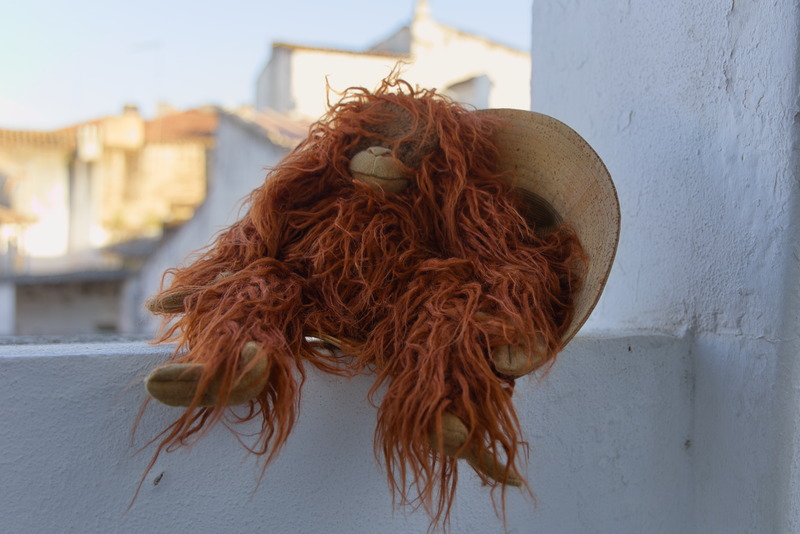
Gu-vu watches from his perch.
After dinner, we think we'll take an evening stroll...
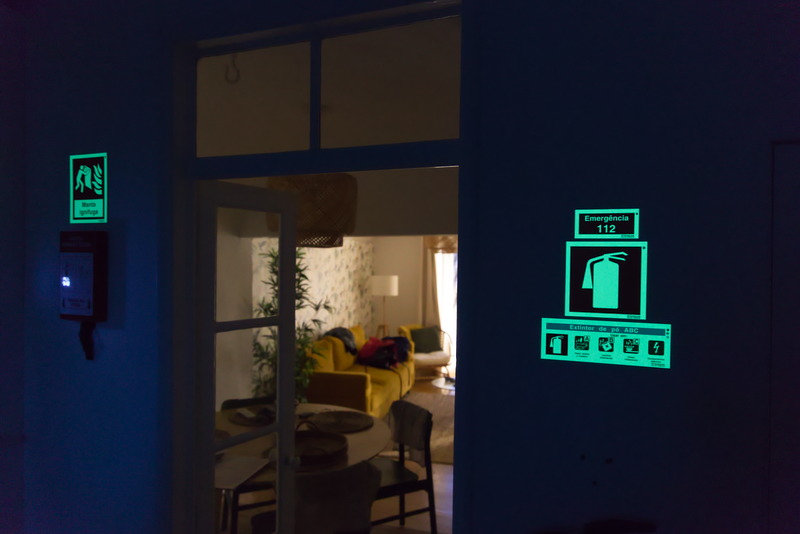
Gosh, we have glow-in-the-dark emergency posters on the walls. Is this what Kurt Cobain meant when he sang, “With the lights out, it's less dangerous”? [Have another YouTube link.]
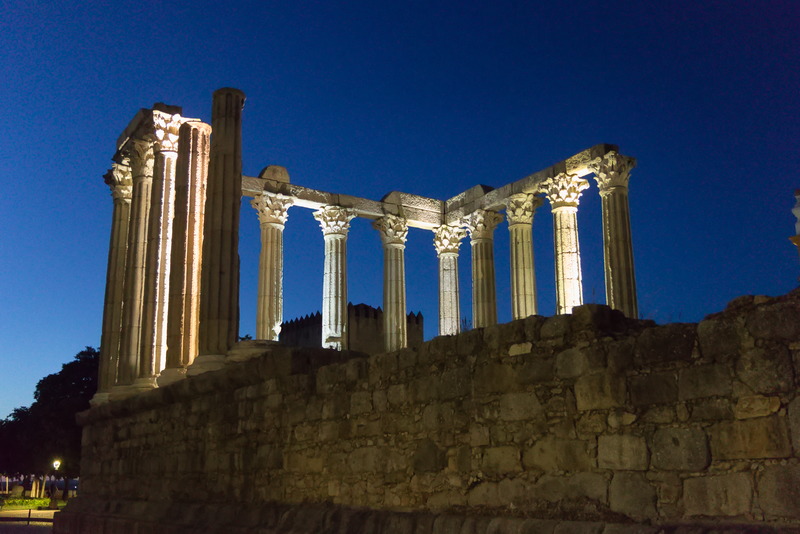
The temple is lit up.
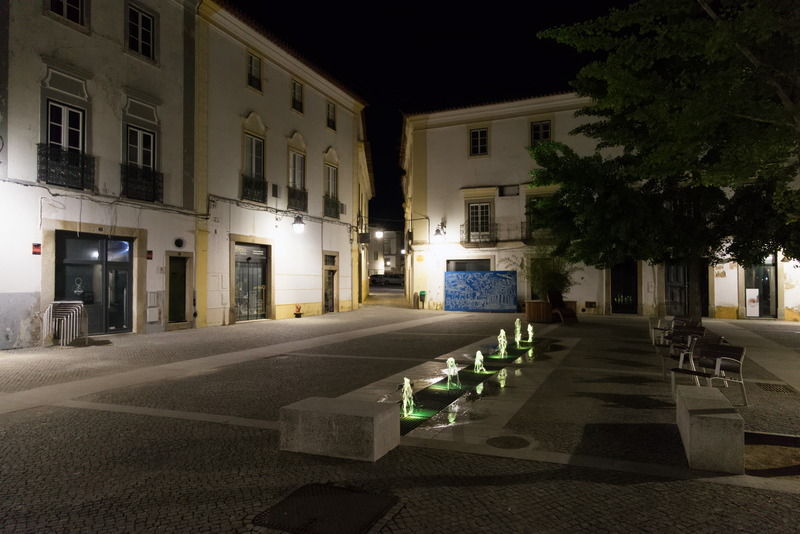
And the fountains where the dogs were drinking earlier.
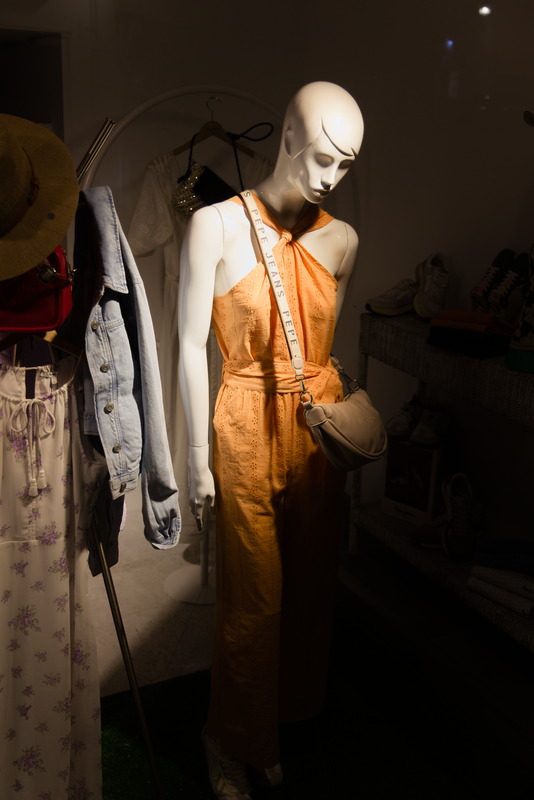
Even the shop window display looks mysterious.
So that's it for us here. Tomorrow it's back to Lisbon and home.
⬅ previous ⬆intro next ➡