Packing Is Going To Be Tricky...
⬅ previous ⬆intro next ➡Day 15 ~ January 28 ~ Buenos Aires
It's our last sightseeing day in Buenos Aires, so we want to go and check out some of the things we skipped briefly past on our guided tour. There's a metro stop not far from our hotel which will take us into the centre of town, so that's our plan.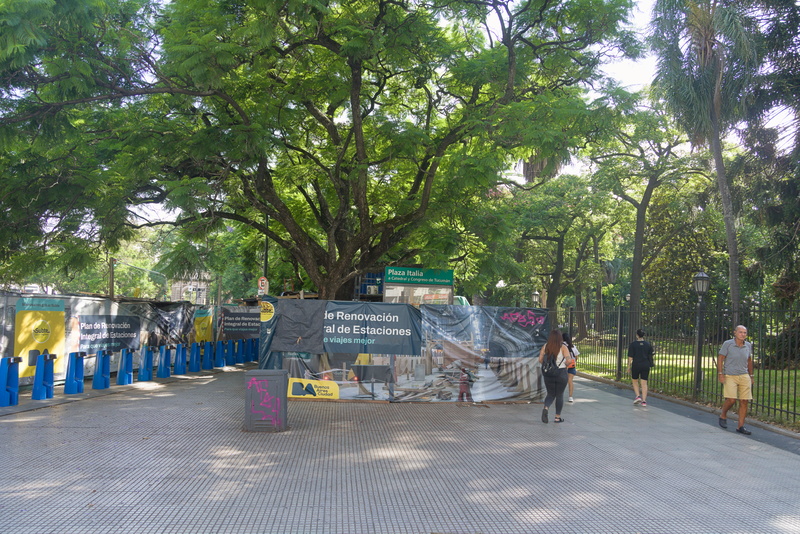
Ah. Our local station is closed for renovations. Oh well, it's not that much of a walk to the next one.
But we need to get a metro card. You will recall that in Santiago a little man leapt to our assistance and we were sorted in no time. This is different. There are no machines we can see, and the man in the ticket kiosk tells us he doesn't have any, try the other side of the station. No, try a newsagent. Newsagent: no, try the station. WTF??? We're going round in circles. As we stand in the street looking confused, a local accosts us and asks if he can help. We explain that we're trying to buy SUBE cards – the local equivalent of Oyster – and he says that he doesn't think we need them, that ordinary credit cards work.
That's emphatically not what any of our online research had told us, and nobody in the metro station offices had said it either, so we're now very confused. But at the next station we ask again, and this time while we're told that they have no SUBE cards either, a much more helpful lady points us at the barrier that takes ordinary contactless debit/credit cards right next to the SUBE barrier.
Hoorah! It works. It seems that this facility has only been in existence for a year or so, and easily accessible tourist information has yet to catch up.
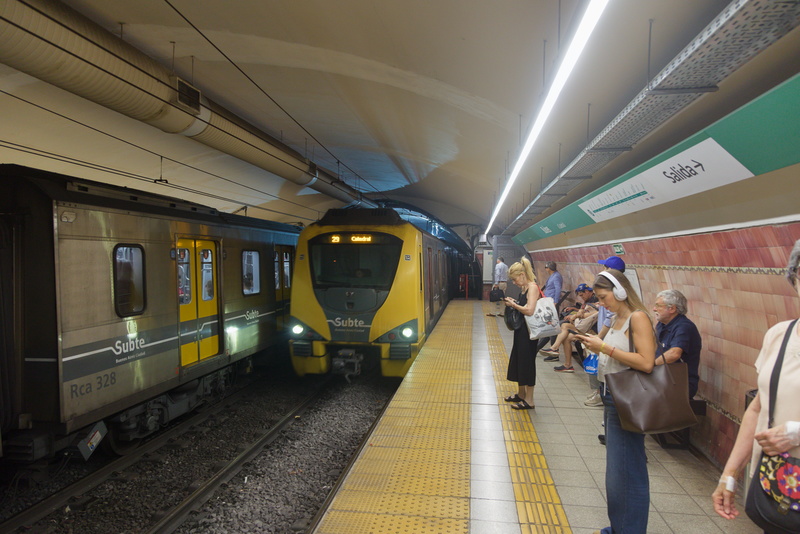
So here we are at last and here's a train. What more could we ask.
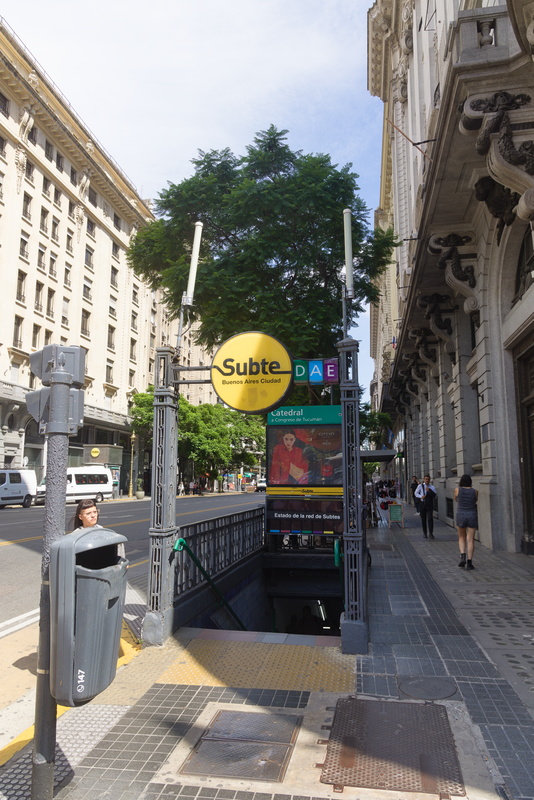
And we're back out in the city.
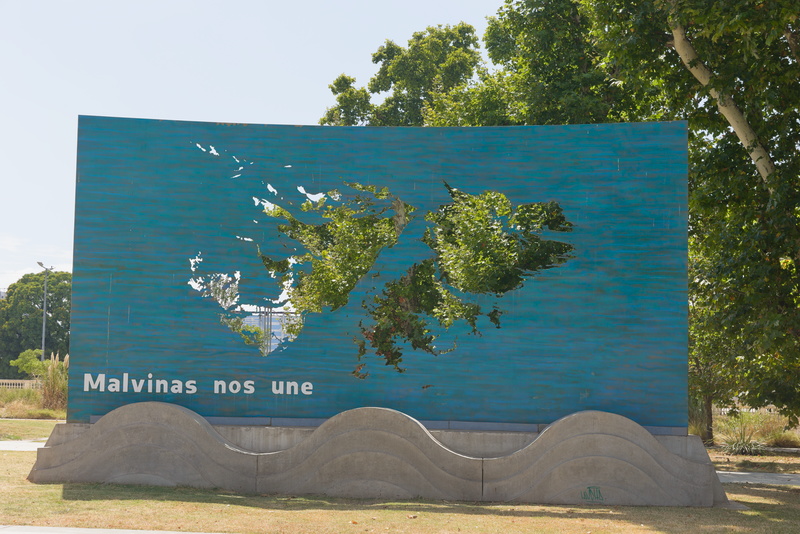
Hmm... Best not go there.
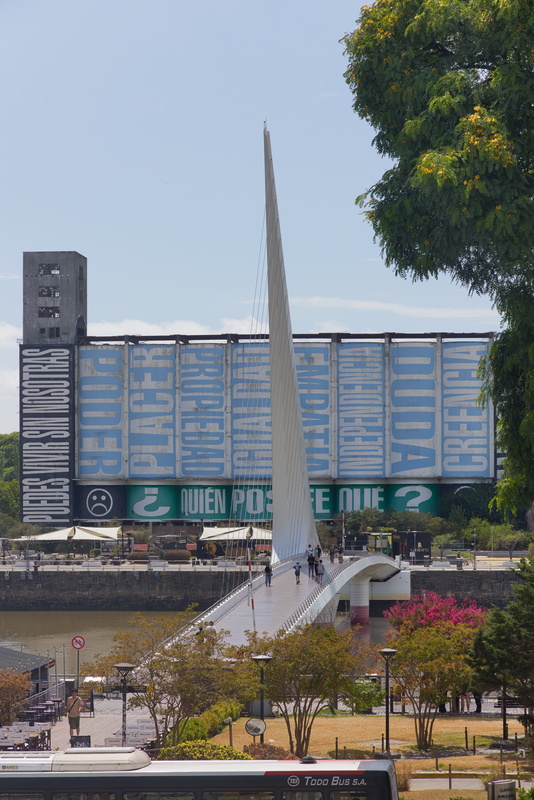
The “Woman Bridge” we saw from afar yesterday; we'll examine it more closely soon.
We're down in the old docklands area, and not unlike London, it's definitely been gentrified a bit.
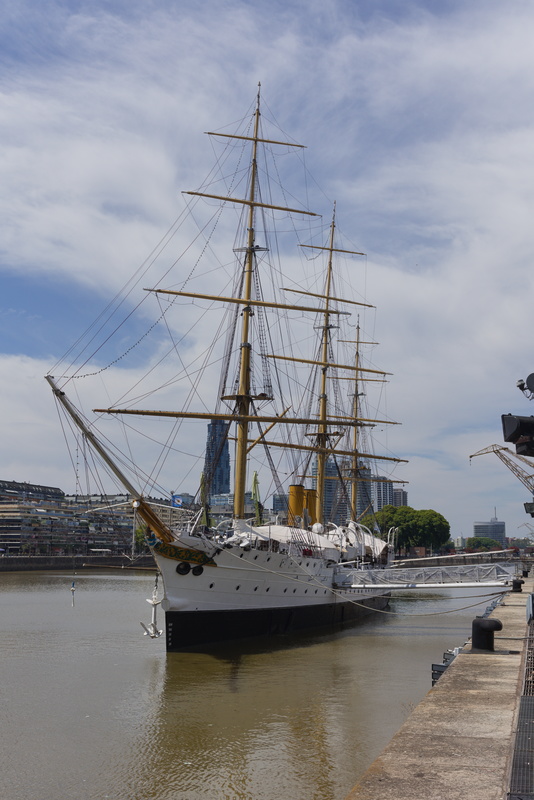
This ship, built as a naval training vessel in the 1890s and named after Domingo Faustino Sarmiento, the seventh President of Argentina, is now a museum.
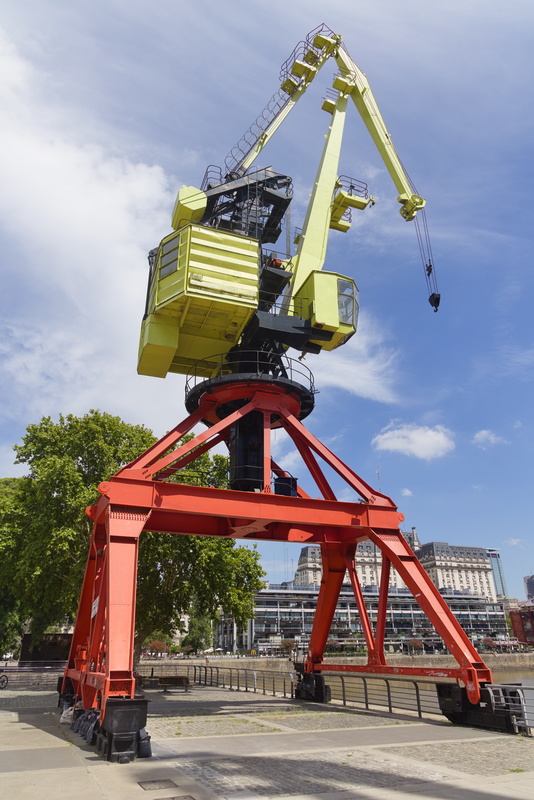
The old cranes are now works of art.
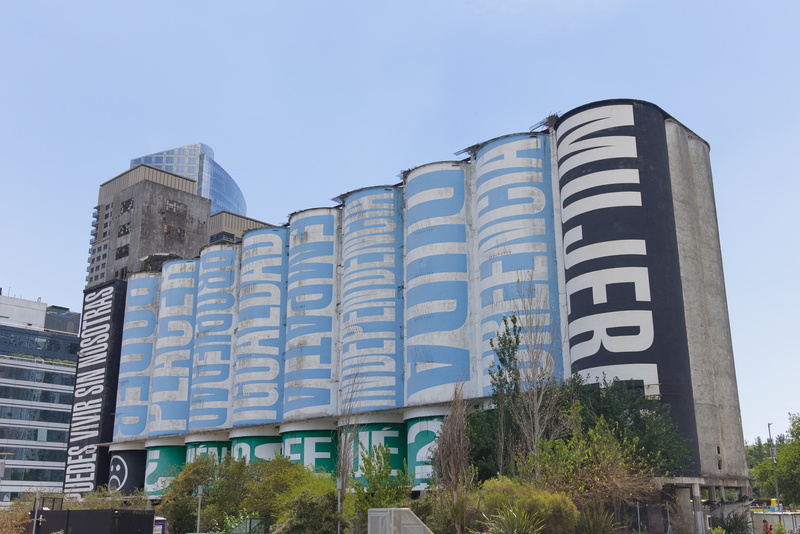
As are these old, somewhat rotting concrete, former grain silos.
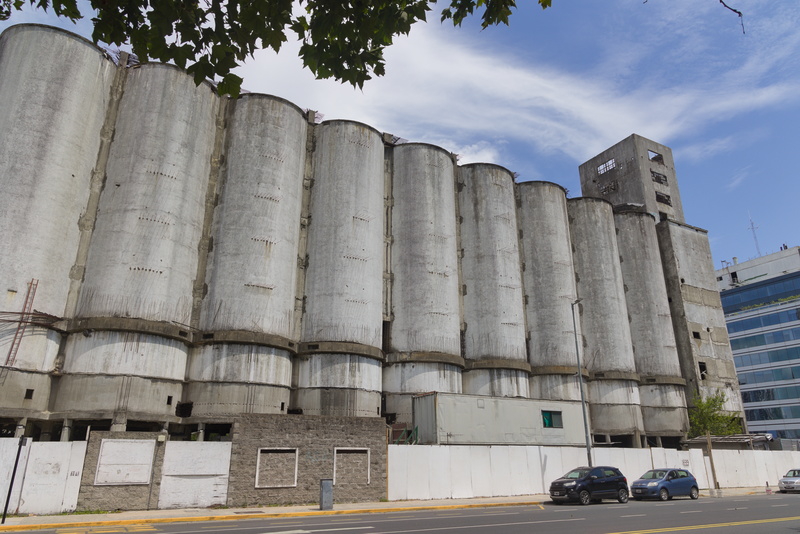
A lot less arty from the back!
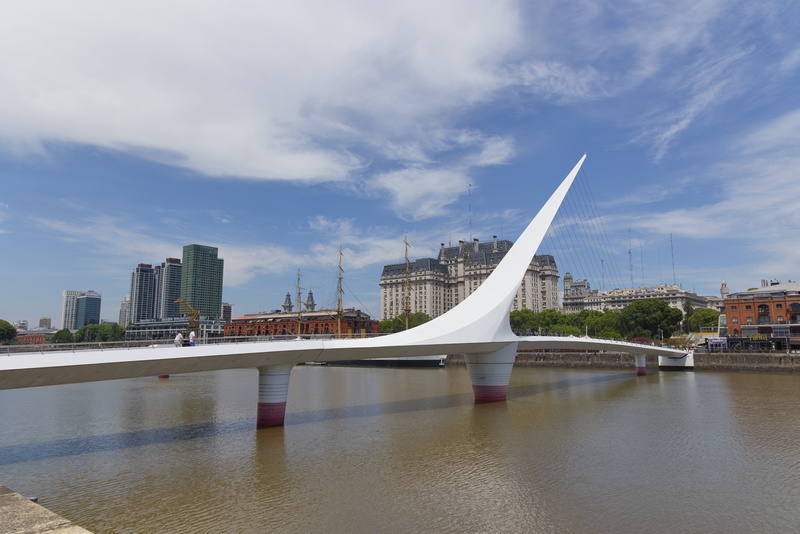
Back to this fine bridge, designed by Santiago Calatrava, who has been one of our favourite architects for many years. We first became aware of his work in his native Spain when we visited Rioja in 2007, at Bilbao airport and the stunning winery of Bodega Ysios. Most recently, his fabulous Gare do Oriente railway station was right outside our hotel in Lisbon last year.
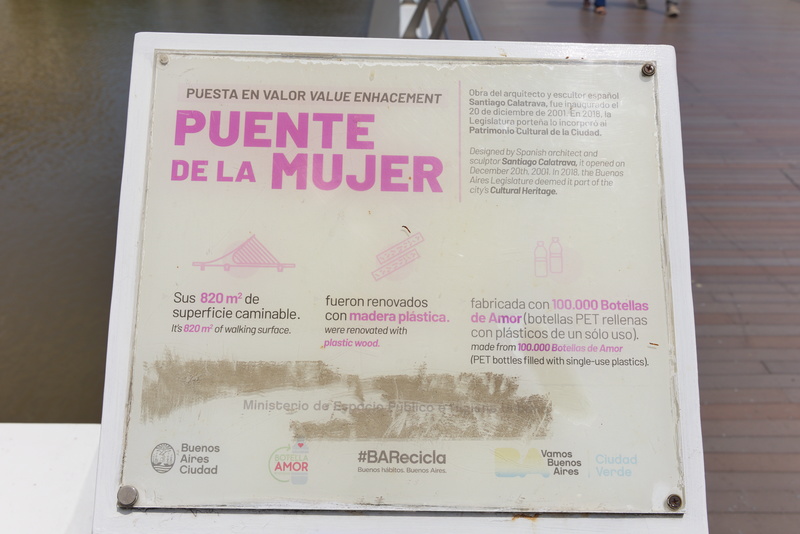
There's a plaque with lots of interesting information, but no explanation of the name. Fortunately, Google can find me a good page about it in Spanish and then translate it for me.
I quote:
The Puente de la Mujer is so called because it is nestled in a neighborhood that with the names of its streets honors outstanding women. It was the first work of Santiago Calatrava in Latin America and represents a couple dancing tango. The mast, whose 39 meters project towards the sky diagonally, acts as man. The arms of this are the 19 tensioners of the pedestrian bridge, which with a slight curve symbolizes the female body.
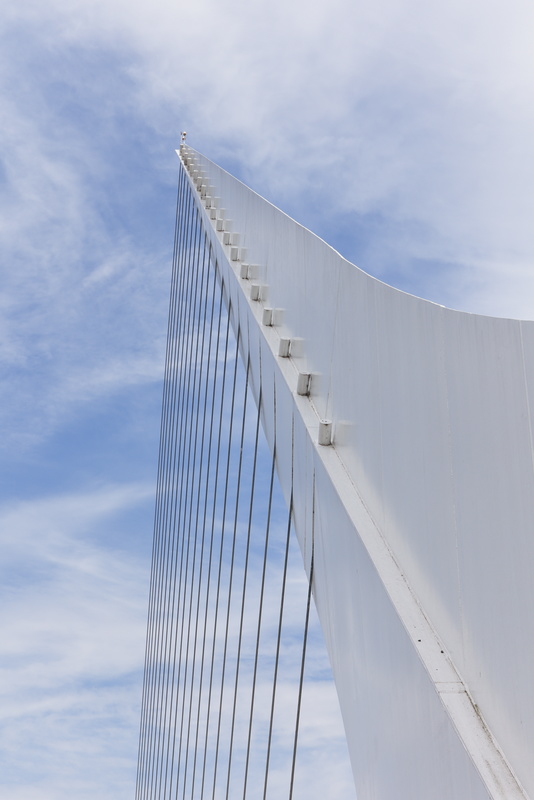
Use your imagination then; I'm not sure mine is quite up to it. But it's fine engineering and it's pretty: that's good enough for us.
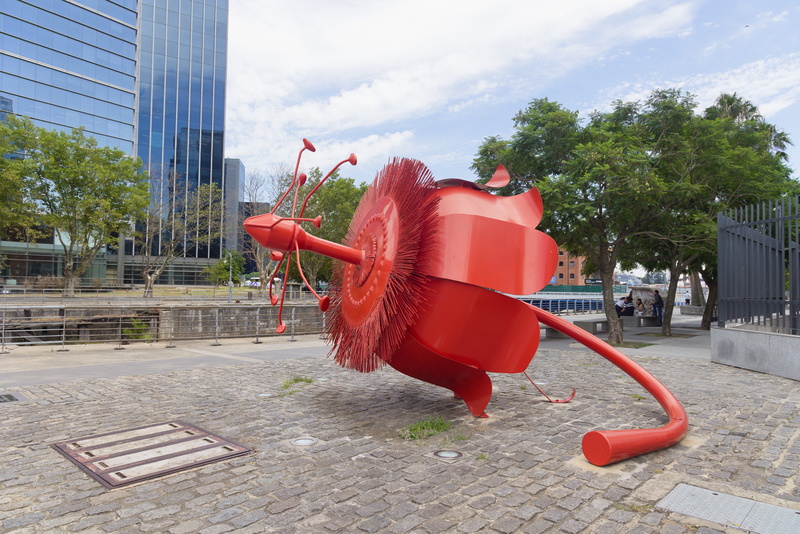
And some street art that isn't repurposed industrial heritage for a change.
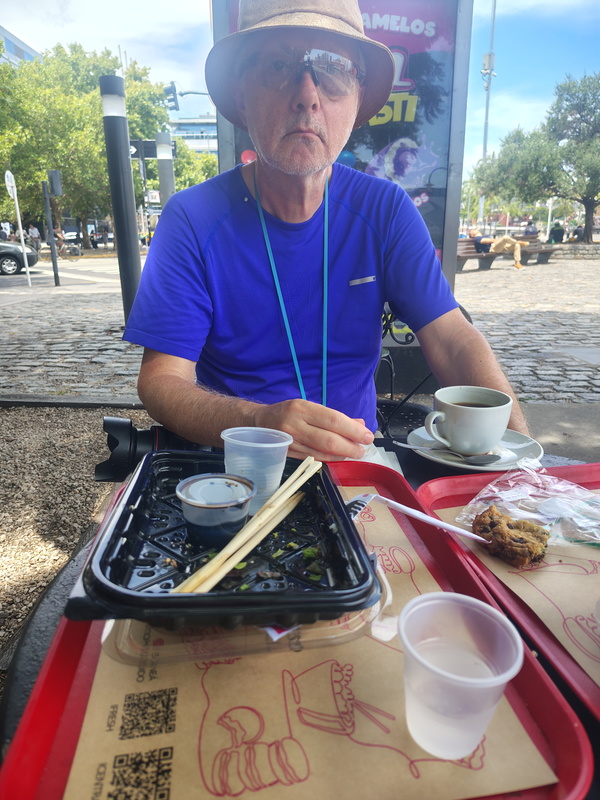
Hmm... Despite appearances, I am not at all miserable, after a very decent lunch at a waterside cafe. But this is the only picture we have, so it'll just have to do.
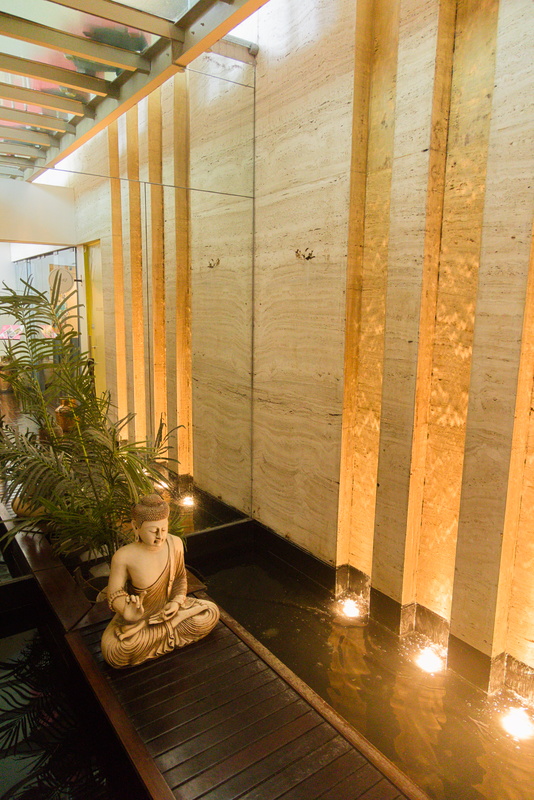
The cafe itself is perfectly unpretentious, but it shares facilities with a rather more swanky hotel in the same building, so going to the toilet is an experience.
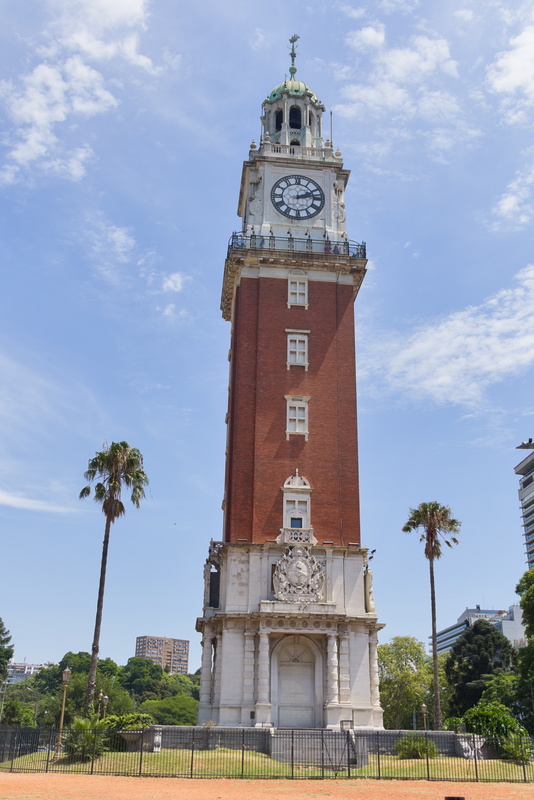
This clock tower was presented to the city by the local British expat community in 1916 to commemorate the centenary of Independence. As a monumental tower, it's officially named the Monumental Tower (Torre Monumental).
A little hard to make out at this scale, but the parapet with the railings just below the clock is open to the public and several people are up there. We think it's worth the $10,000 charge (which sounds a lot, but it's only a bit over £5) but then are delighted to find that as it's a Wednesday, admission is free!
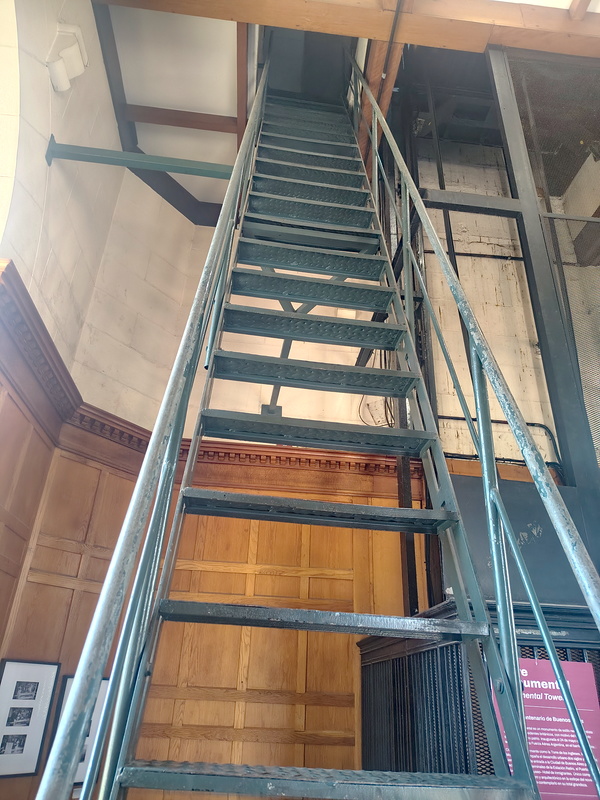
There are some very steep stairs, but even if we wanted to we're not allowed to climb them, we have to take the lift.
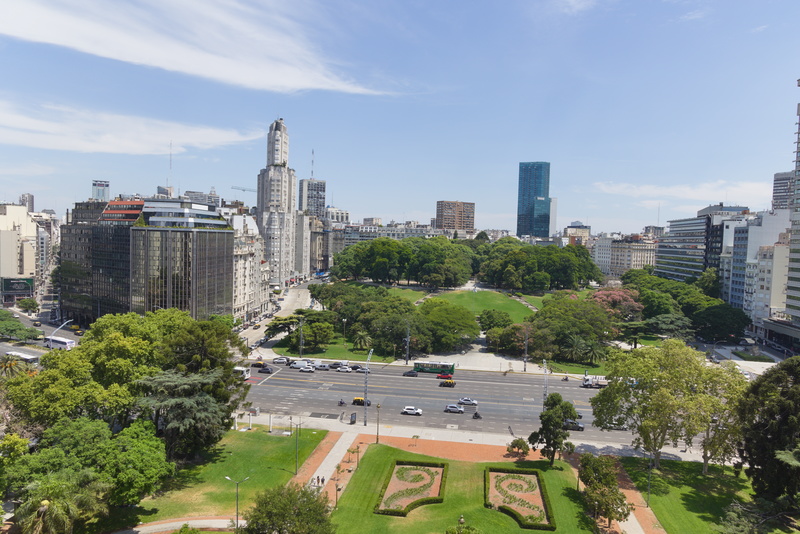
From here you can see the nearby Avenida 9 de Julio, the widest avenue in the world! Don't just take my word for it, or even Wikipedia's: no less an authority than Guinness World Records says it's so.
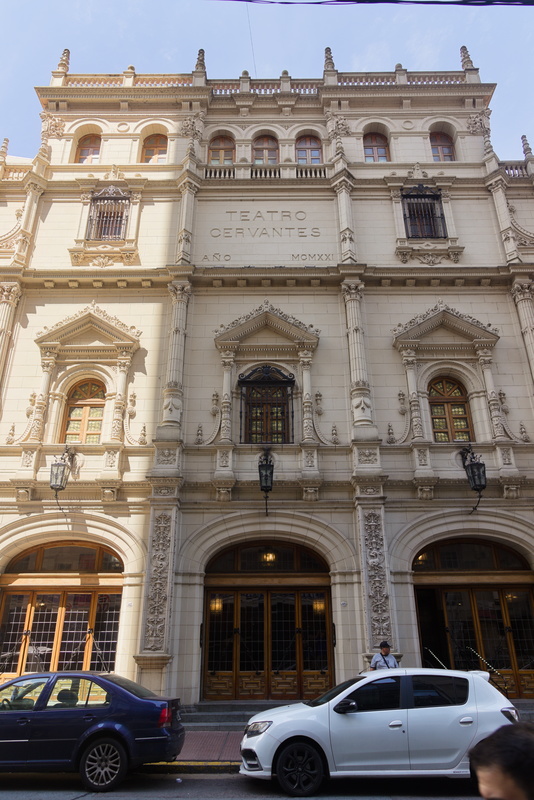
Another local landmark, one of the most important theatres in Argentina. The interior is supposed to be well worth seeing, but there's only so much we have time to do.
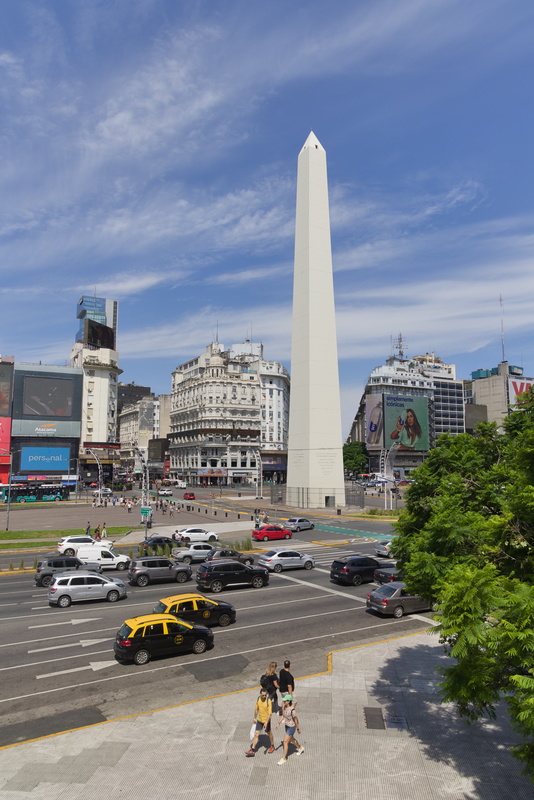
If you want to get an even birdier birds-eye view of the avenida, there's an obelisk you can ascend with a viewpoint at 67.5 metres. We don't do this either. The obelisk was built in 1936, but public access had not been possible until very recently. Just November, in fact, two and a half months ago, and none of our guidebooks and other tourist information has caught up, so we don't actually realise it's possible at this time.
Not that we would probably have done it anyway. We're getting a bit tired and going to find a metro station to take us back to our hotel district now.
The nearest one is also undergoing renovations as it happens, but is still in operation, you just need to be a bit cunning to find the way in.
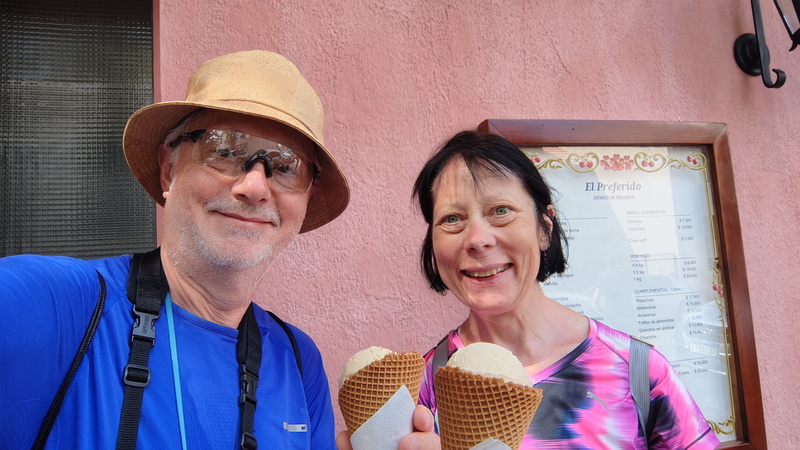
We've been told that Buenos Aires has an excellent artisanal ice cream scene, so we need to investigate. Vanilla and pistacchio are, in our opinion, two of the best flavours for quality evaluation and I can report that they both pass with flying colours.
Now look behind at the sign, “El Preferido”. This means nothing to us at this moment, but it turns out that it's one of the best restaurants in Buenos Aires! Indeed, number 24 in Latin America on this list for example!
No wonder they can make a decent ice cream.
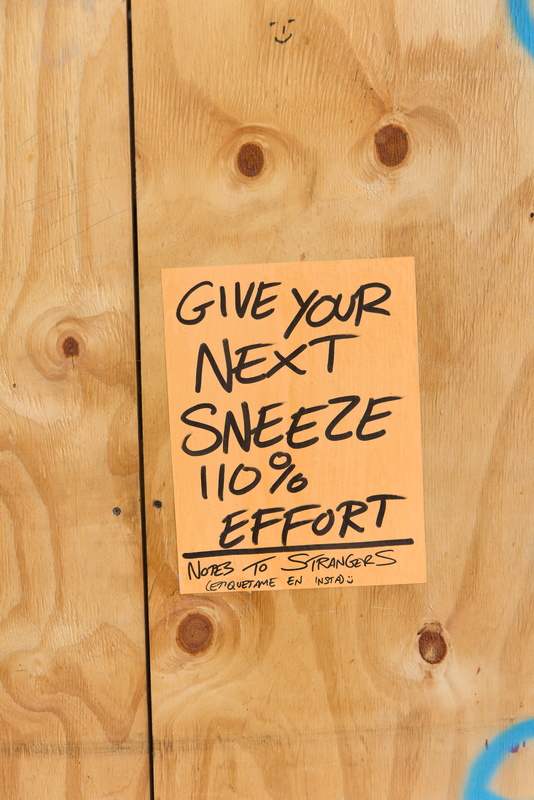
We have no idea what this signifies. It's on a boarded-up doorway on a street corner near the hotel.
[Later.... The bracketed text at the bottom reads “etiquetame en insta” or “tag me on insta[gram]”, but I'm at a bit of a loss to know who it is to be tagged. Ah, but wait... Maybe “notes to strangers” is the clue... Yes! https://www.instagram.com/notestostrangers/. It's not altogether clear what it's all about even if you follow that link, but fortunately Google's AI summary is quite helpful:
"Notes to Strangers” is a popular public art project and Instagram account (@notestostrangers) created by Andy Leek, featuring handwritten, uplifting messages posted in public spaces in London. It aims to spread positivity, mental health awareness, and connection
Looks like it's spread beyond just London, and we've never seen one there that we are aware of.]
For dinner, Jeremias had given us a suggestion, but we thought it looked a bit formal, so we'll go for a little wander again and see what we can find.
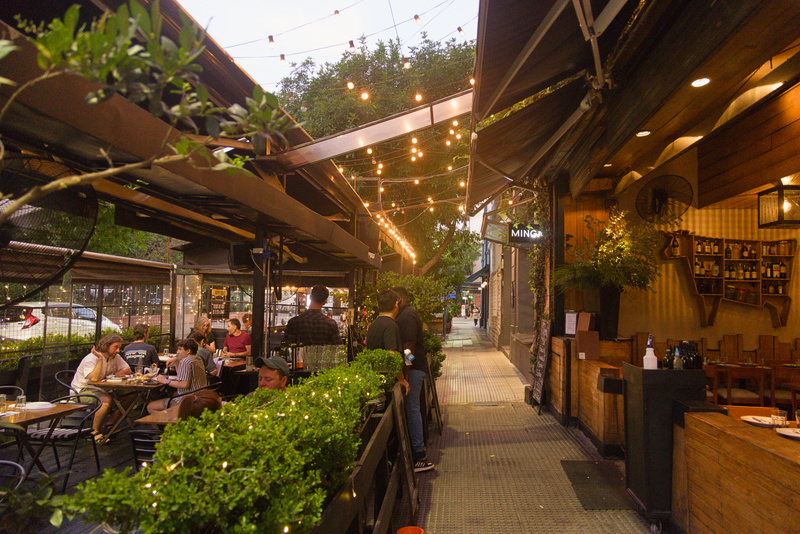
A bit further along the same street as Las Petunias, “Minga Parilla” or “Minga Grill”.
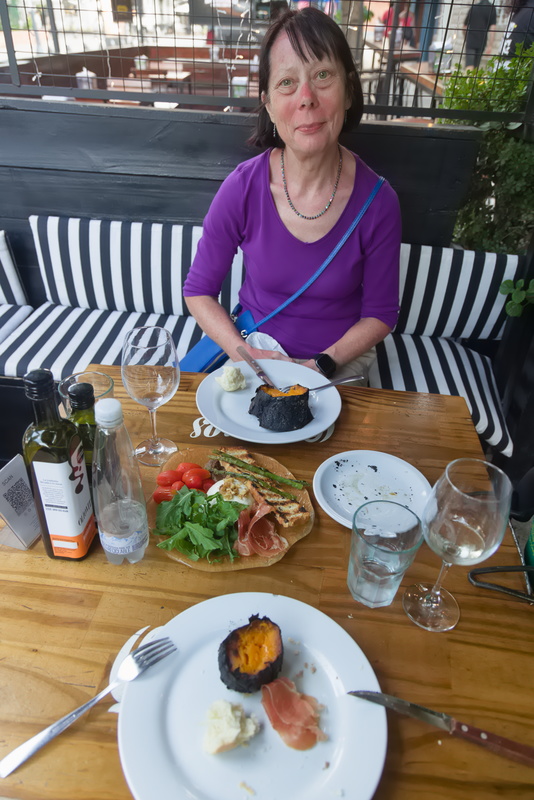
Their main focus is grilled meat, preferably in enormous chunks, but we are able to find something a little lighter. The charred roast pumpkin is a surprise to us both, but it's all delicious.
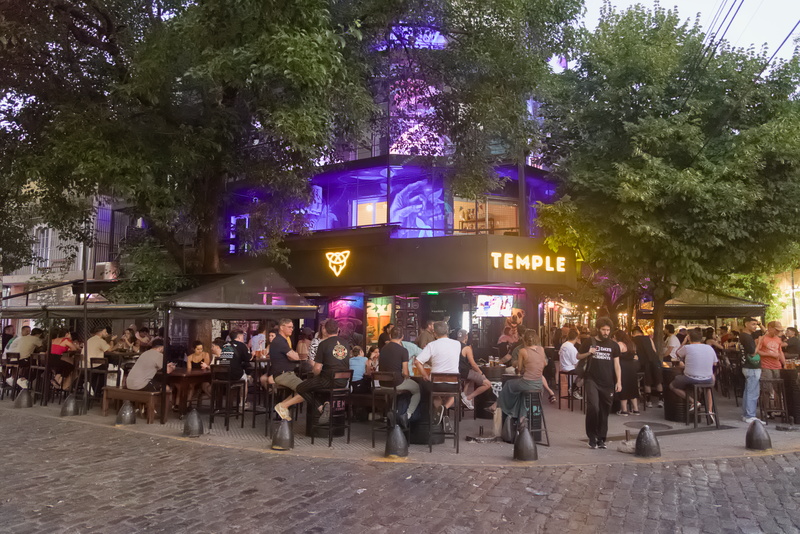
It's getting quite buzzy, but we can't party the night away, we have to get packed and ready to leave in the morning.
⬅ previous ⬆intro next ➡