Packing Is Going To Be Tricky...
⬅ previous ⬆intro next ➡Day 3 ~ January 16 ~ Santiago
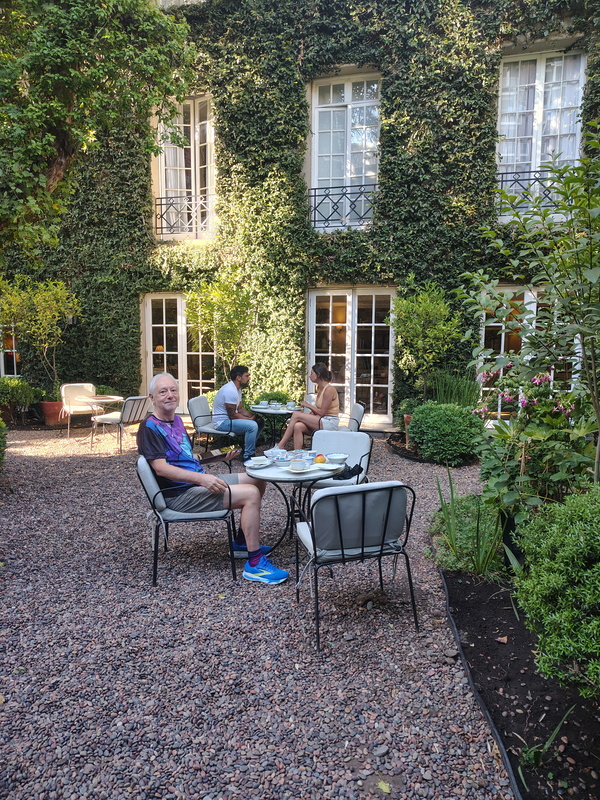
Back in the lovely hotel courtyard for breakfast. Cereal, yoghurt, fruit, nothing fancy, but that's fine by us.
Now we've read about and seen pictures of the Bahá'í Temple, and it looks like a must-see. It's only about ten years old, but that means it was there when we visited in 2022, yet at that time we hadn't the foggiest notion it existed. It's on one of the hills outside the city, so too far to walk: how do we get there?
In the past, we might just have copped out and got a taxi, but now with the Internet and Google Maps and all that, we can be a bit more adventurous and figure out the public transport.
Google says we should get a metro then a bus, but they are all part of an integrated transport system a bit like TfL.
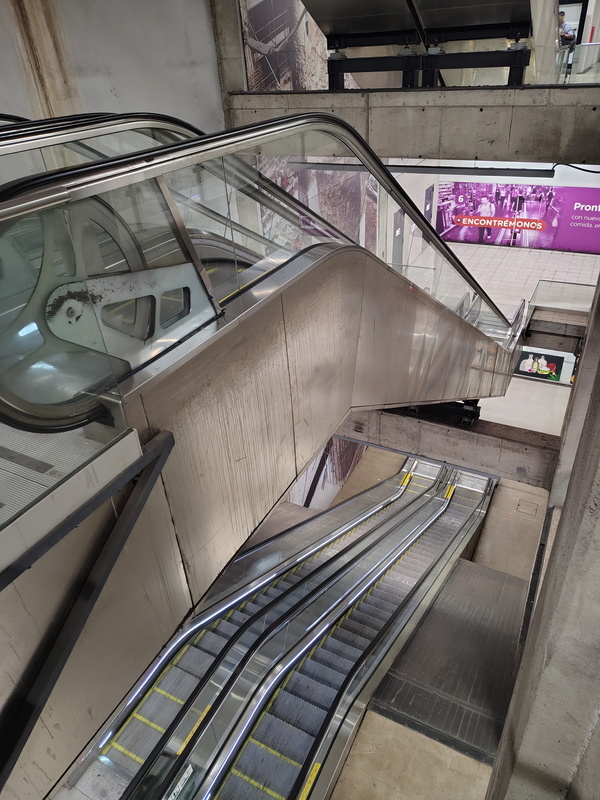
“Down down, deeper and down...” Any Status Quo fans? Yeah, ok.
Now I have to say that my vote for “easiest public transport payment system in the world” must go to Transport for London since they introduced the system that allows you to just touch any contactless card or your NFC phone on the gates, but this is a bit more like the older system where you needed a special Oyster card. No big deal, we just have to get one. There are vending machines here, we should be fine.
Except it's very confusing. The machine wants us to insert our card to top it up, not actually give us one in the first place. However, we've barely had time to scratch our heads when a member of the metro staff leaps to our assistance. The overlap of our Spanish and his English is not great, but it's good enough, and he moves us a little to the right, to a very similar looking but quite different machine which will indeed dispense cards. Sorted! ¡Muchas gracias señor!
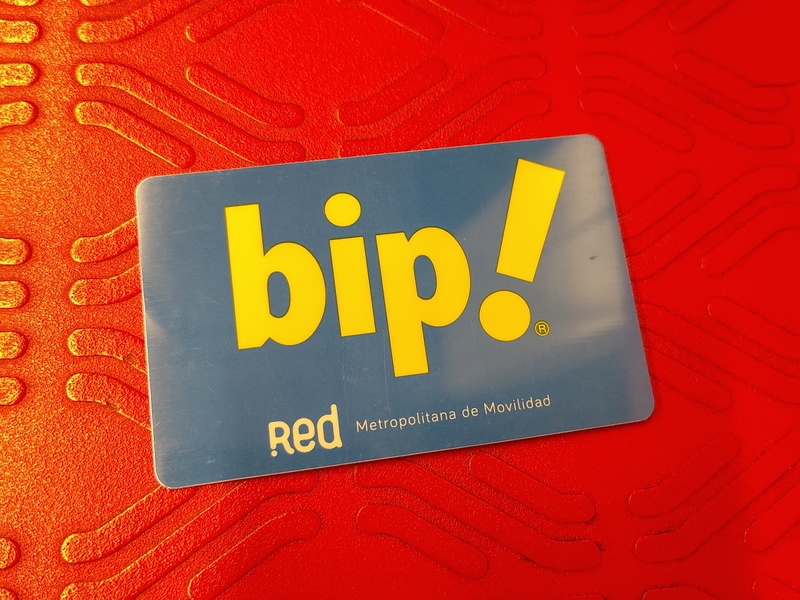
We have our “bip!” cards.
What is “bip!”? Well obviously it's the noise the card reader makes when it reads the card! (No, I'm not joking.)
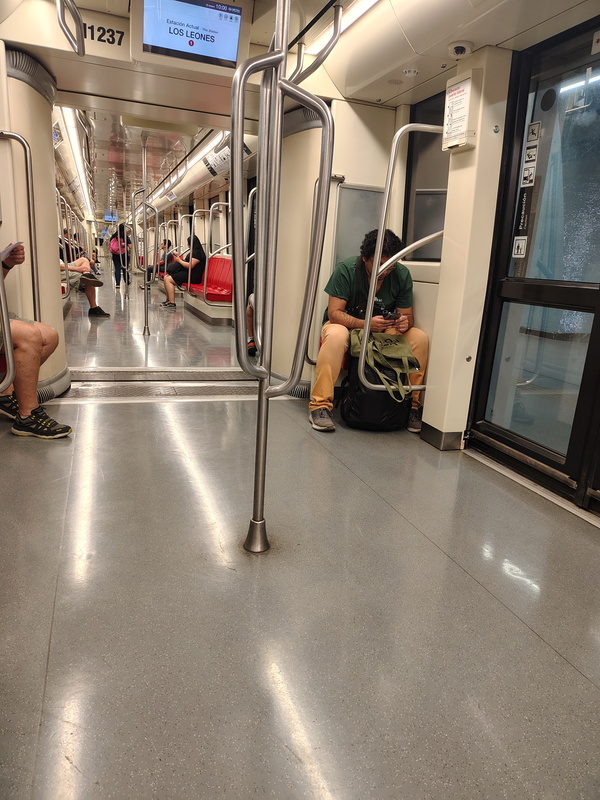
Not a lot to say about the metro: it's clean and modern-looking, but Line 6 was only opened in 2017 so it would be a bit worrying if it wasn't. The metro in Santiago is mostly pretty new, and even the old bits aren't that old: the first line was opened in 1975. As always, Wikipedia has the details trainspotters need.
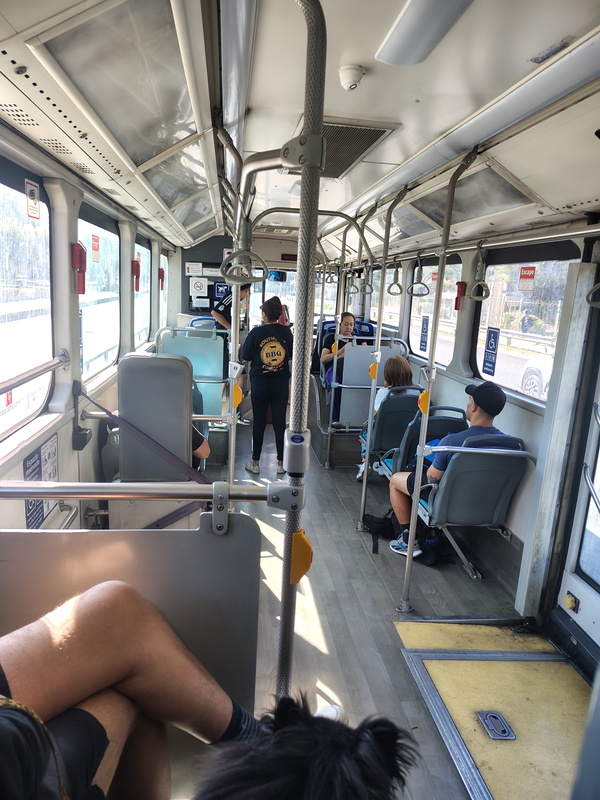
Next, the bus. Again, there's not a lot to be said if you've ever been on a bus before.
When we get off the bus, it's not immediately obvious which way the temple is and there are no signs. I think we must ask Google again.
A young woman has got off the bus here too, and has clearly been affected by the mysterious aura of knowledge I somehow seem to exude even when I haven't got a clue. “Excuse me, how do I find the temple?” Well, hold on a mo... my app says... according to my understanding, it's thataway...
[Look, this is not new: I clearly look like somebody who knows things whether I do or not. I mean, for example, in 2009 we were holidaying in Sicily, and a couple came up to me in Erice, where I'd literally arrived by cable car about two minutes previously and said to me, “you look like you should know, can we ask you...” The same thing happened at a parkrun in Wales a week ago. There have been too many such instances to dismiss them all as coincidence.]
Anyway, we walk thataway for a short while and then...
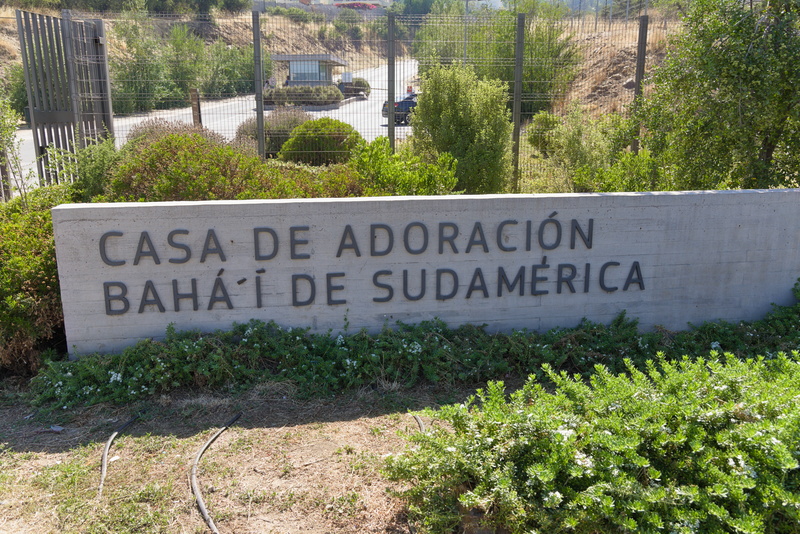
I think we must be here.
While I faff about taking pictures, girlie [oops, sorry, young woman] has obviously decided that now my utility is at an end she has no need to be sociable and carried on ahead. Not a problem: we weren't in a massively sociable mood ourselves.
At that little booth you can see in the background, there's a woman who doesn't speak English, but knows how to use Google Translate on her phone, and thereby tells us that it's a bit of an uphill walk and we can get a taxi if we want. We already knew that and had not thought we'd want one, but it's easier just to go through the palaver than try to short-circuit it.
The taxi is very cheap – just $1 – but we prefer to walk.
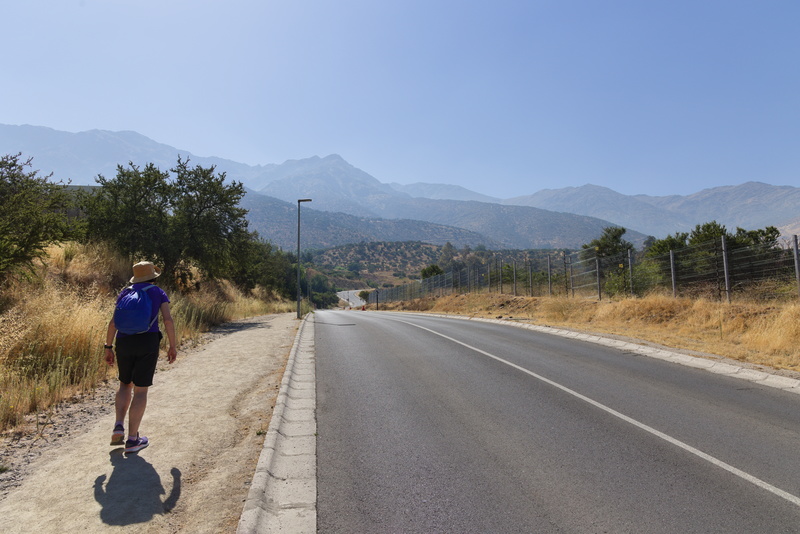
It looks quite bleak and the distance seems infinite as we set off; fortunately that will turn out to be a bit of an optical illusion.
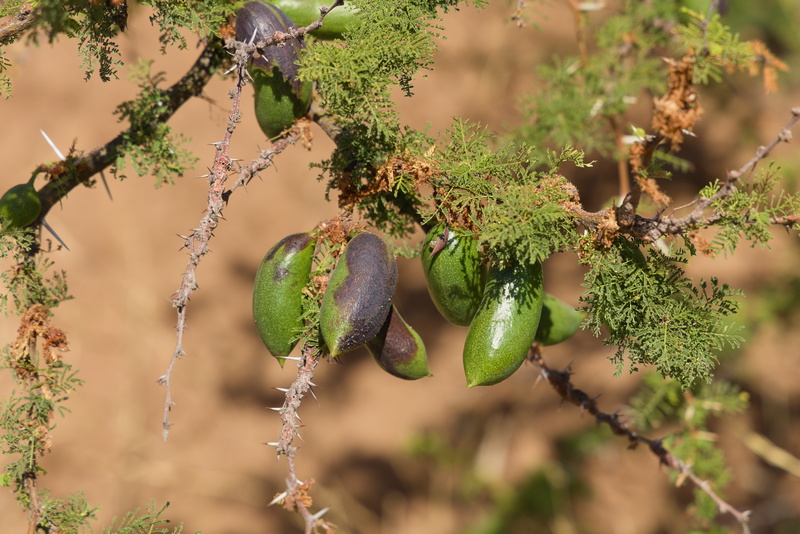
Despite the parched climate and a lot of very dry vegetation, there are still patches of vibrant green to be seen.
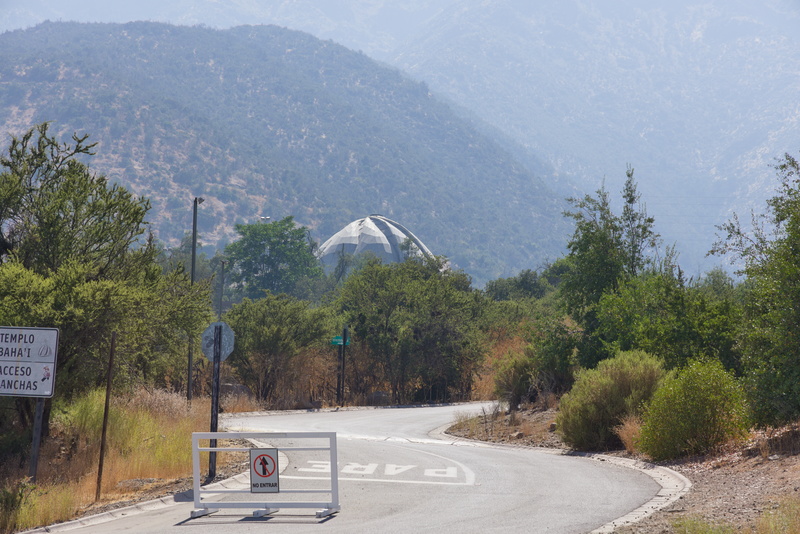
Teaser... Our first glimpse of the temple.
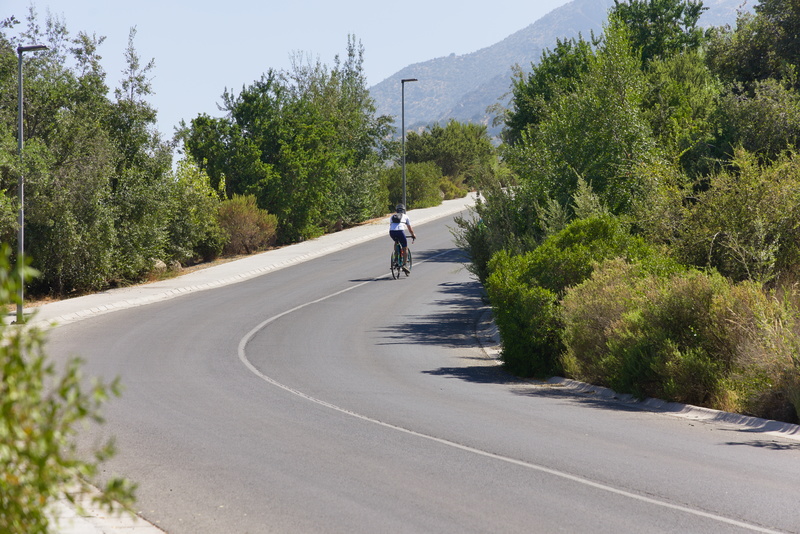
This isn't the steepest part of the hill, and this cyclist and his friend (just out of sight round the corner in front) were pushing a short while ago, but even so, this is still pretty damn steep on a bike! If you aren't a cyclist yourself you may not realise that what you thought was a completely flat road as a motorist or pedestrian is in fact an alpine climb, and what you thought of as a moderate incline is basically “pull yourself up with a rope”.
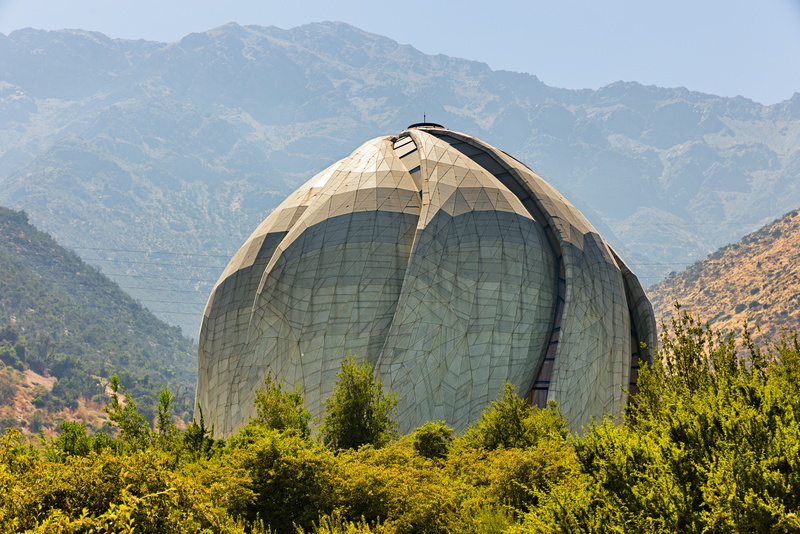
Wow! This is something special.
In 2000 we visited the Bahá'í temple in New Delhi. Pre-digital, of course, so I don't have photographs readily to hand, but our text-only diary from that time reads,
Lotus Temple – Nice architecture, shame about: 1) ant-trail of visitors streaming in, through, around and out; 2) prohibition of photography inside; 3) fading light making outdoor shots difficult; 4) smog
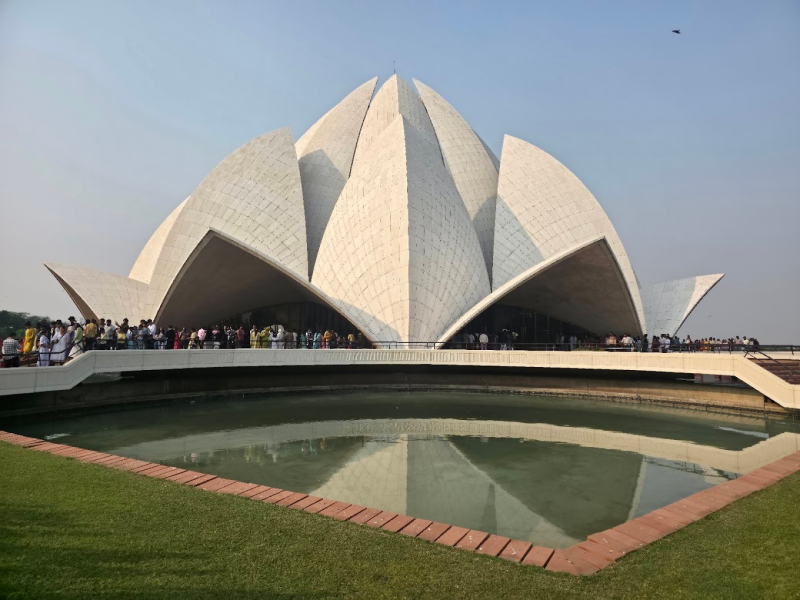
This isn't my picture, I just grabbed it off the web (thanks Sachin Kanwar for posting it) but I think you can see both the similarly organic style and what has and hasn't changed in a quarter century: the visitor numbers and photography restrictions remain even if the pollution has been greatly reduced.
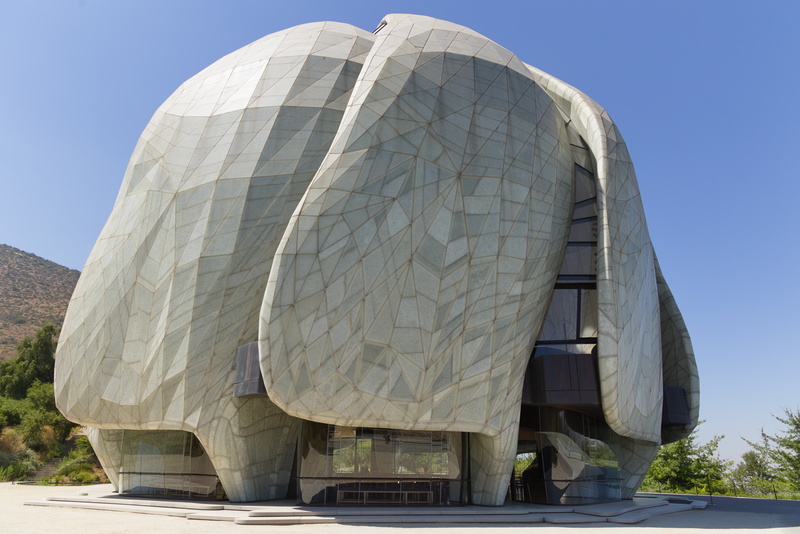
And now here's the whole thing.
The material it's made of is special: it's glass, but not just ‘glass’... Now at this point, it gets a little confusing, because we have been given a short introductory talk by a volunteer who has told us that this glass was originally created by a company that didn't have a project special enough to deserve it at first, and it was held in storage until the temple project was begun. But that's completely at odds with my investigations!
Let me tell you more...
The architectural design was by Hariri Pontarini Architects in Toronto, Canada, and their web page describes it in some detail.
The Bahá'í originally acquired land for a temple in the Santiago area in 1967, but it was 40 years before the project commenced with a design competition, which HPA won. (It may or may not be coincidence that Siamak Hariri, co-founder of the firm and project lead, is a Bahá'í himself, but we are happy that it's a very worthy winner regardless.)
There's a fascinating interview with him in which one of the things he says is that the design is explicitly not “church-like” or “synagogue-like” or whatever, precisely because that will put some people off, and Bahá'î is all about inclusivity for everyone without exception. We ourselves love a good bit of religious architecture and have not the slightest concern for the religion itself, so Cologne Cathedral? Check! Grand Mosque in Oman? Check! The stupas of Bagan? Check! But maybe not everyone agrees with us.
By the time of the competition, however, the original area had been swallowed by the expanding city and was no longer suitable, so a new location was found in the foothills of the Andes. We can't be sure, because we've no idea what the original site was, but we'd be astonished if this was not massively superior in every way.
But back to the glass...
The concept for the building was for it to be translucent from the start, but the material Hariri initially had in mind, alabaster, would not have been durable enough for the climate, particularly the summer temperatures. He then contacted Jeff Goodman Studio, an architectural and artistic glass specialist also based in Toronto, asking if they could produce a translucent white glass suitable for building in an area of both strong climatic variation and seismic activity.
As the studio's web page says, “After over 100 samples and years of testing, the Temple Glass was born, a carefully designed formula of borosilicate glass cast in custom made kilns”. And, “The project took over 12 years to complete, with 8 years dedicated to manufacturing 55,000 square feet of 1 1/4″ thick Temple Glass”.
But obviously translucent glass that takes years of dedicated expert work to achieve isn't enough on its own, so we'll need some translucent marble for the interior!
And funnily enough, the chosen material is from Estremoz in Portugal, which we drove past only last year! We didn't visit the quarries ourselves, but if you look at Google Maps, it's easy to see them right here. We were visited the nearby town of Vila Viçosa to see the palace, but there are quarries there too. If only we'd been psychic. But according to the estremozmarble.com website “the finer and cleaner blocks are becoming more scarce and available just for few regular clients”. Blog for that day is here.
It's been a very international project. Apart from the Canadian architects and glassmakers and the Portuguese marble suppliers, the framework was built in Germany by the Permasteelisa Group and other glass was supplied by Glassbell in Lithuania!
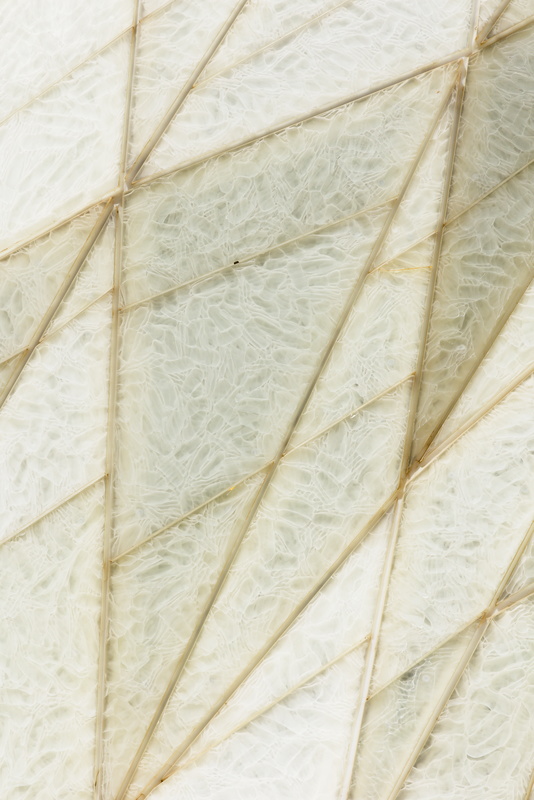
Let's zoom in on the glass a bit...
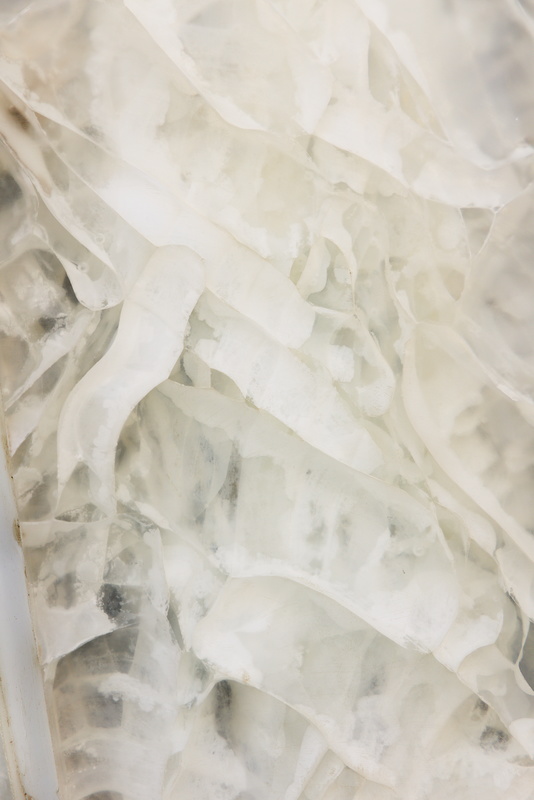
And more!
You can clearly see how this glass has been made by partially re-melting pieces without letting them become completely liquid and mix indistinguishably together. Unfortunately, more detail is presumably a trade secret, as neither the manufacturing studio itself nor any other website I've found will give any more info.
Now I think I mentioned earlier that you are not supposed to take photos in Bahá'í temples, but that's not because they think God hates cameras, it's because they don't want people to feel they're being stared at and photographed. I can understand that, and anyway, most of the time I don't want uninvited random people getting in my pictures in the first place. So I'm going to follow my interpretation of the spirit of the law, not the letter.
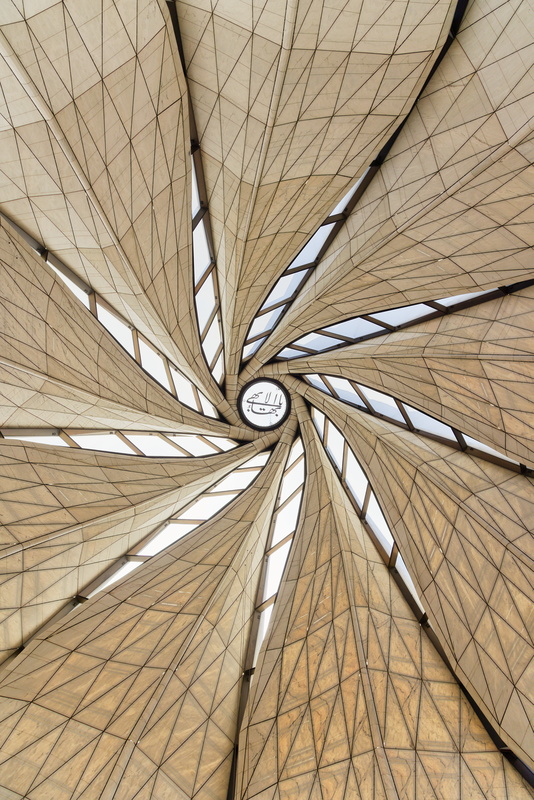
You will see this picture in just about every feature on the temple in existence, but this is different because this is my picture, not somebody else's.
I've set my camera to a totally silent mode and simply put it pointing upwards on the arm of the chair I'm sitting on and pressed the button. Literally nobody but God knows I've taken this picture and he seems fine with it.
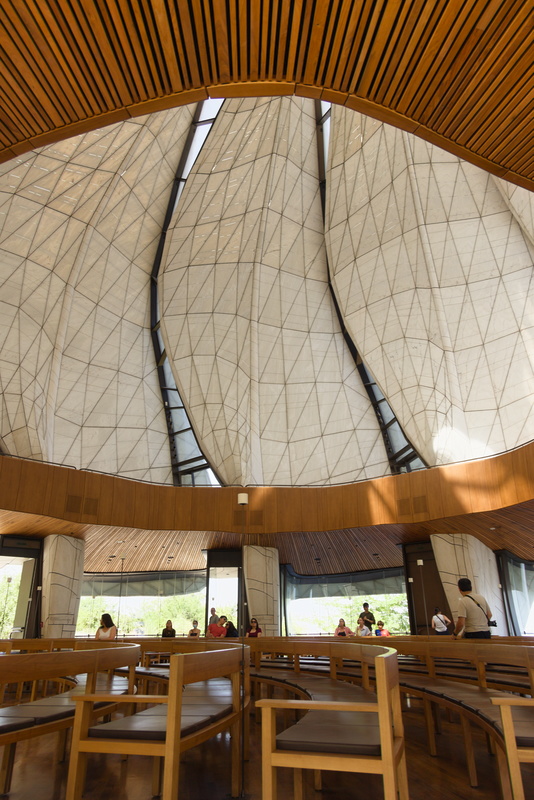
Ok, technically this interior shot does have people in it who have not signed a model release form. Oh dear, what a pity, never mind.
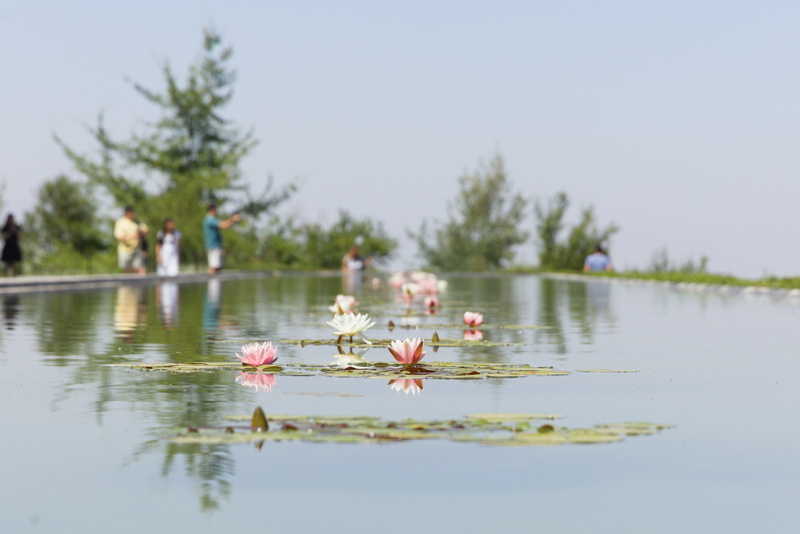
We like the lily pound outside too.
Ok, temple visited, time to move on.
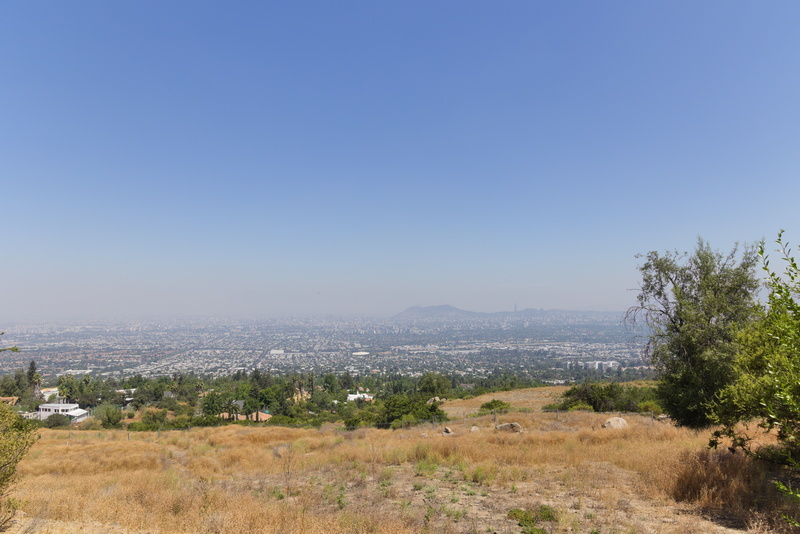
A little way back down the hill, we stop for a bite of lunch and this is what we see looking out over the city: it pretty much fills the plain in between the mountains, then suddenly stops, as here. ‘Santiaguinos’ don't seem so keen to build on the non-flat bits.
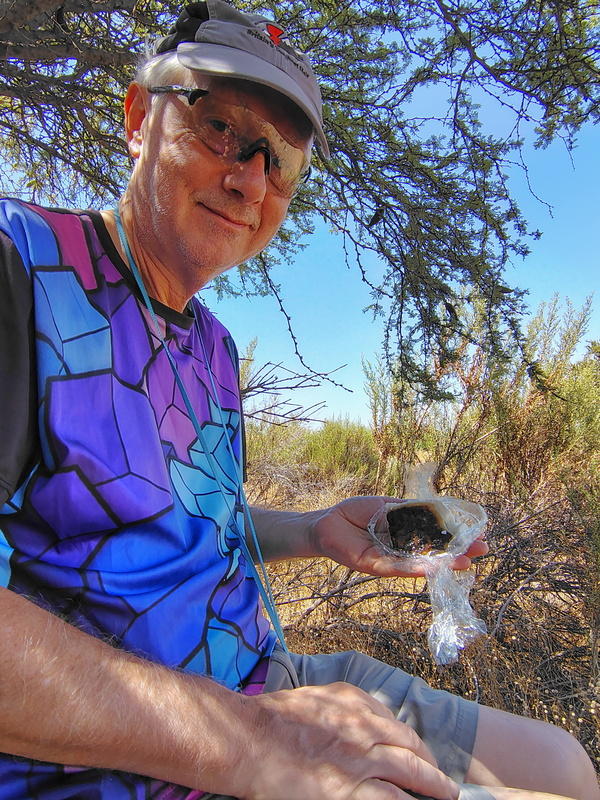
Time for my contraband. As it's mid-January now, this may not technically be Christmas cake any more, and it's hardly what we Brits would think of as Christmas weather.
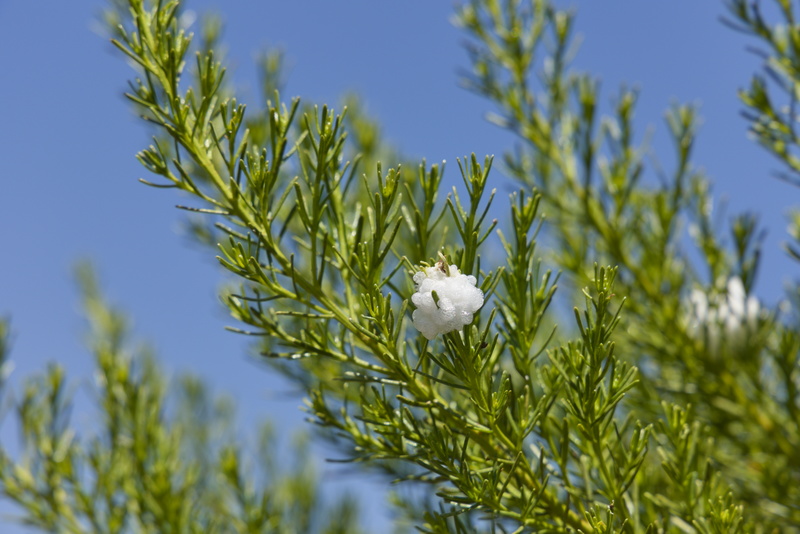
Cuckoo spit. Why is it called cuckoo spit? It occurs to me that I have never particularly wondered about it until now.
It's produced by insects called froghoppers or spittlebugs to protect them while feeding before they reach adulthood. It's nothing to do with cuckoos at all, except that it appears in spring at a time when cuckoos are typically heard. But now I have another question: why ‘froghopper’?! They do have some serious hopping power as adults: 70cm or a hundred times their own body length according to various sources, but where does the frog bit come from?
The Natural History Museum has a good page here with some pictures of some of the species. They look nothing like frogs and they certainly don't hop on or off frogs, so the source of the name will have to remain a mystery.
Back at the bottom, we have a surprisingly long wait for a bus back into town. Many buses pass by the stop, but none are the one we want, and we're starting to think about admitting defeat and firing up the Uber app.
Just before that point is reached, the bus we want finally appears.
If you've read our previous Chile blog, you may recall that we were supposed to ride the funicular up to the top of San Cristobal, but it was suffering from a power failure and we ended up walking. We think we should at least have a go and see if we're lucky this time, so when we get back to the centre of town, we start heading out that way.
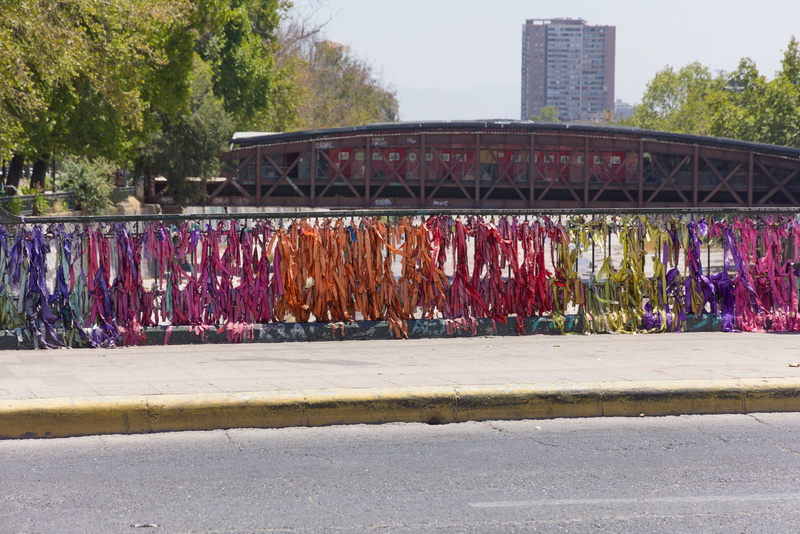
In some places coloured ribbons are replacing “love locks” which have caused damage to bridges because of their sheer weight in large numbers. However, the relatively even distribution of colours here looks more like an art installation than a product of collective teenage passion. I did a Google image search, though, and it told me that this was a bridge in Portugal! Even when I looked for the real place, Puente Pío Nono, nothing useful came up.
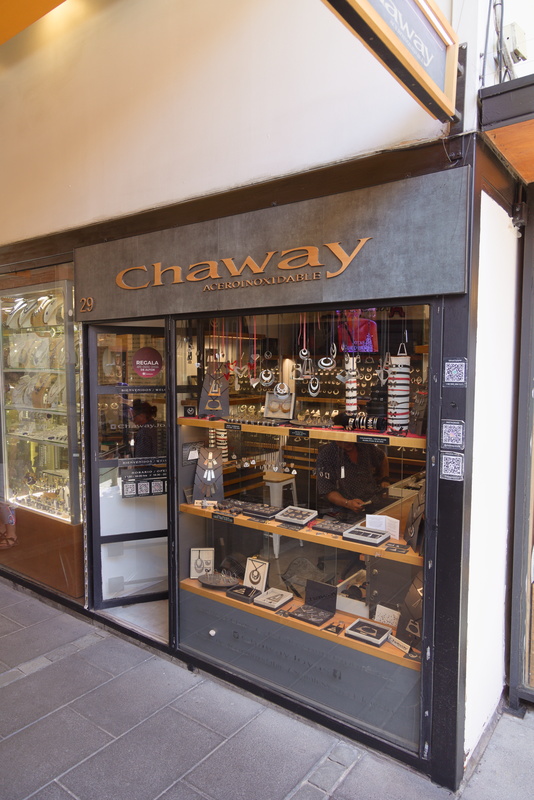
We pass through Patio Bellavista, the mall where we had lunch on our previous visit, and spot this interesting shop selling stainless steel jewelery. We must look closer...
And indeed Amanda finds it most agreeable: so much so that a small purchase is in order!
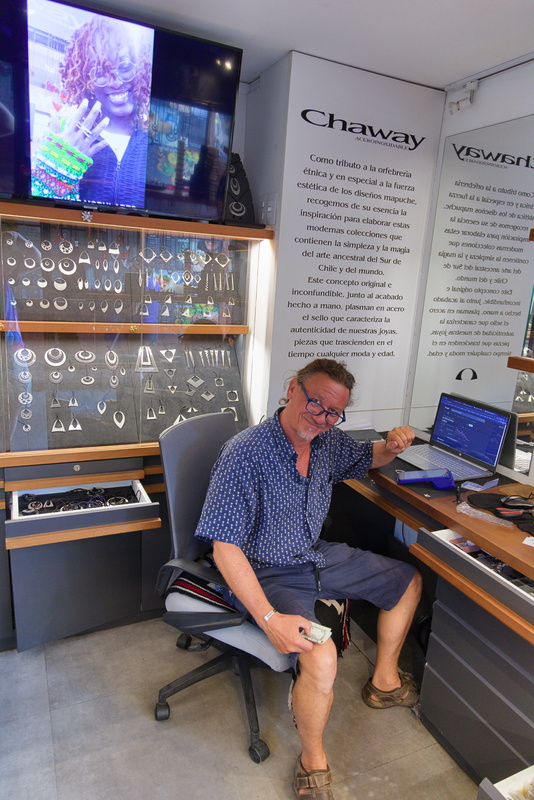
We have a fine chat with the owner/artist too. We get a discount for paying in cash, even though we only have US$, not Chilean pesos. As is not uncommon in the Americas, the dollar is effectively a parallel currency accepted just about everywhere.
Recommended should you be passing, and since that's relatively unlikely, you can check out his website here.
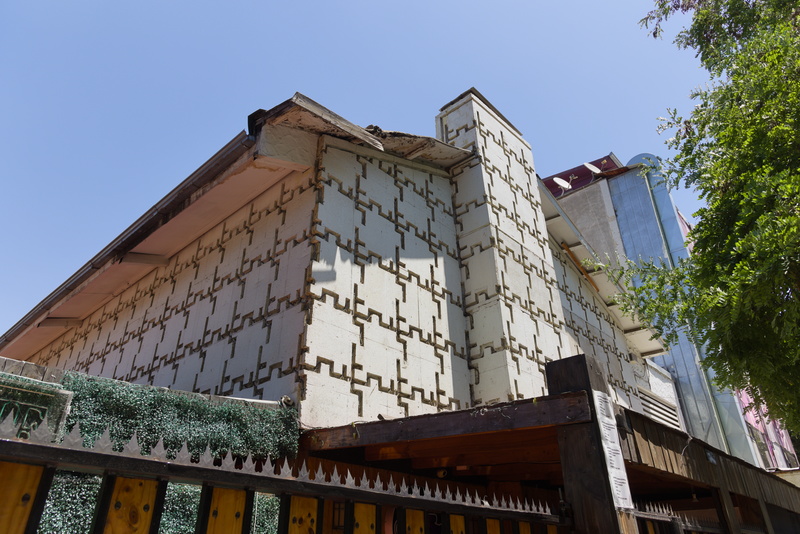
At first glance, you think this is just a decorative pattern.
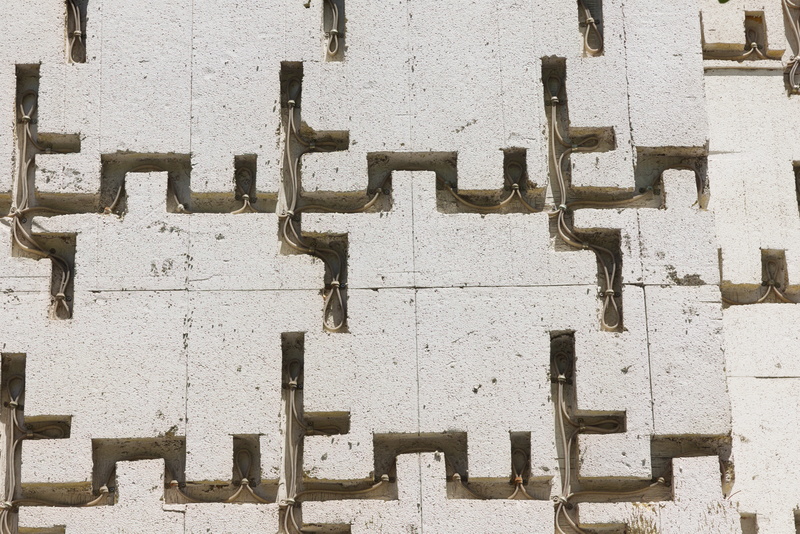
But what the...?! For a moment you think maybe it's some kind of weird first-fix electrical installation but then you look more closely and all those cables are basically going nowhere and doing nothing.
I think we must conclude it's Art. Google's AI think's it's a Frank Lloyd Wright design in Pasadena, California, but I think we can safely conclude that this is not the case.
Google Image Search doesn't seem to know Santiago well.
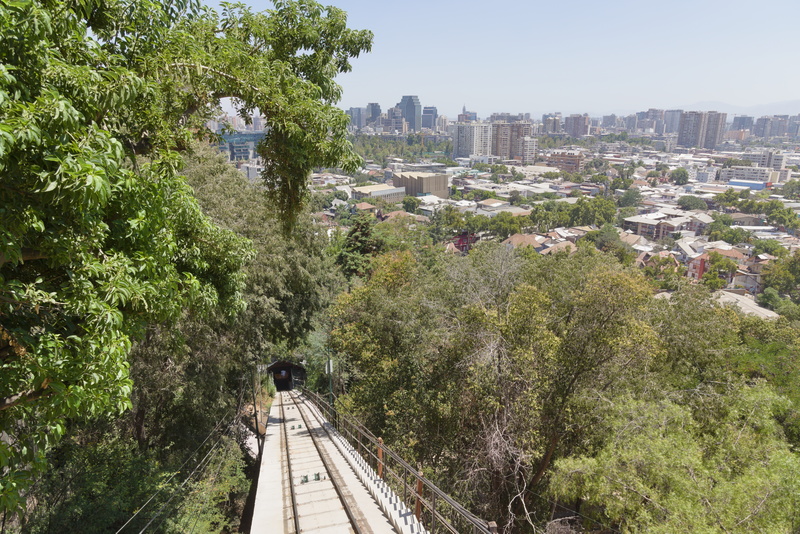
And finally, we ascend the funicular as planned. We are in the lowest compartment so we have a completely clear view down.
I won't bother repeating pictures of the summit, it's not changed since last time.
We walk back down, and then on to our hotel, mostly on a traffic-free road that runs around the base of the hill. We do at one point find ourselves walking on the wrong side of a barrier and have to climb over, but it's not a big deal.
For dinner, we'll try another of the places just down the road.
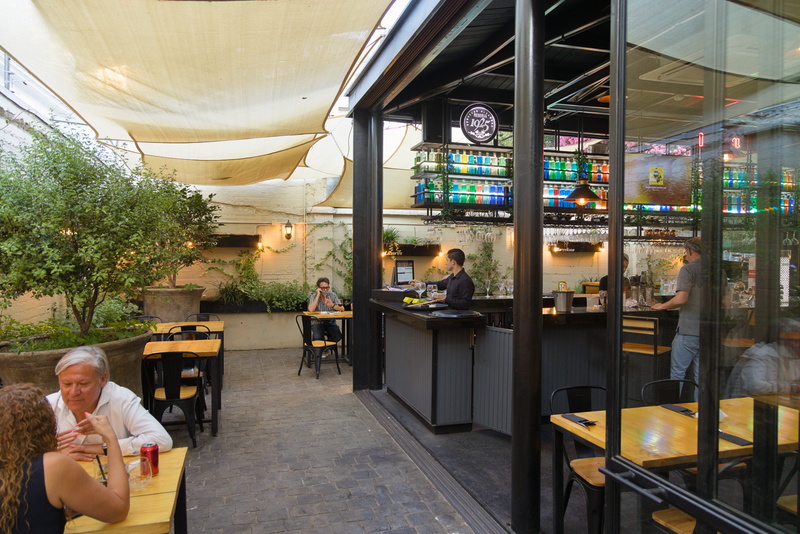
“De la Ostia”, a tapas bar that looks attractive and should do us nicely. All the tables are named after Spanish cities (or at least, all the ones that we can see) and we find ourselves in Madrid.
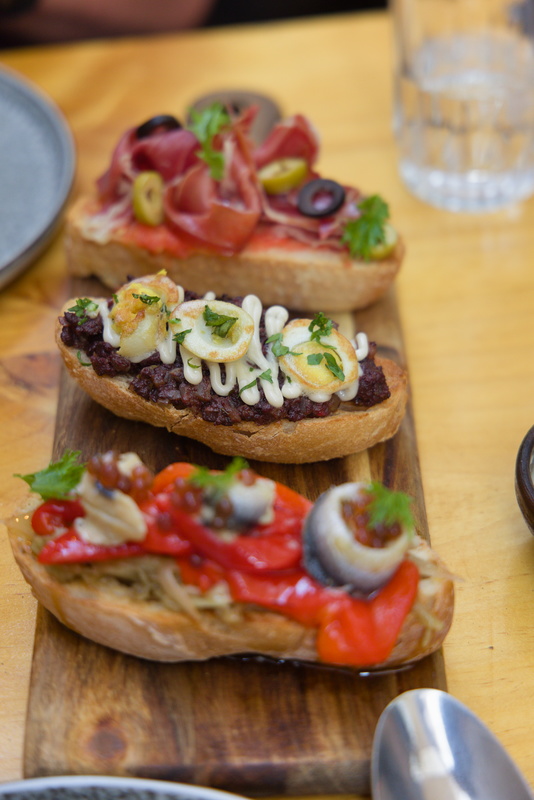
Nice food. Admittedly, we've had some difficulty ordering, and haven't really received quite what we expected, but it's all part of the fun.
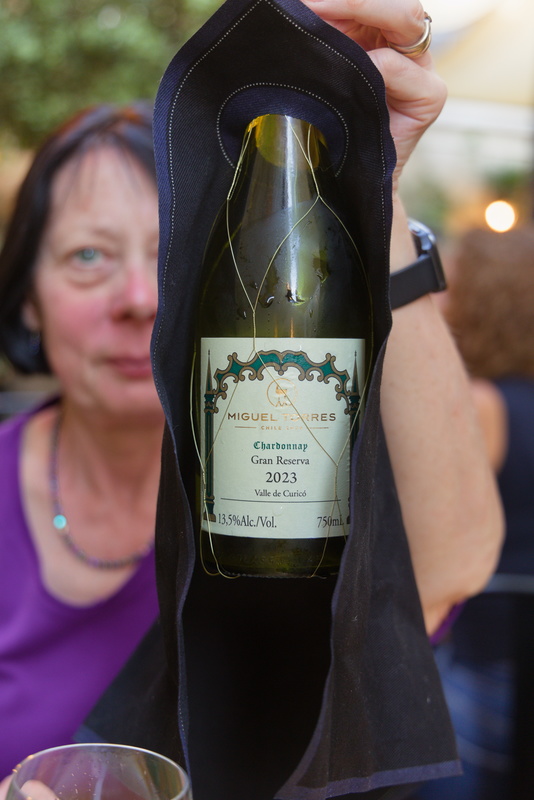
And an excellent bottle of wine. Despite being Chilean Chardonnay at 13.5%, which would not normally be Amanda's first choice, it goes down well.
Tomorrow, we get our domestic flight to Punta Arenas.
⬅ previous ⬆intro next ➡